M11A4 Practice Rifle Grenade
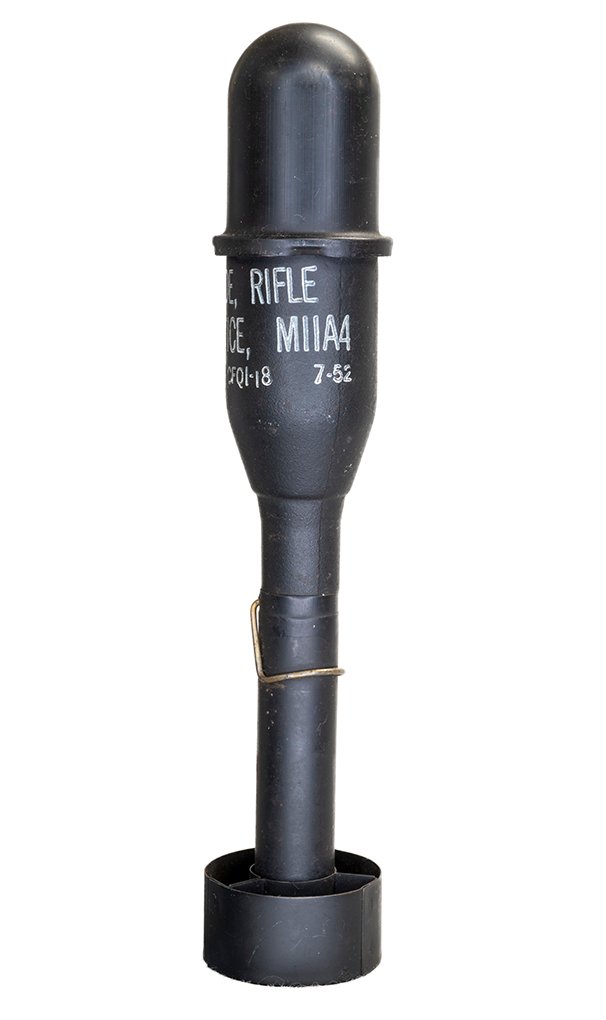
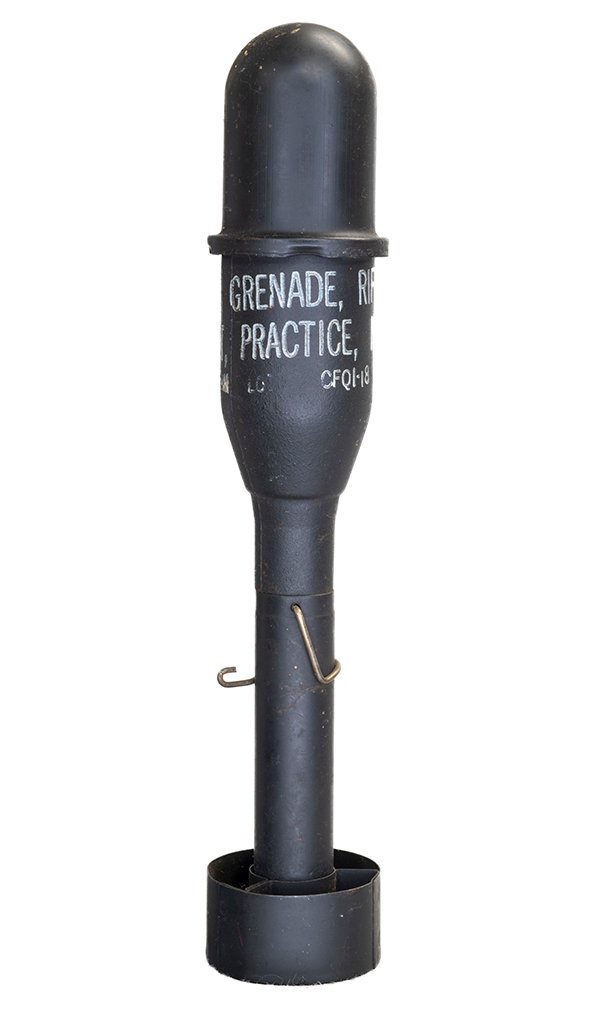
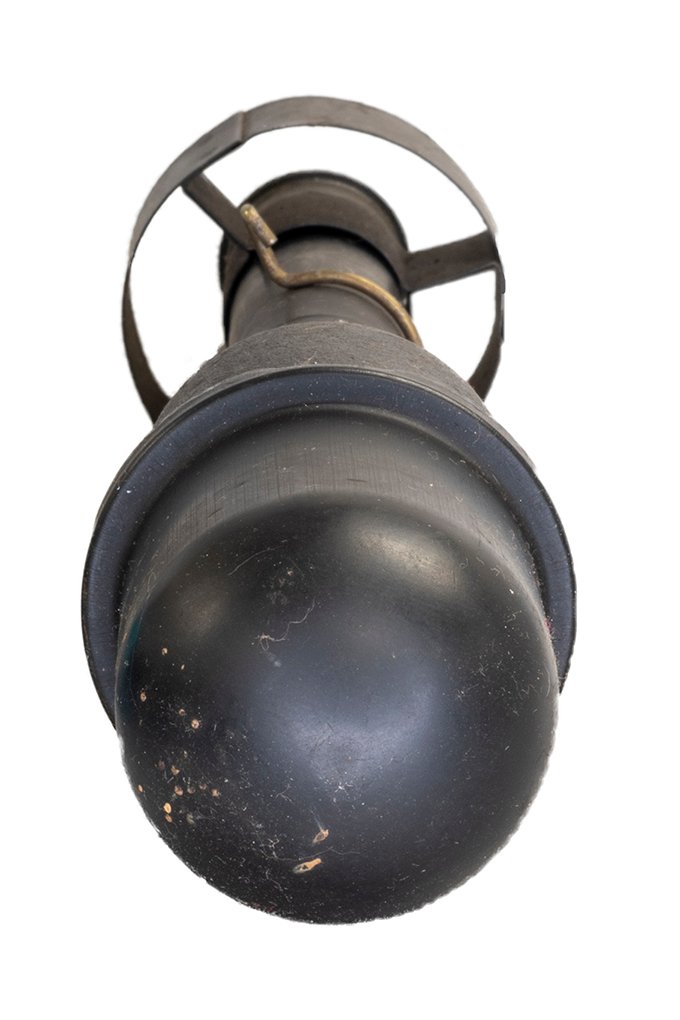
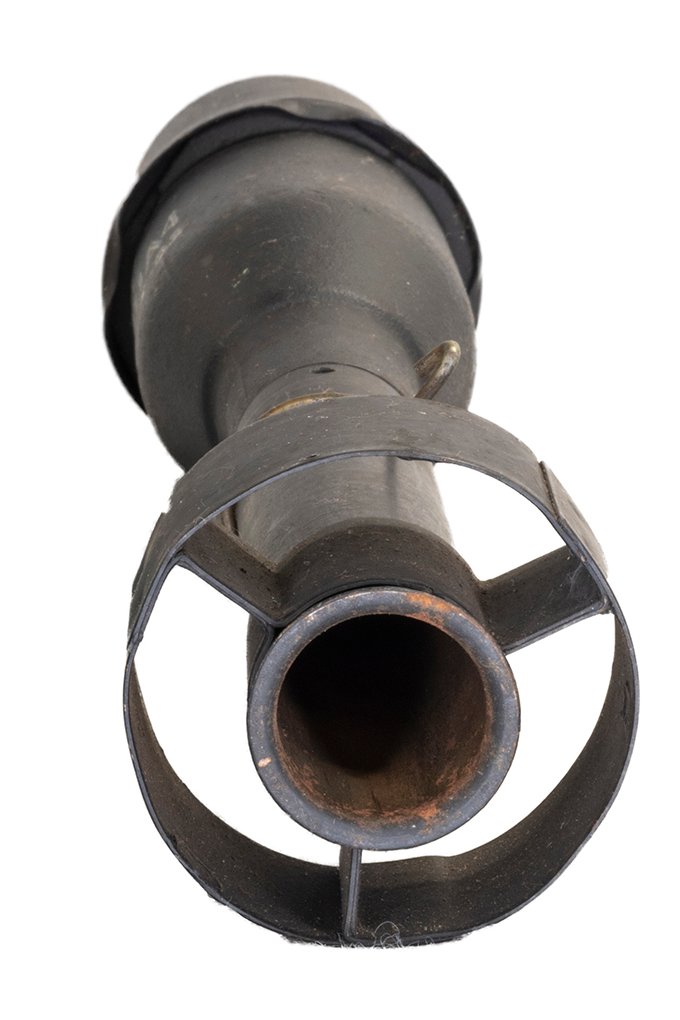
Ordnance Overview
The M11A4 Practice Rifle Grenade is an American inert training munition designed to simulate the M9A1 High Explosive Anti-Tank (HEAT) rifle grenade. Introduced during the Korean War era (1952), this practice round was specifically engineered with replaceable components for repeated training use, making it a cost-effective solution for training infantry soldiers in rifle grenade employment. Unlike its live counterpart, the M11A4 contains no explosive fill and is completely inert, allowing for realistic training without the hazards associated with live ordnance.
Country/Bloc of Origin
Country: United States of America
Military Branch: U.S. Army
Period of Development: Korean War era (1950-1953)
Standard Service Introduction: 1952
Production Location: U.S. military arsenals and contracted manufacturers
The M11A4 was developed as part of the U.S. Army’s comprehensive rifle grenade training program during the Korean War, when American forces urgently needed effective anti-tank capabilities against North Korean T-34/85 tanks and other Soviet-supplied armor.
Ordnance Class
Primary Classification: Practice/Training Rifle Grenade
Simulates: M9A1 Anti-Tank Rifle Grenade
Training Category: Inert ordnance training device
Delivery Method: Rifle-launched via M7 grenade launcher
Propulsion: Blank M6 grenade cartridge propellant gases
Stabilization: Fin-stabilized flight
This munition belongs to the category of inert practice devices designed to replicate the ballistic characteristics, handling procedures, and launch dynamics of live anti-tank rifle grenades while eliminating explosive hazards during training.
Ordnance Family/Nomenclature
Primary Designation: Grenade, Rifle, Practice, M11A4
Common Names:
- M11A4 Practice Grenade
- Practice AT Rifle Grenade M11A4
- Anti-Tank Practice Grenade M11A4
Nomenclature Breakdown:
- M11 – Model 11 series designation
- A4 – Fourth modification/improvement in the series
Related Variants in the M11 Series:
- M11 – Original practice grenade (1940s), cast iron head with sheet metal tail
- M11A1 – First improved version with design modifications
- M11A2 – Second improved version
- M11A3 – Third improved version with further cost-reduction features
- M11A4 – Final production version (1952) with optimized replaceable components
Simulated Live Round:
- M9 – Original anti-tank rifle grenade (1940)
- M9A1 – Improved anti-tank rifle grenade (1942), which the M11A4 simulates
Related Training Equipment:
- M7 Grenade Launcher – 22mm rifle grenade launcher for M1 Garand
- M8 Grenade Launcher – Variant for M1 Carbine
- M6 Grenade Cartridge – Blank propelling cartridge
The evolution from M11 through M11A4 reflects continuous efforts to reduce manufacturing costs while improving durability and reusability for training purposes.
Hazards
IMPORTANT SAFETY NOTICE: While the M11A4 is an inert practice device containing no explosive materials, it still presents significant hazards and should be handled with appropriate caution and respect.
Primary Hazard Profile
Mechanical Hazards:
- Impact Trauma: When launched, the M11A4 travels at approximately 60-80 meters per second and weighs over one pound. Impact with personnel can cause serious injury or death.
- Crushing Hazard: The heavy metal body can cause injury if dropped on extremities
- Sharp Edges: Fins and damaged components may have sharp edges causing lacerations
Launch-Related Hazards:
- Recoil: Launching generates significant recoil that can injure unprepared shooters
- Backblast: Propellant gases exit around the grenade base; never have personnel or obstacles behind the launcher
- Misfire Potential: Damaged grenade rounds may fail to launch or launch unpredictably
Training Hazards:
- Mistaken for Live Ordnance: Practice grenades could potentially be confused with live rounds in poor lighting or by untrained personnel
- Ricochets: Practice grenades striking hard surfaces at shallow angles may ricochet dangerously
- Training Range Hazards: Designated impact areas required; observers must maintain safe distances
Sensitivity Considerations
- Impact Sensitivity: NONE – Contains no explosive materials
- Handling Sensitivity: LOW – Robust construction tolerates normal handling
- Age Degradation: Metal corrosion and component wear may compromise structural integrity
- Environmental Stability: EXCELLENT – Inert fill is environmentally stable
No Explosive Hazards
Critical Distinction: The M11A4 practice grenade contains NO explosive materials. It is filled with:
- Inert material (sand, concrete, or plaster)
- Metal ballast to match M9A1 weight characteristics
- Inert fuze simulators (non-functional)
However: Always treat any found ordnance as if it were live until positively identified by qualified personnel. Historical mix-ups between live and practice rounds have occurred, and vintage ordnance should never be assumed safe without expert verification.
Safe Distance Guidelines
During Training:
- Impact Area: Minimum 50 meters from target impact zone
- Lateral Safety: 25 meters to sides of trajectory
- Behind Firer: Clear zone of 10 meters for backblast
For Found Ordnance:
- Unknown Ordnance: Treat as live; 300+ meter safe distance
- Confirmed M11A4: 25 meters until expert verification
Key Identification Features
Physical Dimensions
- Total Length: Approximately 9.5 inches (241 mm)
- Body Diameter: Approximately 2 inches (50 mm) at widest point
- Tail Diameter: 22mm (fits over M7 launcher spigot)
- Weight: Approximately 1.23 pounds (560 grams), matching M9A1 weight
- Fin Span: Approximately 2.5 inches (64 mm) with fins extended
Visual Characteristics
Shape and Profile:
- Torpedo-like configuration with smooth, rounded nose
- Cylindrical body divided into two distinct sections joined at mid-point
- Tapered tail section transitioning from body to stabilizer tube
- Finned tail assembly with 4 fins at aft end
Color Schemes by Era:
Korean War Era (1952-1953):
- Primary Color: BLACK overall finish
- Alternative: BLUE (standard practice ordnance color)
- Markings: WHITE or YELLOW stenciled nomenclature
Typical Markings:
PRACTICE AT
M11A4
LOT CFQ1-18
7-52 (or other date code)
INERT
Post-Service Collectors:
- Many examples retain 70+ years of original paint
- Some oxidation and surface rust common
- Sharp, legible markings indicate good preservation
Distinctive Features
Body Construction:
- Two-piece body: Joined at approximate center with visible seam
- Rounded ends: Both nose and tail sections have hemispherical profiles
- Sheet steel construction: Thinner gauge than live ordnance
- Inert fill: Solid internal fill (no hollow charge cavity)
Tail Assembly:
- Hollow stabilizer tube that slides over M7 launcher spigot
- 4 stabilizing fins spot-welded or riveted to stabilizer
- Tube threaded or mechanically attached to body
- Fin configuration: Evenly spaced around circumference
Identification Aids:
- “PRACTICE” marking: Always prominently displayed
- “INERT” marking: Indicates no explosive content
- Black or blue paint: Practice ordnance color coding
- Date codes: Month-year format (e.g., “7-52” = July 1952)
- Lot numbers: Alphanumeric production lot codes
Comparison to Live M9A1:
- Similar external profile for realistic training
- Identical weight for ballistic simulation
- No explosive fill – solid inert material instead
- Simulated fuze – non-functional mockup
- Practice markings – clearly identified as training device
Material Composition
- Body: Sheet steel, typically 18-20 gauge
- Fins: Steel sheet, spot-welded
- Stabilizer Tube: Steel tubing, seamless or welded
- Internal Fill: Sand, concrete, plaster, or lead shot for ballast
- Fuze Simulator: Machined steel or brass (non-functional)
Condition Variations
Excellent Condition:
- Retains 90%+ original paint
- Sharp, legible markings
- Intact fins with minimal bending
- No significant corrosion
Good Condition:
- 50-70% original paint
- Readable markings
- Some fin damage or bending
- Surface rust but structurally sound
Poor Condition:
- Heavy paint loss
- Significant corrosion
- Bent or missing fins
- Structural integrity questionable
Fuzing Mechanisms
Practice Fuze Simulator
The M11A4 incorporates a non-functional fuze simulator designed to replicate the external appearance and weight of the M9A1’s live fuze without any actual firing mechanism.
Simulated Fuze Components
External Appearance:
- Visible fuze assembly at grenade nose
- Safety pin hole (or safety pin present in many examples)
- Machined metal components matching M9A1 profile
Internal Reality:
- NO EXPLOSIVE TRAIN: No detonator, booster, or explosive components
- NO FIRING PIN: Any pin present is non-functional dummy
- NO SPRING MECHANISM: No armed/safe mechanical system
- NO DETONATION CAPABILITY: Completely inert under all conditions
Training Value of Simulator
The fuze simulator serves critical training purposes:
- Realistic Handling: Trainees practice safety pin removal and grenade preparation as they would with live rounds
- Muscle Memory: Develops proper procedural habits transferable to live fire
- Visual Identification: Familiarizes soldiers with fuze appearance for recognition
- Safety Emphasis: Reinforces importance of fuze safety procedures
“Arming” and “Functioning”
Training Scenario: Instructors would explain that in a live M9A1:
- Setback Arming: Launch acceleration causes internal mechanisms to arm the grenade
- Flight Phase: Spring-loaded firing pin held back during flight
- Impact: Target contact drives firing pin forward into detonator
- Detonation: Shaped charge initiates and forms penetrating jet
M11A4 Reality:
- No actual arming occurs
- No explosive initiation possible
- Impact produces only mechanical collision
- Training focuses on procedures, not explosive function
Safety Mechanisms (Live M9A1 Context)
For comparison, the live M9A1 incorporated:
- Safety Pin: Removable pin blocked firing pin movement
- Setback Arming: Prevented detonation until launch forces applied
- Spring Retention: Firing pin held by spring tension during flight
M11A4 Practice Round:
- May include dummy safety pin for realism
- No actual safety mechanisms needed (inert)
- Safety depends on proper range procedures and impact area control
History of Development and Use
Historical Context and Development
World War II Origins (1940-1945)
The M11 practice grenade series originated during World War II as the United States rapidly expanded its military and required effective, economical training solutions for the newly developed M9 anti-tank rifle grenade.
Initial Development – M9 and Original M11 (1940):
- M9 anti-tank rifle grenade introduced in 1940 as response to German tank threat
- Original M11 practice grenade developed simultaneously
- Early M11: Cast iron head with sheet metal tail assembly
- Production challenges: relatively expensive, not easily repairable
Wartime Evolution – M9A1 and Improved M11 Variants (1942-1945):
- M9A1 improved live grenade introduced in 1942 with better aerodynamics and increased penetration
- M11A1, M11A2, and M11A3 practice variants developed
- Each successive model incorporated:
- Cost-reduction features
- Improved durability
- Enhanced repairability
- Manufacturing simplifications
Korean War Era Development (1950-1953)
M11A4 Introduction (1952)
The M11A4 represents the culmination of practice grenade evolution, introduced specifically to meet Korean War training demands.
Development Drivers:
- Tactical Urgency: North Korean T-34/85 tanks proved highly effective against unprepared U.S. forces in 1950
- Training Intensity: Massive mobilization required extensive anti-tank training
- Economic Constraints: Cold War military budgets demanded cost-effective training
- Logistics: Need for reusable, easily maintained practice devices
Design Philosophy – M11A4:
- Replaceable Components: Body, stabilizer, and fins could be individually replaced
- Modular Construction: Damaged elements replaced without scrapping entire grenade
- Cost Effectiveness: Repair cost far less than manufacturing new practice rounds
- Durability: Enhanced construction withstood repeated training launches
- Simplified Manufacturing: Streamlined production processes reduced unit cost
Korean War Context:
- U.S. forces initially lacked effective portable anti-tank weapons
- Early encounters with T-34/85 tanks resulted in significant U.S. casualties
- Rifle grenades like M9A1 provided infantry with organic anti-armor capability
- Intensive training programs required large quantities of practice ammunition
- M11A4 allowed realistic, repeated training without explosive hazards
Operational Use and Training Doctrine
Training Applications
Basic Training:
- Introduction to rifle grenade concepts
- Launcher installation and removal procedures
- Safety pin manipulation
- Grenade mounting techniques
- Basic aiming and trajectory estimation
Advanced Training:
- Range estimation and windage
- Firing from various positions (prone, kneeling, standing)
- Rapid engagement techniques
- Target vulnerability analysis
- Coordinated fire with squad elements
Unit Qualification:
- Individual soldier qualification courses
- Squad-level tactical exercises
- Combined arms training scenarios
- Annual requalification requirements
Training Range Operations
Typical Training Range Setup:
- M7 launchers installed on M1 Garand training rifles
- M6 blank grenade cartridges for propulsion
- Target arrays at various distances (50-200 meters)
- Simulated armored vehicle targets
- Impact berms and safety areas
- Observer positions with adequate standoff
Training Cycle:
- Classroom instruction on procedures and safety
- Dry practice with uninstalled grenades
- Static launching practice at short range
- Progressive distance qualification
- Tactical scenario training
- Performance evaluation
Production and Service Life
Production Timeline:
- 1952-1953: Peak production during Korean War
- 1953-1960s: Continued production for Cold War training
- 1960s-1970s: Declining production as rifle grenades become obsolescent
- 1970s: Final production as M79 and M203 grenade launchers replace rifle grenades
Manufacturing Locations:
- U.S. military arsenals
- Contracted civilian manufacturers
- Production lots identified by date codes (month-year format)
Service Duration:
- Active Training: 1952 through late 1970s
- Primary Use Period: 1952-1965 (Korean War through early Vietnam)
- Declining Use: 1965-1980 as dedicated grenade launchers adopted
- Obsolescence: By 1980, largely replaced in training inventory
Production Numbers: Exact quantities remain classified, but production included:
- Tens of thousands manufactured during Korean War
- Continued production through 1960s for training stockpiles
- Widespread distribution to Army training facilities worldwide
Obsolescence and Transition
Factors Leading to Retirement:
- Tactical Obsolescence:
- M72 LAW rocket launcher provided superior anti-armor capability
- Dedicated grenade launchers (M79, M203) offered better indirect fire
- Rifle grenades required blank cartridges and disabled the rifle
- Training Evolution:
- Modern combat emphasized rapid fire and maneuver
- Rifle grenades required relatively slow launch procedures
- New weapon systems demanded training time and resources
- Technological Advancement:
- Guided missiles and smart munitions emerged
- Armor became too thick for rifle grenades to defeat
- Infantry anti-armor shifted to dedicated systems
Transition Period (1965-1980):
- Gradual phase-out as M79 grenade launcher adopted
- M203 under-barrel grenade launcher replaced M79
- AT-4 and later Javelin replaced rifle grenades for anti-armor role
- Training focus shifted to new weapon systems
- M11A4 stocks gradually demilitarized or surplused
Current Status and Legacy
Present Day:
- Military Service: No longer in active U.S. military training inventory
- Surplus Market: Widely available through military surplus dealers
- Collectors: Popular among ordnance collectors and military historians
- Display Use: Museums, veteran organizations, educational institutions
- Historical Significance: Represents transitional period in infantry anti-tank development
Collectibility:
- Examples dated 1952 particularly sought after (Korean War association)
- Excellent condition specimens with sharp markings command premium prices
- Complete examples with original paint highly valued
- Historical context increases significance
Legal Status:
- U.S. Federal Law: Legal to own as demilitarized practice device
- State Laws: Vary by jurisdiction; some states restrict military ordnance
- International: Export regulations apply; restricted in many countries
- Verification: Buyers should ensure items are genuinely inert practice devices
Technical Specifications
Physical Characteristics
Weight Distribution:
- Total Weight: 1.23 pounds (560 grams)
- Body Weight: Approximately 400 grams
- Tail Assembly: Approximately 160 grams
- Weight Balance: Center of gravity forward of fins for stable flight
Dimensional Specifications:
- Overall Length: 9.5 inches (241 mm)
- Body Length: 5.0 inches (127 mm)
- Tail Length: 4.5 inches (114 mm)
- Body Diameter: 2.0 inches (51 mm) maximum
- Stabilizer Tube Diameter: 22mm (0.87 inches) – NATO standard
- Fin Span: 2.5 inches (64 mm)
Ballistic Performance (Simulating M9A1)
Launch Characteristics:
- Launch Velocity: 60-80 meters per second
- Launch Angle: Typically 5-15° elevation for direct fire
- Maximum Range: 200-250 meters
- Effective Training Range: 50-150 meters
- Time of Flight: 2-4 seconds to typical targets
Flight Characteristics:
- Stabilization: Fin-stabilized, inherently stable design
- Trajectory: Ballistic parabolic arc
- Wind Sensitivity: Moderate; crosswinds affect accuracy
- Spin: Minimal rotation; fins prevent tumbling
Launch System Integration
M7 Grenade Launcher Specifications:
- Length: 7.5 inches including mounting bracket
- Weight: Approximately 5 ounces (140 grams)
- Material: Steel tube construction
- Mounting: Bayonet lug attachment on M1 Garand
- Spigot Diameter: 22mm (fits into M11A4 stabilizer tube)
M1 Garand Rifle (Launch Platform):
- Caliber: .30-06 Springfield
- Gas System: Disabled by M7 launcher to prevent damage
- Manual Operation: Required during grenade launching
- Barrel Length: 24 inches
- Weight with Launcher: Approximately 10.5 pounds
M6 Grenade Cartridge (Propellant):
- Type: Blank cartridge specifically designed for rifle grenade launching
- Propellant: Smokeless powder charge optimized for grenade launching
- Characteristics: Produces no bullet; all energy goes to grenade propulsion
- Pressure: Calibrated to safely launch grenade without damaging rifle
Durability and Reusability
Design Life:
- Expected Launches: 50-100+ launches before component replacement needed
- Body Durability: Most durable component; rarely requires replacement
- Fin Assembly: Most vulnerable; impact damage common
- Stabilizer Tube: Moderate wear from repeated mounting
- Overall: Designed for extensive reuse with component replacement
Maintenance Requirements:
- Inspection: Visual check before each use for damage
- Cleaning: Remove dirt, debris, and corrosion
- Component Replacement: Replace damaged fins, tubes, or bodies as needed
- Storage: Dry conditions to prevent corrosion
- Inventory Control: Tracking of reuse cycles and condition
Comparative Specifications
M11A4 vs. M9A1:
- Weight: Identical (1.23 pounds)
- Dimensions: Virtually identical external profile
- Ballistics: Similar flight characteristics
- Differences: Inert fill vs. explosive charge; practice markings vs. tactical markings
Cost Comparison (1950s):
- M9A1 Live Round: $10-15 per unit (1950s dollars)
- M11A4 Practice Round: $3-5 per unit initial cost
- Reusability: M11A4 reusable 50+ times; M9A1 single-use
- Training Economy: M11A4 dramatically more cost-effective
Frequently Asked Questions
Q: How can I tell the difference between an M11A4 practice grenade and a live M9A1 anti-tank grenade?
A: This is an absolutely critical safety question. The primary identification features are:
- FIRST, check the COLOR—M11A4 practice grenades are painted BLACK or BLUE, while live M9A1 grenades were painted YELLOW in early production or OLIVE DRAB (green) in later production.
- SECOND, look for MARKINGS—the M11A4 is clearly stenciled “PRACTICE AT” and “INERT” in white or yellow paint, while the M9A1 will be marked “GRENADE, A.T., M9A1” with explosive hazard warnings.
- THIRD, examine the CONSTRUCTION—the M11A4 has visible sheet metal construction with a seam around the body middle, while the M9A1 has more robust construction for containing explosive forces.
- FOURTH, check the WEIGHT DISTRIBUTION—if you safely handle it, the M11A4 feels solid throughout (inert fill), while an M9A1 has distinct weight zones from the explosive charge arrangement.
- HOWEVER, the CRITICAL RULE is: if you find ANY rifle grenade and have ANY doubt about its identity, treat it as live ordnance. Do not touch it, maintain a 300+ meter safe distance, and immediately contact authorities. Historical cases of mislabeled ordnance or contamination of practice stocks with live rounds mean you should never assume an item is safe based on markings alone. Only qualified EOD personnel should make definitive determinations about ordnance status.
Q: Why did the U.S. military develop so many different versions of the M11 practice grenade (M11, M11A1, M11A2, M11A3, M11A4)?
A: The progression from M11 through M11A4 reflects the military’s continuous effort to optimize cost, durability, and training effectiveness. The original M11, developed during World War II, was a functional training device but had limitations: it used a cast iron head that was relatively expensive to manufacture and couldn’t be easily repaired if damaged. When a fin bent or the stabilizer tube dented, the entire grenade often had to be discarded. Each successive variant incorporated lessons learned from field use. The M11A1 introduced some design improvements for manufacturability. The M11A2 further refined construction techniques. The M11A3 focused on cost reduction while maintaining training fidelity. Finally, the M11A4, introduced in 1952 during the Korean War, represented the culmination of this evolution with a modular design featuring easily replaceable components. If training use damaged the fins, they could be replaced without discarding the entire body. If the stabilizer tube wore out, it could be unscrewed and replaced. This meant a single M11A4 could serve for 50-100+ training launches by replacing only the damaged components, dramatically reducing the per-launch training cost. This was especially important during the Korean War when massive mobilization created enormous training demands. The evolution shows how military procurement balances immediate tactical needs with long-term cost effectiveness and logistical sustainability.
Q: Is it legal to own an M11A4 practice rifle grenade, and what should I know before purchasing one?
A: The legal status of M11A4 practice grenades varies significantly by jurisdiction. In the United States at the FEDERAL level, the M11A4 is generally legal to own because it is a completely inert practice device containing no explosive materials and has never contained explosives. The Bureau of Alcohol, Tobacco, Firearms and Explosives (BATF) does not classify properly demilitarized practice ordnance as destructive devices under federal law. HOWEVER, state and local laws vary considerably—some states and municipalities restrict or prohibit ownership of military ordnance regardless of inert status, while others allow it freely. California, New York, New Jersey, and Massachusetts, for example, have stricter regulations that may apply even to practice devices. Before purchasing, you must research your specific state and local laws. When buying an M11A4, ensure you obtain documentation confirming it is genuinely a practice device—original manufacturer markings showing “PRACTICE” and “INERT,” black or blue paint scheme, and reputable seller documentation. Be aware that military surplus items have sometimes been incorrectly identified, so buy only from knowledgeable, reputable dealers. For international buyers, most countries have strict import restrictions on military ordnance of any type, even practice devices. The M11A4 may be considered a restricted military item requiring import licenses or may be prohibited entirely. Finally, while owning an M11A4 may be legal, using it (launching it with blank cartridges) may require special permits, designated training ranges, and compliance with firearms regulations. Consult a lawyer familiar with firearms law in your jurisdiction before purchasing military ordnance, even practice devices.
Q: What was the actual effectiveness of the M9A1 rifle grenade that the M11A4 simulates against Korean War-era tanks?
A: The M9A1’s effectiveness against Korean War armor was limited but tactically significant in the right circumstances. The M9A1 had approximately 100mm (4 inches) of armor penetration capability under optimal conditions—perpendicular impact angle against homogeneous armor. Against the principal North Korean tank, the T-34/85, this created a challenging tactical situation. The T-34/85 had frontal armor of 90mm (turret) and 45mm (hull) sloped at significant angles, which effectively increased protection to 140-180mm equivalent. The M9A1 could NOT penetrate the T-34/85’s frontal armor reliably. However, the side armor was 45mm (relatively vertical), and rear armor was 40-45mm—both vulnerable to M9A1 penetration. This meant infantry armed with M9A1 grenades had to maneuver for flank or rear shots, a dangerous proposition against a mobile armored vehicle. The M9A1 was more effective against lighter armored vehicles like the SU-76 self-propelled gun (35mm side armor) or armored personnel carriers. In practice, the M9A1 served as a “weapon of last resort” when dedicated anti-tank weapons (like the 3.5-inch bazooka or recoilless rifles) weren’t available. It could disable tracks, damage vision ports, or target vulnerable areas like engine compartments. Veterans reported that while the M9A1 wasn’t a reliable tank killer, its availability provided psychological reassurance to infantry facing armor and occasionally scored effective hits. The Korean War ultimately demonstrated that rifle grenades were inadequate against modern armor, accelerating development of more capable systems like the M72 LAW rocket launcher. This context makes M11A4 training particularly interesting—soldiers were learning to employ a weapon system that was already becoming obsolescent against its intended targets.
Q: How does the launch procedure for the M11A4 differ from modern grenade launchers like the M203?
A: The launch procedures differ dramatically, reflecting a generational leap in weapons technology. For the M11A4/M7 launcher system, the procedure was: (1) Ensure the rifle is unloaded and cleared of all ammunition; (2) Install the M7 grenade launcher over the rifle’s muzzle, securing it with the bayonet lug; (3) Load an M6 grenade blank cartridge into the chamber; (4) Mount the M11A4 over the launcher’s spigot, ensuring it seats properly; (5) Remove the safety pin (on practice grenade simulator); (6) Adopt a stable firing position (prone preferred); (7) Aim using estimated trajectory (no precision sights); (8) Fire, experiencing significant recoil; (9) Manually cycle the action to eject the spent blank cartridge; (10) Remove the launcher before the rifle can fire regular ammunition again. This entire process takes 30-60 seconds for a trained soldier and completely disables the rifle as a firearm during the process. In contrast, the M203 grenade launcher: (1) Remains permanently attached under the rifle barrel; (2) Requires merely sliding the barrel forward, loading a 40mm grenade, and closing the action—takes 3-5 seconds; (3) Has a dedicated trigger, so the rifle remains fully functional for normal fire; (4) Features precise quadrant sights allowing accurate indirect fire; (5) Can be reloaded and fired in 10-15 seconds; (6) Requires no rifle gas system manipulation. The M203 represents a weapon system designed from the ground up for rapid, repeated use, while the M7/M11A4 system was an adaptation of existing rifles requiring extensive manipulation and temporarily converting the rifle into a single-shot grenade launcher. This procedural complexity was a major factor in rifle grenades’ obsolescence—in fast-moving modern combat, the 30-60 seconds required to prepare and launch a rifle grenade was often too long, leaving the soldier vulnerable and without normal rifle fire capability.
Q: What should I look for when evaluating the condition and authenticity of an M11A4 for a collection?
A: When evaluating an M11A4 for authenticity and collectible condition, consider multiple factors.
- AUTHENTICITY INDICATORS: (1) Correct markings—should read “PRACTICE AT M11A4” with appropriate lot numbers and date codes in the format “X-XX” (month-year, e.g., “7-52”); (2) Proper paint scheme—black or blue overall finish is correct; yellow or OD green suggests possible mix-up with live ordnance; (3) Construction details—two-piece sheet steel body with visible center seam, spot-welded fins, threaded or mechanical stabilizer tube attachment; (4) Inert fill—should be completely solid when shaken (no rattling suggests incomplete fill or damage); (5) Date code consistency—Korean War examples are typically 1952-1953 dated, though production continued through the 1960s.
- CONDITION FACTORS: (1) Paint condition—rate as percentage remaining (90%+ is excellent, 70%+ is very good, 50%+ is good, below 50% is fair/poor); (2) Marking sharpness—clear, legible stenciling is highly desirable; (3) Structural integrity—check for cracks, severe dents, or body separation; (4) Fin condition—bent fins reduce value but can sometimes be straightened; missing fins significantly reduce value; (5) Corrosion—surface rust is common and acceptable; deep pitting or structural rust is problematic; (6) Completeness—original safety pin or simulator components increase value.
- RED FLAGS: (1) Yellow or OD paint with “M9A1” markings could indicate live ordnance—do not purchase; (2) Holes drilled through body (proper demilitarization) versus no visible demil markers; (3) Suspiciously heavy weight might indicate lead ballast or, rarely, retained explosive components; (4) Seller cannot provide provenance or documentation.
- PRICING: Condition dramatically affects value—excellent examples with sharp markings and 90%+ paint in Korean War date codes command premium prices ($75-150+), while poor condition examples might sell for $25-50. Always buy from reputable dealers who can guarantee inert status and provide documentation.
Q: Why were practice grenades like the M11A4 painted black or blue instead of the same colors as the live grenades?
A: The distinct color coding of practice munitions represents a critical safety protocol that has prevented countless training accidents throughout military history. The universal practice of painting training ordnance in dramatically different colors from live ammunition serves multiple essential safety functions.
- FIRST, it provides IMMEDIATE VISUAL DIFFERENTIATION that works at a glance, in poor lighting, and across language barriers—any soldier anywhere can instantly recognize that black or blue ordnance is practice/inert while yellow or green (depending on era) indicates live explosives. This prevents catastrophic errors where live rounds might be accidentally issued for training or practice rounds mistakenly sent to combat units.
- SECOND, the distinct colors create INSTITUTIONAL SAFETY CULTURE by establishing an unmistakable visual standard that reinforces safety consciousness. Soldiers learn from basic training that certain colors mean “inert and safe for training” while others mean “live explosives, extreme caution.”
- THIRD, the system enables INVENTORY CONTROL AND SEGREGATION—armories can immediately verify they’re issuing the correct ordnance type; supply sergeants can visually confirm they’re in the correct storage area; range safety officers can quickly verify all ordnance on a training range is practice ordnance.
- FOURTH, HISTORICAL ACCIDENTS drove this system’s development—early military training programs experienced tragic incidents where live and practice ordnance were confused, resulting in deaths and injuries. The color-coding system was implemented to prevent such tragedies. The international convention (blue for practice, various colors for different live ordnance types) became standardized across most militaries. While not foolproof—items can be repainted, colors fade, markings wear off—the system has proven remarkably effective. Modern military ordnance continues this tradition with even more sophisticated marking systems including color-coded bands, stenciling, and lot tracking, all building on the foundation of the simple but effective practice of painting training devices distinctly different colors from live munitions.
Q: What happened to all the M11A4 practice grenades after they were retired from military service?
A: The disposition of surplus M11A4 practice grenades followed typical military surplus patterns, with the majority demilitarized and disposed of, while significant quantities entered the civilian collector market. The retirement and disposal process occurred in several waves:
- FIRST WAVE (1960s-1970s): As rifle grenades became obsolescent, military training facilities gradually reduced M11A4 inventories. Because they were inert practice devices containing no explosives or explosive residues, they didn’t require the same elaborate demilitarization procedures as live ordnance. Many were simply: (1) Surveyed and documented for disposal; (2) Offered through military surplus channels to civilian markets; (3) Sold to dealers specializing in military collectibles; (4) Occasionally transferred to museums, ROTC programs, or educational institutions.
- SECOND WAVE (1980s-1990s): Final clearance of obsolete inventories as storage facilities consolidated and modernized. Larger quantities reached civilian markets through: (1) Defense Reutilization and Marketing Service (DRMS) sales; (2) Military surplus auctions; (3) Government liquidation sales; (4) Foreign military sales (in some cases) to allied nations still using M1 Garands.
- CURRENT DISTRIBUTION: Today, M11A4 practice grenades are widely distributed among: (1) COLLECTORS—Military ordnance collectors prize these as affordable, historically significant, and completely safe display pieces; (2) MUSEUMS—Military museums and veteran organizations use them for educational displays; (3) REENACTORS—Historical reenactment groups use them for authenticity; (4) DEALERS—Military surplus and militaria dealers regularly stock them; (5) ONLINE MARKETS—Readily available through online auction sites, surplus dealers, and collector forums.
- DISPOSAL ACTIONS: Damaged or deteriorated examples were disposed of through: (1) Scrap metal recycling for steel recovery; (2) Crushing and disposal as non-hazardous solid waste; (3) Use as range targets (ironically).
- INTERNATIONAL DISPOSITION: Some quantities were provided to allied nations through military assistance programs, particularly countries still using U.S. weapons systems. Today, M11A4 grenades are one of the more common types of collectible military ordnance precisely because they were produced in large quantities, saw extensive training use, and posed minimal disposal concerns due to their inert nature. Unlike explosive ordnance which must be carefully demilitarized and destroyed, practice grenades could simply be sold off when no longer needed, leading to their widespread availability in the collector market.
Q: How does training with practice grenades like the M11A4 compare to modern military simulation and training technologies?
A: This comparison reveals a dramatic evolution in military training philosophy and technology over the past 70 years, highlighting both the enduring value of hands-on training and the revolutionary impact of modern simulation.
- TRADITIONAL M11A4 TRAINING offered significant advantages: (1) AUTHENTIC PHYSICAL EXPERIENCE—soldiers handled real metal objects with genuine weight, felt actual recoil, and experienced true ballistic trajectories rather than computer simulations; (2) PROCEDURAL MASTERY—the complex loading sequence, safety pin manipulation, and firing procedures developed genuine muscle memory directly transferable to combat; (3) EQUIPMENT INTEGRATION—training with actual M7 launchers and M1 Garand rifles ensured familiarity with real hardware; (4) COST-EFFECTIVE REPETITION—reusable practice grenades allowed extensive training without consuming expensive live rounds; (5) OUTDOOR TRAINING REALISM—weather, terrain, and environmental factors affected training as they would combat.
- HOWEVER, M11A4 training had limitations: (1) NO TERMINAL EFFECTS—impact produced no explosion, fragmentation, or penetration, limiting understanding of actual combat results; (2) SAFETY CONSTRAINTS—extensive range safety requirements, large safety distances, and strict supervision limited training frequency; (3) LOGISTICAL BURDEN—required dedicated training ranges, M6 blank ammunition, spare parts for repairs, and range control infrastructure; (4) LIMITED SCENARIOS—training scenarios were relatively simple due to safety and control requirements. MODERN TRAINING SYSTEMS (virtual simulators, laser systems, advanced gaming technologies) offer revolutionary capabilities: (1) CONSEQUENCE SIMULATION—virtual reality systems can simulate terminal effects, including accurate damage modeling, without physical danger; (2) SCENARIO COMPLEXITY—instructors can create intricate tactical situations, changing conditions in real-time, and present “what-if” alternatives instantly; (3) INSTANT FEEDBACK—computer systems provide immediate performance metrics, trajectory analysis, and tactical assessment; (4) COST EFFICIENCY—once installed, simulation systems allow unlimited repetitions without consuming ammunition; (5) SAFETY—no physical risks from errant projectiles, ricochets, or handling errors; (6) ACCESSIBILITY—training can occur anywhere, anytime, without range facilities.
- YET MODERN SYSTEMS have their own limitations: (1) AUTHENTICITY GAP—even advanced simulators don’t perfectly replicate physical recoil, weapon weight, or environmental factors; (2) PSYCHOLOGICAL REALITY—training in climate-controlled facilities doesn’t prepare soldiers for actual field stress; (3) EQUIPMENT DISCONNECT—soldiers train on computers but fight with hardware, creating potential transfer problems. THE OPTIMAL APPROACH, recognized by modern militaries, combines both: (1) Virtual simulation for safe, repeated practice of basic skills and complex tactical scenarios; (2) Live training with practice devices (modern equivalents of M11A4) for essential hands-on experience; (3) Limited live fire with actual explosive ordnance for realistic terminal effects; (4) Field exercises combining all elements in realistic operational contexts. The M11A4 represents an earlier, simpler training philosophy focused entirely on hands-on physical training, but its core insight remains valid: soldiers must physically handle, manipulate, and employ actual weapon systems to develop genuine combat competency. Modern training enhances this with technology that makes training safer, more flexible, and analytically richer, but cannot entirely replace the authentic physical experience that practice devices like the M11A4 provided.
Safety Warning
This document is for educational and identification purposes only. All grenades and explosive ordnance are extremely dangerous and should only be handled by trained military personnel or explosive ordnance disposal (EOD) specialists. Unexploded ordnance (UXO) can remain lethal for decades and may be unstable. If you encounter suspected ordnance, do not touch it—mark the location, evacuate the area, and contact military or law enforcement authorities immediately.
The information presented here is intended for military professionals, historians, collectors (handling inert training replicas only), and educational purposes. Never attempt to disarm, modify, or handle live ordnance.