UMNP-1V Firing Device

Ordnance Overview
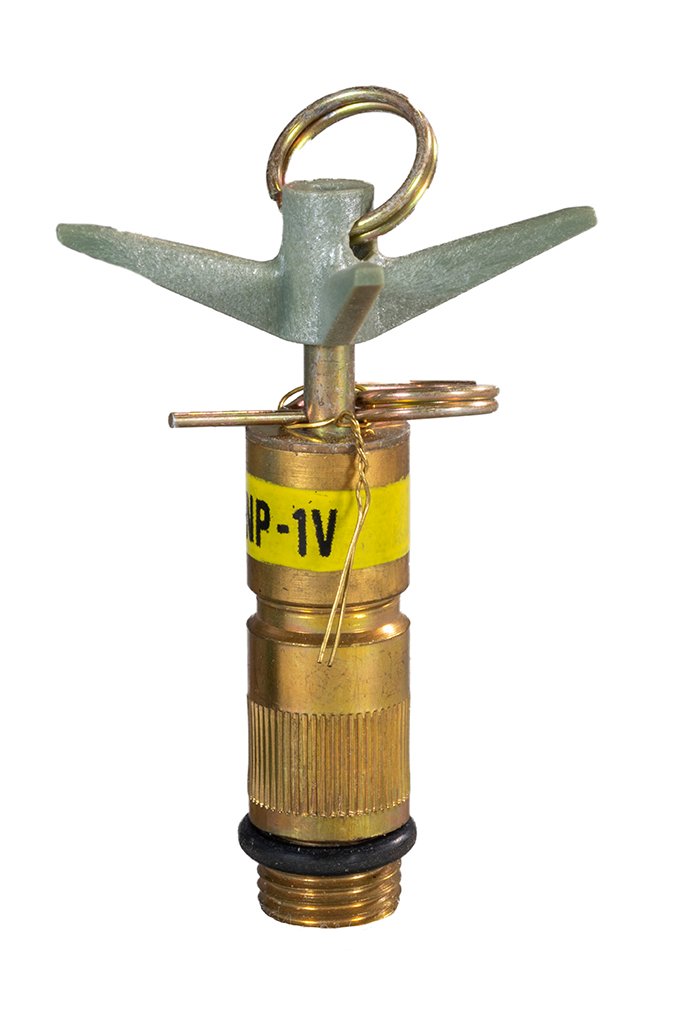
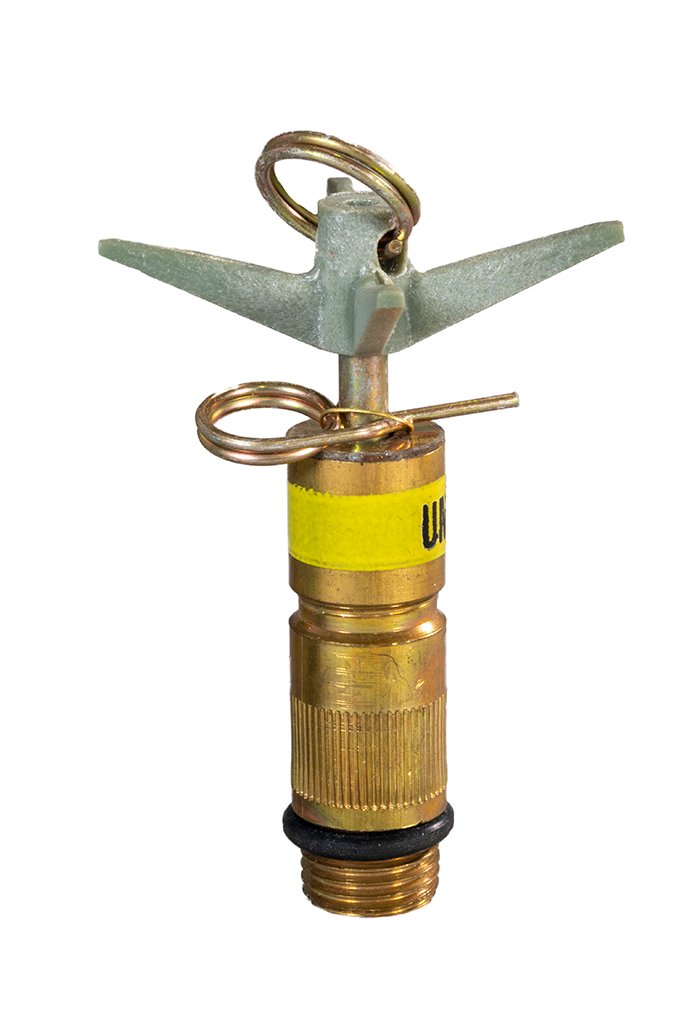
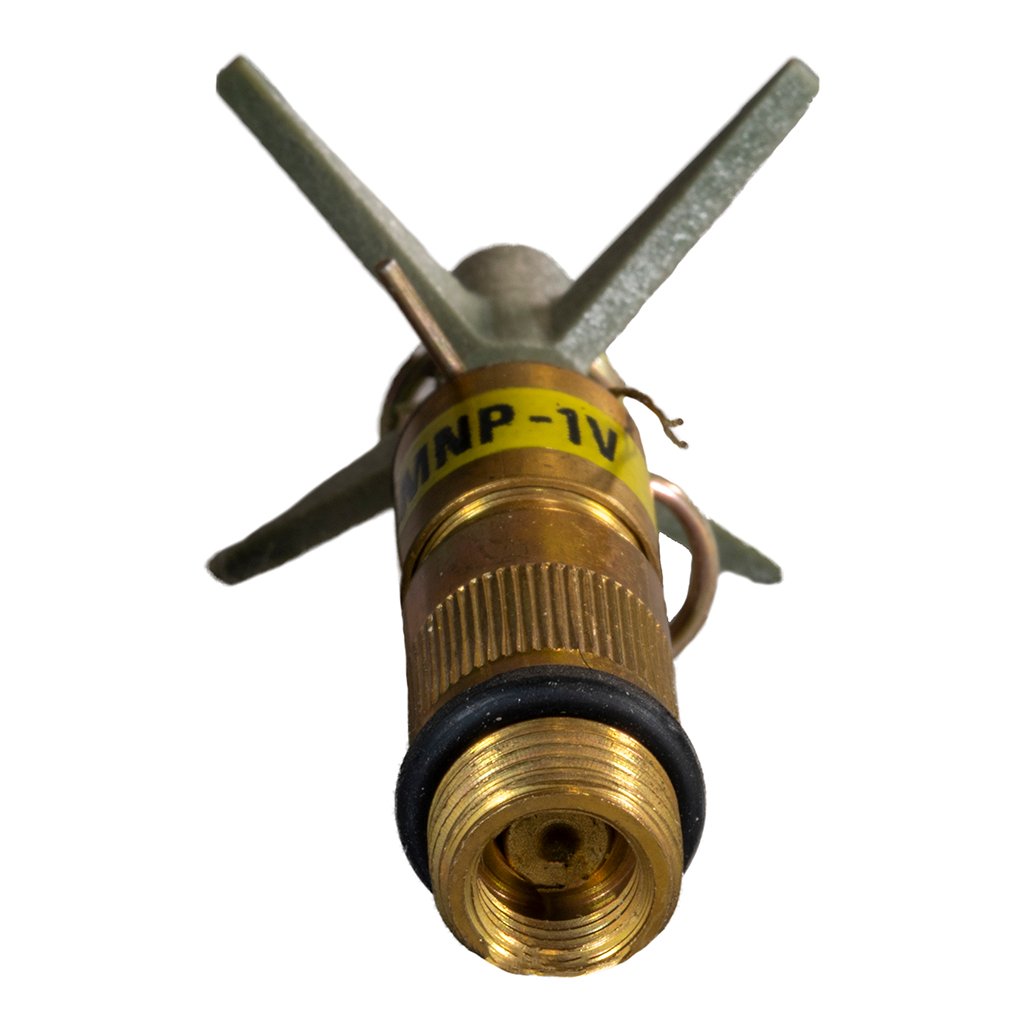
The UMNOP-1V (Univerzalna Mehanička Naprava Opterećenja Pritiska – Universal Mechanical Pressure Loading Device) is the training variant of the Yugoslav UMNOP-1 multi-function firing device. This sophisticated mechanical fuze represents one of the most versatile booby-trap and mine initiation systems developed during the Cold War era. Unlike conventional single-function fuzes, the UMNOP-1V can be configured to respond to pressure, pressure release, axial pull, or radial pull forces, making it extremely flexible for various tactical applications. The “V” designation indicates this is a training device, differing from the operational UMNOP-1 only in that it lacks the live blasting cap, making it safe for instruction and practice while retaining all mechanical functions.
Country/Bloc of Origin
- Country: Socialist Federal Republic of Yugoslavia (SFRY)
- Development Period: Cold War era, approximately 1960s-1980s
- Production Facilities: Yugoslav military ordnance factories
- International Variants: No known licensed production, though similar concepts influenced other nations
- Distribution: Primarily Yugoslav military and allied nations
- Successor States: After Yugoslav dissolution (1991-1992), inherited by:
- Serbia
- Croatia
- Bosnia and Herzegovina
- North Macedonia
- Slovenia
- Montenegro
- Current Status: Operational variants remain in stockpiles and active use in former Yugoslav regions
Ordnance Class
- Type: Multi-function mechanical firing device / Universal fuze
- Primary Classification: Booby-trap initiation device
- Secondary Classification: Anti-handling device for mines
- Tertiary Classification: Demolition charge initiator
- Function Categories:
- Pressure-activated (downward force)
- Pressure-release activated (removal of weight)
- Pull-activated (tripwire, axial)
- Pull-activated (tripwire, radial/perpendicular)
- Power Source: Purely mechanical (spring-loaded striker)
- Arming Mechanism: Manual removal of safety pins
- Compatibility: Designed to accept M10 × 1mm threaded detonators
Ordnance Family/Nomenclature
Official Designations
Primary Designation:
- UMNOP-1: Operational version (full function with blasting cap)
- UMNOP-1V: Training version (mechanically identical, no blasting cap)
Related Yugoslav Firing Devices
Simpler Predecessors:
- UMNP-1: Pressure/pull type (two-function capability)
- UMP-1: Simple pull fuze (single function)
- UMP-2: Pull fuze variant
- UMOP-1: Mechanical pressure/pull fuze
Other Related Devices:
- UDOP-1: Anti-handling device
- UDPP: Pull-type firing device
- UST-T: Thermal fuze
- UDOD-1: Anti-lift device
- UDVK: Vehicle killer firing device
Nomenclature Breakdown
U.M.N.O.P.
- U: Univerzalna (Universal)
- M: Mehanička (Mechanical)
- N: Naprava (Device)
- O: Opterećenja (Loading/Weight)
- P: Pritiska (Pressure)
Suffix “-V”: Vežbovni (Training) or Vežba (Exercise)
NATO Terminology
- Sometimes referenced in Western documentation as “Yugoslav Multi-Function Fuze”
- May appear in ordnance reports as “YU MF Fuze” or similar abbreviations
Thread Specification
- Detonator Thread: M10 × 1mm (metric fine thread)
- Compatible with: Standard Yugoslav military detonators (Mod 8 blasting cap in operational version)
Hazards
Training Version (UMNOP-1V) Hazards
PRIMARY SAFETY FEATURE: The UMNOP-1V training variant does NOT contain a blasting cap and CANNOT initiate explosives. However, it still presents hazards:
Mechanical Hazards:
- Spring-Loaded Striker:
- Under significant tension when armed
- Can cause impact injuries if released unexpectedly
- Finger pinch hazard during manipulation
- Potential for minor puncture wounds from striker
- Sharp Edges and Pinch Points:
- Metal body edges may be sharp, especially if corroded
- Moving parts create pinch hazards
- Pressure lever and pins can cause minor injuries
- Training Exercise Hazards:
- If mistaken for operational device, may cause panic
- Improper use in training scenarios could cause confusion
- Physical strain from repeated handling and manipulation
- Corrosion Products:
- Aged devices may have corrosion creating toxic dust
- Metal oxidation products potentially harmful if ingested or inhaled
Operational Version (UMNOP-1) Hazards
EXTREME HAZARD – HIGH-RISK ORDNANCE
Primary Explosive Hazards:
- Initiated Blast Hazard:
- Contains Mod 8 military blasting cap
- Sufficient to initiate mines, explosives, or demolition charges
- Direct blast from detonator can cause severe injuries within 1 meter
- Fragmentation from metal body creates additional hazard
- Sensitivity Characteristics:Pressure Activation:
- Activation force: Approximately 5-8 kg (11-18 lbs)
- Can be triggered by:
- Human footfall
- Animal weight (large animals)
- Falling debris
- Accidental contact
- Functions when weight is removed
- Extremely dangerous for clearance operations
- Can be hidden under objects, corpses, or equipment
- “Unintentional arming” when weight naturally removed
- Pull force: Approximately 2-4 kg (4.4-8.8 lbs)
- Connected to tripwires
- Multiple meter standoff distance possible
- Pull force: Approximately 2-4 kg (4.4-8.8 lbs)
- 90-degree perpendicular pull
- Allows complex tripwire geometries
- No Arming Delay:
- Device is “instant arm” once safety pins removed
- No time delay for safe withdrawal
- Immediate danger upon arming
- Anti-Handling Device Applications:
- Frequently used to booby-trap mines
- Standard anti-lift configuration for TMA-series anti-tank mines
- Can be placed under OZM bounding mines
- Used with TM-series demolition charges
- Creates compound explosive hazards
Environmental and Tactical Hazards
Camouflage and Concealment:
- Small size allows easy concealment
- Metal body detectable by metal detectors but often buried deeply
- Can be placed in vegetation, rubble, or structures
- Often combined with larger mines, making detection complex
Environmental Degradation:
- Corrosion may affect mechanical reliability but can increase sensitivity
- Frozen or iced mechanisms may function unpredictably
- Mud and debris infiltration may cause spontaneous function
- Battery-like corrosion in wet environments
Compound Hazards:
- Often found in clusters or minefields
- May be one of multiple booby traps in an area
- Tripwires may connect to multiple devices
- Clearance of one may trigger another
Special Hazards for EOD Personnel
Detection Challenges:
- Small metal signature
- Can be buried or concealed in structures
- Wire connections may be camouflaged or buried
- Visual indicators minimal if properly emplaced
Disarming Risks:
- Pressure-release mode specifically targets clearance operations
- Multiple activation modes mean checking one does not clear others
- Wire cutting may trigger device if radial or axial pull armed
- No standard “safe” approach vector
Dual-Use Configurations:
- Single device may be rigged for multiple activation modes simultaneously
- Unknown configuration until examined (if safe to examine)
UXO and Post-Conflict Hazards
Long-Term Persistence:
- All-metal construction ensures decades of viability
- Minimal biodegradation of components
- May remain functional 30+ years post-emplacement
- Former Yugoslav conflicts (1990s) left significant contamination
Civilian Impact:
- Found in agricultural areas
- Present in destroyed buildings and infrastructure
- Often mixed with other UXO
- Particular risk in areas with scavenging or reconstruction
Specific Risk Scenarios
High-Risk Situations:
- Mine clearance operations: Pressure-release function specifically targets deminers
- Battlefield recovery: Devices placed under equipment, weapons, bodies
- Building clearance: Used in urban booby traps
- Infrastructure demolition: Connected to demolition charges for denial operations
Kill Radius:
- Detonator alone: 1 meter (severe injury/death)
- Connected to mine: Depends on mine type (up to 50+ meters for directional mines)
- Connected to demolition charge: Highly variable based on charge size
Key Identification Features
Physical Dimensions
Overall Measurements:
- Length: Approximately 90-100mm (3.5-3.9 inches)
- Width: Approximately 70-75mm (2.8-3.0 inches)
- Height (with legs deployed): Approximately 35-40mm (1.4-1.6 inches)
- Weight: Approximately 200-250 grams (7.1-8.8 oz)
- Detonator Well Depth: ~25-30mm
Structural Components
1. Fuze Body:
- All-metal construction (steel or steel alloy)
- Roughly rectangular/trapezoidal shape when viewed from side
- Cylindrical detonator well at bottom
- Threaded receptacle: M10 × 1mm for detonator
- Multiple mounting points and attachment holes
- Fastener slots on sides (2 locations)
2. Pressure/Pressure Release Lever:
- Metal lever on top surface
- Pivot mechanism visible
- Spring-loaded operation
- Can be configured for pressure or pressure-release function
- Typically horizontal orientation when not activated
3. Safety Pins (2):
Top Safety/Pull Pin (Axial):
- Extends vertically through fuze body
- Prevents striker from releasing
- Primary safety device
- Must be removed to arm device
- Often has loop or ring for extraction
Side Safety/Pull Pin (Radial):
- Positioned at 90 degrees to axial pin
- Prevents pressure/pressure-release activation
- Secondary safety device
- Can be connected to tripwire for radial pull function
- Located on side of fuze body
4. Striker Mechanism (Internal):
- Spring-loaded firing pin
- Held by safety pins when safe
- Multiple paths to release depending on configuration
- Designed to impact detonator with sufficient force for initiation
5. Attachment Legs (2):
- Fold-out metal legs
- Fit into slots at bottom of fuze body
- Used for mounting to mines or charges
- Can be adjusted for different mounting configurations
- Typically fold flat against body for storage/transport
6. Detonator Retainer:
- Threaded metal component securing detonator
- Visible at base of device
- May have knurling for hand-tightening
- O-ring seal in operational devices
7. Locking Wire:
- Present in shipping configuration
- Prevents accidental function during transport
- Typically copper or steel wire
- Threaded through safety pins
- Bright color (often) for visibility
Training Version (UMNOP-1V) Distinguishing Features
CRITICAL IDENTIFICATION – Yellow Stripe:
- Most Important Feature: Yellow painted stripe or band around fuze body
- Purpose: Immediate visual indication of training device
- Location: Circumferential band around body (typically mid-section)
- Width: Approximately 10-20mm wide
- Color: Bright yellow (may fade with age to cream/tan)
Other Training Indicators:
- Markings: “V” or “VEŽBA” stamped on body
- May have training documentation attached
- Shipping/storage containers marked for training use
- No blasting cap present (empty detonator well or dummy insert)
Color Schemes and Markings
Body Color (Operational and Training):
- Bare metal (steel gray)
- Painted olive drab green
- Painted dark gray or black
- Often unpainted with oxidation/rust
Markings:
- Manufacturer codes (Yugoslav arsenals)
- Date codes (often two-digit year)
- Serial numbers
- Model designation: “UMNOP-1” or “UMNOP-1V”
- Cyrillic or Latin script: “УМНОП-1” (Cyrillic)
- Thread specification: “M10×1”
Training Version Specific Markings:
- Yellow stripe (most prominent)
- “V” suffix prominently displayed
- “VEŽBOVNI” (Training) stamped or stenciled
- May have “INERT” markings in some cases
Distinguishing from Similar Devices
vs. UMNP-1:
- UMNOP-1 has more complex lever mechanism
- UMNOP-1 has four function modes vs. UMNP-1’s two
- UMNOP-1 typically larger body
- Different pin configurations
vs. UMP-1/UMP-2:
- Simpler devices lack pressure lever
- Smaller, simpler construction
- Pull-only function
- No pressure-release capability
vs. UMOP-1:
- UMOP-1 lacks radial pull capability
- Different lever design
- Typically smaller
Condition Indicators
New/Good Condition:
- Bright metal or intact paint
- Yellow stripe clearly visible on training version
- Safety pins move smoothly
- Legs deploy and retract cleanly
- No corrosion
- Markings legible
Aged/Deteriorated Condition:
- Surface rust and corrosion
- Yellow stripe faded or partially worn
- Safety pins may be corroded in place or missing
- Legs may be frozen or broken
- Detonator threads corroded
- Markings obscured by corrosion
Field-Used Indicators:
- Dirt and debris accumulation
- Camouflage paint or natural camouflage residue
- Wire attachments or remnants
- Mounting residue from charges/mines
- Impact damage or deformation
Size Comparison
- Similar in size to a cigarette pack (slightly smaller)
- Comparable to a large pocket watch in profile
- Fits easily in the palm of a hand
- Significantly smaller than most anti-tank mines
Fuzing Mechanisms
Overview of Multi-Function Capability
The UMNOP-1/UMNOP-1V is unique in that a single device can be configured for four different activation modes. The operator selects the desired mode(s) during emplacement by the sequence and method of safety pin removal and tripwire attachment.
Activation Modes
Mode 1: Pressure Activation
Function: Device initiates when downward pressure is applied to the pressure lever.
Mechanism:
- Side safety pin (radial) is removed first
- Top safety pin (axial) remains in place temporarily for safety during emplacement
- Device positioned under target surface (mine, charge, or concealed location)
- Top safety pin removed last, arming device
- When pressure applied to lever (5-8 kg force):
- Lever pivots downward
- Pivot movement releases striker
- Spring drives striker into detonator
- Detonator initiates
Typical Applications:
- Pressure plate for improvised mines
- Booby trap under floor boards
- Concealed under objects intended to be moved
- Anti-vehicle applications (with heavier activation force modifications)
Advantages:
- Reliable activation under known weight
- Predictable function
- Can be adjusted for sensitivity
Limitations:
- Requires direct pressure on device
- May be activated unintentionally by animals or debris
Mode 2: Pressure Release Activation
Function: Device initiates when weight is removed from the pressure lever.
Mechanism:
- Side safety pin remains installed initially
- Weight (sandbag, object, etc.) placed on pressure lever
- Top safety pin removed while weight depresses lever
- Side safety pin then removed carefully
- Device is now armed and held safe only by weight on lever
- When weight is removed:
- Spring forces lever upward
- Lever movement releases striker
- Striker impacts detonator
- Detonator initiates
Typical Applications:
- Anti-clearance booby trap: The primary intended use
- Placed under mines, making demining attempts lethal
- Hidden under bodies, equipment, or supplies
- Concealed under OZM bounding mines or TMA anti-tank mines
- Placed beneath attractive items (weapons, valuables)
Advantages:
- Specifically targets clearance operations
- Difficult to detect before disturbance
- Highly effective psychological deterrent
Limitations:
- Weight must remain constant or device may function prematurely
- Environmental factors (rain, snow accumulation) may trigger
- Natural settling or degradation can cause function
Mode 3: Axial Pull Activation
Function: Device initiates when pulled in line with the pull pin axis (straight pull).
Mechanism:
- Tripwire attached to top safety/pull pin loop
- Wire routed away from device in line with pin axis
- Side safety pin removed
- Shipping safety wire removed
- Device is armed
- When tripwire pulled (2-4 kg force):
- Top pin extracted from fuze body
- Striker released
- Spring drives striker into detonator
- Detonator initiates
Typical Applications:
- Standard tripwire booby trap
- Path denial
- Perimeter defense
- Doorway/entryway booby traps
- Connected to demolition charges
Advantages:
- Long standoff distance possible (wire can be 10+ meters)
- Direction of approach predictable
- Multiple devices can share single wire
Limitations:
- Wire must be tensioned properly
- Visible if not properly concealed
- Animals or weather may trigger
Mode 4: Radial Pull Activation
Function: Device initiates when pulled perpendicular (90 degrees) to the axial pull pin.
Mechanism:
- Tripwire attached to side safety/pull pin
- Wire routed perpendicular to device
- Top safety pin removed
- Shipping safety wire removed
- Device is armed
- When tripwire pulled perpendicular (2-4 kg force):
- Side pin extracted from fuze body
- Pressure lever released (if configured) OR striker released
- Striker impacts detonator
- Detonator initiates
Typical Applications:
- Complex tripwire networks with multiple vectors
- Unusual approach angles
- Combined with axial wires for multiple activation points
- Urban environment booby traps with limited space
Advantages:
- Allows flexible wire routing
- Can cover areas axial wires cannot
- Perpendicular pull sometimes harder to detect
Limitations:
- Pull angle critical (must be truly perpendicular)
- More complex to emplace correctly
- May be less familiar to some users
Combined Mode Configurations
Multiple Activation Modes Simultaneously:
The UMNOP-1 can be configured so that ANY of multiple modes will initiate the device. For example:
- Pressure OR axial pull
- Pressure release OR radial pull
- All four modes active simultaneously
High-Risk Configuration: Operational devices may be set for multiple modes without clear external indication, meaning:
- Approaching to check for pressure may trigger pull wire
- Cutting visible wire may not make device safe if pressure/pressure-release also armed
- No “safe” approach vector may exist
Arming Sequence Safety
Critical Safety Protocol:
- Never remove both safety pins while device accessible to unintended activation
- Always remove pins in correct sequence for intended mode
- Always ensure device secured and aimed properly before final arming
- Always use shipping safety wire until final emplacement
- Never “test” armed device
Training Emphasis (UMNOP-1V): Training versions allow practice of all sequences without explosive hazard:
- Trainees can learn proper arming procedures
- Instructors can verify correct mode configuration
- Mistakes have no lethal consequence
- Mechanical function verifies understanding
Mechanical Reliability
Positive Features:
- Simple, robust mechanical design
- No batteries or electronics to fail
- Functions in extreme temperatures (-30°C to +50°C)
- Water-resistant to 25cm depth
- Long-term reliability (decades if stored properly)
Potential Failures:
- Corrosion may seize striker (failure to fire)
- Spring fatigue over extreme time (reduced reliability)
- Debris intrusion may jam mechanism
- Ice formation may prevent function
- Excessive force during emplacement may damage mechanism
Detonator Coupling
Threading and Installation:
- M10 × 1mm fine metric thread
- Hand-tight typically sufficient
- Over-tightening may damage threads or detonator
- O-ring seal prevents moisture ingress
- Thread lubricant sometimes applied for corrosion prevention
Compatible Detonators:
- Yugoslav Mod 8 blasting cap (operational version)
- Any military electric detonator with M10×1 thread
- Commercial detonators with adapter (improper but possible)
Training Version (UMNOP-1V):
- No detonator well contents OR
- Dummy insert simulating weight and dimension OR
- Empty, plugged well
Disarming Procedures (Operational Devices – EOD PERSONNEL ONLY)
CRITICAL WARNING: The following is for informational purposes only. Only trained EOD personnel should approach operational UMNOP-1 devices.
General Approach:
- Identify all possible activation modes from visual inspection
- Trace all wires to termination or safe distance
- Never approach from directly above if pressure/pressure-release suspected
- Use hook and line from cover when possible
If Pull Mode Suspected:
- DO NOT cut wires – cutting may be the activation mechanism
- Follow wires to determine if they are tripwire (tension) or false wires
- If possible, secure wires before approaching device
If Pressure/Pressure-Release Suspected:
- DO NOT attempt to remove weight or disturb device
- Standard procedure: Destroy in place with small demolition charge
- Attempting disarm risks immediate initiation
Training Value: UMNOP-1V allows realistic training in:
- Recognition of configuration from external indicators
- Safe approach techniques
- Wire tracing procedures
- Proper use of tools and techniques
- All without live explosive hazard
History of Development and Use
Origins and Cold War Context (1950s-1960s)
The development of the UMNOP-1 firing device emerged from Yugoslavia’s unique geopolitical position during the Cold War era and the evolution of mine warfare doctrine.
Strategic Background:
Yugoslav Independence:
- Tito’s break with Stalin (1948) left Yugoslavia outside the Soviet sphere
- Non-Aligned Movement positioning (from 1961) meant independent defense development
- Limited access to Soviet equipment but also freedom to innovate
- Necessity to develop indigenous ordnance capabilities
Territorial Defense Doctrine:
- Yugoslav “Total National Defense” concept (Opštenarodna odbrana)
- Emphasis on partisan warfare and guerrilla tactics
- Large territorial defense forces requiring simple, effective weapons
- Need for denial operations and area control with limited resources
Technical Evolution:
- 1950s: Yugoslavia began developing indigenous firing devices
- Simple pull fuzes (UMP series) came first
- UMNP-1 (two-function) developed as intermediate step
- UMNOP-1 represented culmination of multi-function approach
- Likely developed in 1960s, though exact dates classified/incomplete
Development Philosophy
Design Requirements:
- Multi-functionality: Single device for multiple tactical scenarios (reduces logistics)
- Reliability: Mechanical simplicity for harsh field conditions
- Ease of Training: Simple enough for conscript forces and territorial defense units
- Versatility: Compatible with various mines and charges
- Durability: Function in Yugoslav climate extremes
- Cost-Effectiveness: Mass production for large military and territorial defense forces
Engineering Approach:
- All-metal construction for reliability
- Mechanical-only operation (no batteries or electronics)
- Modular design allowing repair and modification
- Standardized thread (M10×1) for compatibility
- Ambidextrous operation where possible
Training Version Development: The UMNOP-1V training variant was developed to:
- Reduce training accidents with live ordnance
- Allow realistic familiarization without explosive hazard
- Permit field exercises with full tactical realism
- Enable verification of proper emplacement techniques
- Reduce costs of training ammunition consumption
Operational Deployment (1960s-1991)
Yugoslav National Army (JNA) Service:
Standard Issue:
- Supplied to engineer units throughout JNA
- Standard booby trap device for special operations
- Integrated into mine warfare doctrine
- Part of demolition teams’ standard kit
- Territorial Defense Forces received quantities for defensive operations
Training Programs:
- Engineer schools taught all four activation modes
- Territorial Defense training emphasized defensive emplacement
- Special operations forces practiced sophisticated configurations
- Combined arms exercises included realistic scenarios
- UMNOP-1V used extensively in all training contexts
Tactical Employment:
- Border defense minefields (anti-lift configuration)
- Denial operations in key terrain
- Special operations missions
- Defensive barriers in mountain warfare
- Urban combat applications
Production and Distribution:
- Manufactured in Yugoslav arsenals (locations classified)
- Likely tens of thousands produced
- Exported to aligned nations and allies
- Training versions produced in significant numbers
- Stockpiles maintained through 1980s
Yugoslav Wars (1991-2001)
The breakup of Yugoslavia and subsequent conflicts saw extensive combat use of the UMNOP-1.
Croatian War of Independence (1991-1995):
Employment by Multiple Parties:
- JNA forces initially controlled most stockpiles
- Croatian forces captured quantities as bases seized
- Serbian forces (RSK) used extensively in defensive positions
- Widespread use in Krajina region
Tactical Applications:
- Defensive minefields around Serb-held territories
- Booby-trapping of abandoned positions
- Urban booby traps in contested cities
- Anti-clearance devices during front-line mining
- Protection of key infrastructure
Notable Incidents:
- UMNOP-1 devices used in anti-lift configurations caused numerous Croatian Army casualties during offensive operations
- Clearance operations slowed dramatically by pressure-release configurations
- Urban booby traps in Vukovar and other contested cities
Bosnian War (1992-1995):
Widespread Proliferation:
- All three major factions (Bosnian Army, HVO, VRS) possessed UMNOP-1 stocks
- Inherited from JNA stockpiles or captured
- Some production possibly continued in Serbian areas
- Black market availability
Extensive Mining:
- Bosnia became one of most heavily mined countries globally
- UMNOP-1 used extensively in minefield emplacement
- Mixed with various mine types (PMN, TMA, PROM, etc.)
- Anti-handling configurations standard in military minefields
Urban Warfare Applications:
- Sarajevo siege: Used in booby traps by multiple parties
- Mostar, Goražde, Srebrenica: Defensive mining
- Abandoned positions routinely booby-trapped with UMNOP-1 devices
- Civilian infrastructure (water supplies, power stations) sometimes booby-trapped
Kosovo War (1998-1999):
Serbian/Yugoslav Use:
- VJ (Yugoslav Army) and MUP (police) forces used UMNOP-1
- Border defense against KLA infiltration
- Protection of key routes and positions
- Denial operations during NATO bombing campaign
Albanian Resistance:
- KLA acquired limited quantities through various means
- Primarily anti-vehicle applications
- Defensive perimeters around controlled villages
Post-Conflict Legacy (1995-Present)
Humanitarian Impact:
Mine Contamination:
- Estimated hundreds of thousands to millions of mines laid in former Yugoslavia
- Significant percentage employed UMNOP-1 or similar anti-handling devices
- Created major humanitarian crisis in post-war period
- Extensive agricultural and residential areas contaminated
Clearance Challenges:
- UMNOP-1’s multi-function capability complicated clearance
- Pressure-release configuration specifically designed to target deminers
- Traditional clearance methods dangerous
- Forced adoption of advanced techniques (mechanical clearance, ground-penetrating radar)
- Clearance operations continue decades later
Casualties:
- Thousands of post-conflict casualties from mines with UMNOP-1 fuzes
- Both military deminers and civilian victims
- Children particularly vulnerable (curiosity about devices)
- Agricultural workers at high risk in rural areas
- Reconstruction workers in urban environments
International Response:
Mine Action Programs:
- UNMAS (UN Mine Action Service) operations throughout region
- International demining NGOs (MAG, HALO Trust, NPA, etc.)
- Training local national demining organizations
- Specific training developed for UMNOP-1 recognition and approach
Ottawa Treaty and Regional Impact:
- Mine Ban Treaty (1997) ratified by successor states
- Remaining stockpiles supposed to be destroyed
- Significant quantities remain in military stockpiles (operational necessity cited)
- Training versions (UMNOP-1V) sometimes exempt as non-lethal
Documentation and Education:
- UMNOP-1 featured in major mine identification databases
- Posters and training materials distributed widely
- CIA and NATO intelligence documents from 1990s detailed device
- Ongoing education efforts in affected communities
Current Status (2020s)
Operational Use:
- Remains in service in several Balkan nations
- Stockpiles exist in Serbia, Bosnia-Herzegovina, others
- Considered legacy equipment but still functional
- Training versions still used for EOD training
Security Concerns:
- Proliferation to non-state actors during Yugoslav wars
- Black market availability in Balkans and beyond
- Potential for illicit use in other conflicts
- Terrorism concerns due to versatility
Clearance Operations:
- Major clearance programs continue in Bosnia-Herzegovina and Croatia
- Estimated decades of work remaining in some areas
- UMNOP-1 encountered regularly in clearance operations
- Advanced techniques and robotics increasingly employed
Lessons Learned:
Military Doctrine:
- Demonstrated effectiveness of multi-function booby trap devices
- Validated concept of anti-handling devices in modern warfare
- Showed importance of training in all activation modes
- Highlighted need for sophisticated clearance capabilities
Humanitarian Law:
- UMNOP-1’s effectiveness contributed to anti-personnel mine ban movement
- Demonstrated indiscriminate nature of advanced mines
- Long-term civilian impact illustrated dangers of sophisticated ordnance
- Influenced international law on mines and booby traps
Technological Development:
- Influenced development of similar devices by other nations
- Contributed to electronic fuzing evolution
- Validated mechanical reliability advantages in some contexts
- Demonstrated enduring military utility of simple designs
Technical Specifications
Dimensional Data
- Overall Length: 90-100mm (3.5-3.9 in)
- Overall Width: 70-75mm (2.8-3.0 in)
- Overall Height (body only): 30-35mm (1.2-1.4 in)
- Height with Legs Deployed: 35-40mm (1.4-1.6 in)
- Detonator Well Diameter: 10mm (M10 thread)
- Detonator Well Depth: ~25-30mm (1.0-1.2 in)
Weight Specifications
- Total Weight (UMNOP-1 with detonator): ~250 grams (8.8 oz)
- Total Weight (UMNOP-1V training version): ~200-220 grams (7.1-7.8 oz)
- Body Only (no detonator): ~180-200 grams (6.3-7.1 oz)
Activation Force Requirements
Pressure Mode:
- Activation Force: 5-8 kg (11-18 lbs)
- Adjustability: Limited (spring tension fixed)
- Consistency: ±1 kg variation (manufacturing tolerances)
Pull Modes (Axial and Radial):
- Activation Force: 2-4 kg (4.4-8.8 lbs)
- Consistency: ±0.5 kg variation
- Wire Breaking Strength: Should exceed 5 kg (safety margin)
Pressure Release:
- Holding Weight: Minimum 5 kg for safe emplacement
- Release Sensitivity: Instant upon removal of weight
- Environmental Factors: May be affected by ice, debris accumulation
Operational Characteristics
Environmental Tolerances:
- Operating Temperature: -30°C to +50°C (-22°F to 122°F)
- Storage Temperature: -40°C to +60°C (-40°F to 140°F)
- Humidity: All conditions (water-resistant design)
- Water Resistance: Submerged to 25cm (9.8 in) depth
- Altitude: All altitudes (mechanical operation unaffected)
Reliability Data:
- Function Rate: >95% when properly maintained and emplaced
- False Activation Rate: <1% (primarily environmental factors)
- Shelf Life: Indefinite (mechanical components)
- Operational Life: Decades if protected from extreme corrosion
- Failure Modes: Primarily corrosion-related striker seizure
Timing Specifications
- Arming Delay: NONE – instant arm upon safety pin removal
- Function Delay: Instantaneous upon activation
- Striker Travel Time: <5 milliseconds
- Total Function Time: <10 milliseconds from activation to detonator initiation
Mechanical Specifications
Striker Mechanism:
- Spring Type: Compression spring (steel)
- Spring Force: Approximately 20-30 N stored energy
- Striker Material: Hardened steel
- Striker Tip: Pointed for reliable detonator initiation
- Safety Engagement: Dual-pin interference lock
Thread Specifications:
- Detonator Thread: M10 × 1mm metric fine thread
- Thread Depth: ~15-20mm engagement
- Thread Material: Steel (may be coated)
- Torque: Hand-tight (approximately 2-3 Nm)
Lever Mechanism:
- Material: Steel
- Pivot Type: Pin or shaft bearing
- Range of Motion: Approximately 10-15° (pressure to release)
- Spring Return: Yes (pressure-release mode)
Safety Pins:
- Material: Steel (may be zinc-plated)
- Diameter: Approximately 3-4mm
- Length: Variable (30-50mm depending on pin type)
- Extraction Force: 1-2 kg (with ring/loop)
Materials of Construction
Primary Materials:
- Body: Steel (mild or medium carbon steel)
- Lever: Steel
- Pins: Steel (spring steel or hardened steel)
- Springs: High-carbon spring steel
- Striker: Hardened steel
- Legs: Steel
- Hardware: Steel (zinc-plated or painted for corrosion resistance)
- Seals: Rubber O-ring (if present)
Protective Coatings:
- Paint (olive drab, gray, or black)
- Phosphate coating on some components
- Zinc plating on fasteners
- Yellow paint band (training version only)
Compatibility
Detonator Types (Operational UMNOP-1):
- Yugoslav Mod 8 military blasting cap (standard)
- Other M10×1 threaded military detonators
- Compatible with electric detonators (requires external power)
- Non-electric detonators (standard use)
Ordnance Compatibility:
- Anti-Tank Mines: TMA-1, TMA-2, TMA-3, TMA-4, TMA-5 (anti-lift well)
- Anti-Personnel Mines: PROM-1, MRUD (directional), PMN-series (anti-lift)
- Demolition Charges: TM-100, TM-200, TM-500, improvised charges
- Other Explosives: Compatible with any explosive accepting standard military detonator
Mounting Options:
- Direct threading into mine fuze well
- Attachment legs for surface mounting
- Wire tie-downs for improvised mounting
- Adhesive mounting (field expedient)
Electrical Characteristics (if used with electric detonator)
- No Integral Electrical Components: Purely mechanical device
- Compatible with External Electric Initiation: Yes, through electric detonator
- Static Sensitivity: Not applicable (mechanical firing)
Packaging and Storage
Individual Packaging:
- Wooden box or metal container
- Protective wrapping
- Locking wire installed
- Safety pins secured
- Desiccant pack for moisture control
Storage Conditions:
- Cool, dry environment
- Protected from corrosion
- Regular inspection cycle
- Separated from explosives (training versions with operational)
- Clearly marked “TRAINING” (UMNOP-1V)
Shelf Life:
- Mechanical Components: Indefinite if properly stored
- Recommended Inspection: Every 5 years
- Training Version: Indefinite (no explosive components to degrade)
Comparison with Similar Devices
vs. Soviet ML-7 (Pressure Release):
- UMNOP-1: Multi-function (4 modes) vs. ML-7: Single function (pressure release)
- UMNOP-1: Larger, more versatile vs. ML-7: Smaller, specialized
- UMNOP-1: Higher activation force vs. ML-7: More sensitive
vs. US M1 Pull-Release Fuze:
- UMNOP-1: 4 activation modes vs. M1: Pull-release only
- UMNOP-1: All metal vs. M1: Plastic components
- Similar vintage and doctrine
Frequently Asked Questions
Q: Why was the UMNOP-1 designed with four different activation modes instead of using separate devices for each function?
A: The multi-function design served several strategic purposes. First, logistics simplification: supplying and training troops on one device is more efficient than managing four separate fuze types. Second, tactical flexibility: a single device could be adapted to unpredictable tactical situations without requiring resupply. Third, cost-effectiveness: manufacturing one complex device is more economical than producing four simpler ones. Fourth, training efficiency: soldiers familiar with one device could employ all four modes rather than learning separate systems. This approach fit Yugoslavia’s “Total National Defense” doctrine, where territorial defense forces needed effective, adaptable equipment that minimized logistical burden. The modular design also meant that captured examples could be employed by opponents who understood the basic mechanism, which was acceptable given the defensive nature of the system.
Q: What is the difference between the UMNOP-1 and UMNOP-1V, and why have a training version?
A: The UMNOP-1V (training version) is mechanically identical to the operational UMNOP-1 but contains no blasting cap, making it safe for training exercises. The only external difference is a prominent yellow stripe painted around the body. The training version was developed for several critical reasons: (1) Safety: allowing soldiers to learn all four activation modes without risk of accidental casualties during training, (2) Cost: training ammunition is expensive and consumable, while UMNOP-1V units can be reused indefinitely, (3) Realism: trainees can practice actual emplacement, arming, and disarming procedures with realistic tactile feedback, (4) Verification: instructors can verify proper configuration and emplacement techniques without explosive hazard. The training version was extensively used in Yugoslav engineer schools and territorial defense training, allowing conscripts to gain proficiency before handling live ordnance. It remains valuable for EOD training worldwide, as it allows safe familiarization with the device’s complex mechanical system.
Q: What made the pressure-release mode particularly dangerous for mine clearance operations, and how did it change demining doctrine?
A: The pressure-release function specifically targets the standard mine clearance procedure of carefully lifting suspicious objects. When a deminer encounters a mine and begins to carefully lift it to examine or remove it, the UMNOP-1 underneath initiates as the weight is removed. This creates a near-inescapable trap: the mine appears to be the threat, but the actual hazard is beneath it. The device was commonly placed under anti-tank mines (which themselves are dangerous to lift), OZM bounding mines, or attractive items like weapons. This forced a fundamental change in clearance doctrine in the Balkans and elsewhere: (1) Visual inspection from distance became critical before any approach, (2) Mechanical clearance (bulldozers, mine-resistant vehicles) was preferred over manual clearance when possible, (3) Ground-penetrating radar and advanced sensors became essential to detect multiple layers of devices, (4) Standard procedure became destroy-in-place with small explosive charges rather than attempting disarmament, (5) Training emphasized that no mine should be considered “cleared” until all sides and beneath it are examined. The psychological impact on deminers was significant, as every lift became potentially fatal.
Q: How can you tell which activation mode(s) an operational UMNOP-1 is configured for, and what’s the safest approach if you encounter one?
A: Determining configuration from external observation is extremely difficult and potentially impossible without very close examination (which is itself dangerous). Some indicators: (1) Presence/absence of safety pins – if top pin is absent, axial pull or pressure modes are possible; if side pin is absent, radial pull or pressure modes are possible, (2) Wire attachments – if tripwire is visible, pull mode is likely, but wires may be false decoys or camouflaged, (3) Position – if the device is under an object, pressure-release is possible; if mounted to a tripwire, pull mode is likely. However, devices can be configured for MULTIPLE modes simultaneously, so visible evidence of one mode does not eliminate others. If you encounter an operational UMNOP-1, the only safe approach is: (1) Withdraw immediately to a safe distance (minimum 100 meters), (2) Mark the location conspicuously from a distance, (3) Evacuate the area and deny access, (4) Report to military or law enforcement immediately, (5) Never attempt to disarm, move, or investigate further. Only trained and equipped EOD personnel should approach these devices. The standard EOD procedure is typically destroy-in-place with a small explosive charge placed by robot or projected from a safe distance.
Q: Are UMNOP-1 devices still a threat in the Balkans today, decades after the conflicts ended?
A: Yes, absolutely. The UMNOP-1 and similar devices remain a significant threat in former Yugoslav territories, particularly Bosnia-Herzegovina and Croatia. Several factors contribute to the persistent danger: (1) Massive scale of mine-laying during the 1990s conflicts left hundreds of thousands of devices emplaced, (2) All-metal construction means UMNOP-1 devices remain functional for decades, with minimal degradation, (3) Corrosion may actually increase sensitivity or cause unpredictable behavior, (4) Many minefields were poorly documented or undocumented during chaotic wartime conditions, (5) Devices were emplaced in agricultural land, forests, residential areas, and infrastructure, (6) Population displacement meant local knowledge of mined areas was lost. Current estimates suggest several more decades of clearance operations will be required. Casualties continue to occur, including both professional deminers and civilian victims (farmers, children, construction workers). Major international mine action programs continue active clearance, but the scale of contamination means complete clearance will not be achieved for generations. Anyone traveling to former conflict zones should seek local advice, stay on marked roads and paths, and never touch suspicious objects.
Q: How does the UMNOP-1’s mechanical-only design compare to modern electronic fuzes, and does it have advantages?
A: The UMNOP-1’s purely mechanical design has both advantages and disadvantages compared to modern electronic alternatives. Advantages: (1) Indefinite shelf life – no batteries to deplete or electronics to degrade, (2) Extreme reliability – functions in harsh environments where electronics might fail, (3) Temperature tolerance – works from -30°C to +50°C without performance loss, (4) Water resistance – simple O-ring seal adequate for shallow water exposure, (5) Simplicity – easy to maintain, repair, and understand, reducing training requirements, (6) No electromagnetic signature – cannot be detected by electronic countermeasures, (7) Cost-effectiveness – cheaper to manufacture than sophisticated electronics. Disadvantages: (1) No remote control capability – cannot be armed/disarmed remotely, (2) No self-destruct mechanism – remains hazard indefinitely, (3) No programmability – cannot be configured for specific timing or counting sequences, (4) No anti-discrimination – cannot distinguish between intended targets and unintended victims (livestock, civilians), (5) Fixed sensitivity – cannot adjust activation force after emplacement. For modern military use, electronic fuzes generally offer superior capabilities (remote control, self-destruct, anti-discrimination features). However, the UMNOP-1’s mechanical simplicity remains valuable in certain contexts: territorial defense, guerrilla warfare, resource-limited forces, and situations where long-term reliability without maintenance is critical.
Q: What specific training should military or humanitarian personnel receive to work safely around UMNOP-1 devices?
A: Comprehensive training for UMNOP-1 recognition and safe procedures should include: (1) Visual Recognition Training: Detailed study of physical appearance, dimensions, color schemes, and markings; comparison with similar devices (UMNP-1, UMOP-1, etc.); examination of training versions (UMNOP-1V) to learn mechanical function without hazard. (2) Activation Mode Training: Understanding all four activation modes; learning to identify configuration clues from external observation; practicing recognition of pressure, pressure-release, axial pull, and radial pull configurations using training devices. (3) Tactical Employment Understanding: Studying typical emplacement patterns; learning where devices are likely to be found; understanding military doctrine for device use; recognizing compound threats (multiple devices, combined with mines). (4) Wire Tracing Techniques: Safe methods for following tripwires; identifying false wires vs. active tripwires; understanding wire routing patterns; safe marking and documentation of wire runs. (5) Approach Procedures: Doctrine for safe approach vectors (never from above if pressure/pressure-release suspected); use of hook-and-line techniques; working from cover; team communication protocols. (6) Tools and Equipment: Proper use of prodders, detectors, robots, and remote systems; understanding capabilities and limitations of detection equipment; maintenance of personal protective equipment. (7) Destroy-in-Place Procedures: Safe placement of demolition charges; calculation of safe distances; effects prediction; proper documentation of destroyed items. (8) Incident Reporting: Proper documentation of finds; standardized reporting formats; coordination with other organizations; chain-of-custody for samples. This training should be hands-on, conducted by experienced EOD personnel, and regularly refreshed.
Q: How did the UMNOP-1 influence international law regarding anti-personnel mines and booby traps?
A: The UMNOP-1 and similar sophisticated anti-handling devices played a significant role in strengthening international humanitarian law, particularly the Mine Ban Treaty (Ottawa Treaty, 1997) and Protocol II of the Convention on Certain Conventional Weapons. The device’s effectiveness demonstrated several concerning realities: (1) Modern mines with anti-handling devices are effectively impossible to clear safely without advanced equipment, creating long-term contamination, (2) The pressure-release function specifically targets humanitarian clearance workers, blurring the line between military and humanitarian targets, (3) Anti-handling devices make accidental civilian casualties nearly inevitable, as even trained personnel face extreme danger, (4) The long-term socioeconomic impact of sophisticated mines far exceeds military utility, creating permanent barriers to development. The extensive humanitarian crisis in the Balkans following the Yugoslav wars provided concrete evidence of these problems. International mine action organizations documented the challenges posed by UMNOP-1 devices, and their reports influenced diplomatic negotiations. The Ottawa Treaty’s prohibition on anti-personnel mines partly stemmed from recognition that devices like the UMNOP-1 created unacceptable humanitarian consequences. However, the treaty’s limitations are also visible: several Balkan nations initially cited continued security threats as justification for retaining stockpiles including UMNOP-1-type devices, demonstrating the tension between military utility and humanitarian concerns. The device’s legacy continues to influence debates about autonomous weapons systems and other technologies that create long-term civilian hazards.
SAFETY NOTICE: This information is provided for educational and identification purposes only. Operational UMNOP-1 devices are extremely dangerous military ordnance that should NEVER be approached, handled, or disturbed by untrained personnel. The multi-function capability means these devices may be configured in ways that are not externally obvious, and any approach may trigger initiation. If you encounter a suspected UMNOP-1 or any suspicious device:
- DO NOT APPROACH OR TOUCH
- WITHDRAW TO SAFE DISTANCE (minimum 100 meters)
- MARK THE LOCATION from a safe distance if possible
- EVACUATE THE AREA and deny access to others
- IMMEDIATELY REPORT to military authorities, law enforcement, or mine action organizations
Only qualified Explosive Ordnance Disposal (EOD) personnel with proper training and equipment should approach these devices. The training version (UMNOP-1V) is safe to handle but should be verified by qualified personnel before manipulation.
Safety Warning
This document is for educational and identification purposes only. All grenades and explosive ordnance are extremely dangerous and should only be handled by trained military personnel or explosive ordnance disposal (EOD) specialists. Unexploded ordnance (UXO) can remain lethal for decades and may be unstable. If you encounter suspected ordnance, do not touch it—mark the location, evacuate the area, and contact military or law enforcement authorities immediately.
The information presented here is intended for military professionals, historians, collectors (handling inert training replicas only), and educational purposes. Never attempt to disarm, modify, or handle live ordnance.