T13 Beano Fragmentation Grenade
Overview
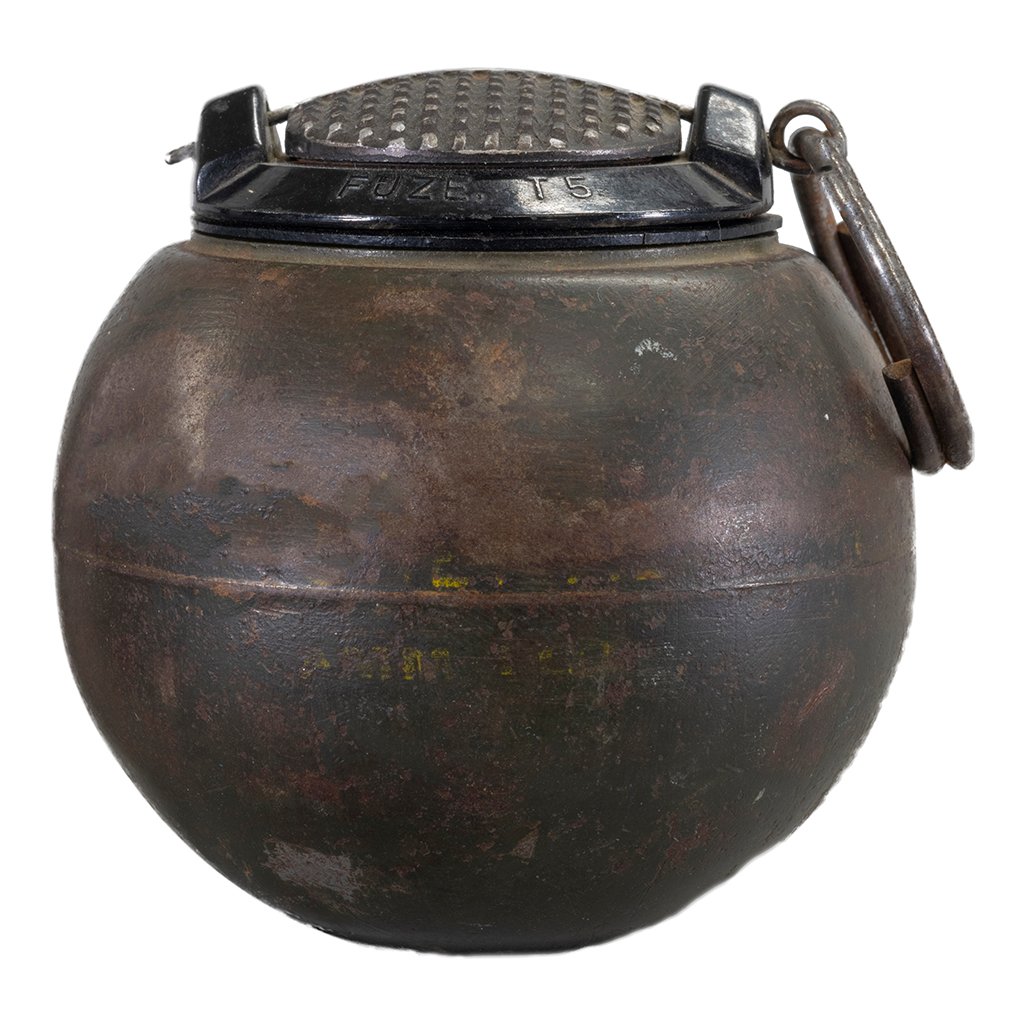
The T13 Beano Grenade was an experimental spherical fragmentation hand grenade developed by the United States during World War II. Often referred to simply as the “Beano” or “Baseball Grenade,” this innovative weapon was designed to leverage the throwing skills of American soldiers by replicating the size, weight, and feel of a regulation baseball. The T13 represented a unique approach to grenade design, featuring an impact-sensitive fuze intended to detonate upon striking a target, thereby preventing enemy soldiers from throwing the grenade back at American forces. Despite its innovative concept, the T13 suffered from significant reliability and safety issues that ultimately led to its withdrawal from service and subsequent destruction of remaining stocks.
⚠️ SAFETY WARNING: All ordnance, including historical items, should be considered dangerous until proven safe by qualified explosive ordnance disposal (EOD) personnel. Never handle suspected ordnance. Report any discoveries to military or law enforcement authorities immediately.
Country/Bloc of Origin
- Country: United States of America
- Development Period: 1943–1945
- Developing Agency: Office of Strategic Services (OSS), the wartime predecessor to the Central Intelligence Agency (CIA)
- Manufacturing Partner: Eastman Kodak Company
- Collaboration: U.S. Army Ordnance Department
The T13 was developed during the latter years of World War II as part of the OSS’s innovative approach to unconventional warfare tools. The collaboration with Eastman Kodak—a company primarily known for photographic equipment—highlighted the wartime practice of leveraging diverse industrial capabilities for military applications.
Ordnance Class
- Type: Hand grenade
- Primary Role: Anti-personnel fragmentation
- Delivery Method: Hand-thrown
- Category: Experimental/Limited production offensive grenade
- Function: Impact-detonated fragmentation device
The T13 was classified as an offensive grenade, designed for use in close-quarters combat where soldiers needed to advance on enemy positions. Unlike defensive grenades that produce heavy fragmentation requiring the thrower to seek cover, offensive grenades like the T13 were intended for use while moving forward.
Ordnance Family/Nomenclature
Official Designations
- Primary Designation: Grenade, Hand, Fragmentation, T13
- Variant Designation: BEANO T-13
- Fuze Designation: T5 Fuze (manufactured by Eastman Kodak Company)
Common Names and Nicknames
- “Beano Grenade”
- “Baseball Grenade”
- “Beano”
- “T-13”
Markings
Surviving examples are marked with:
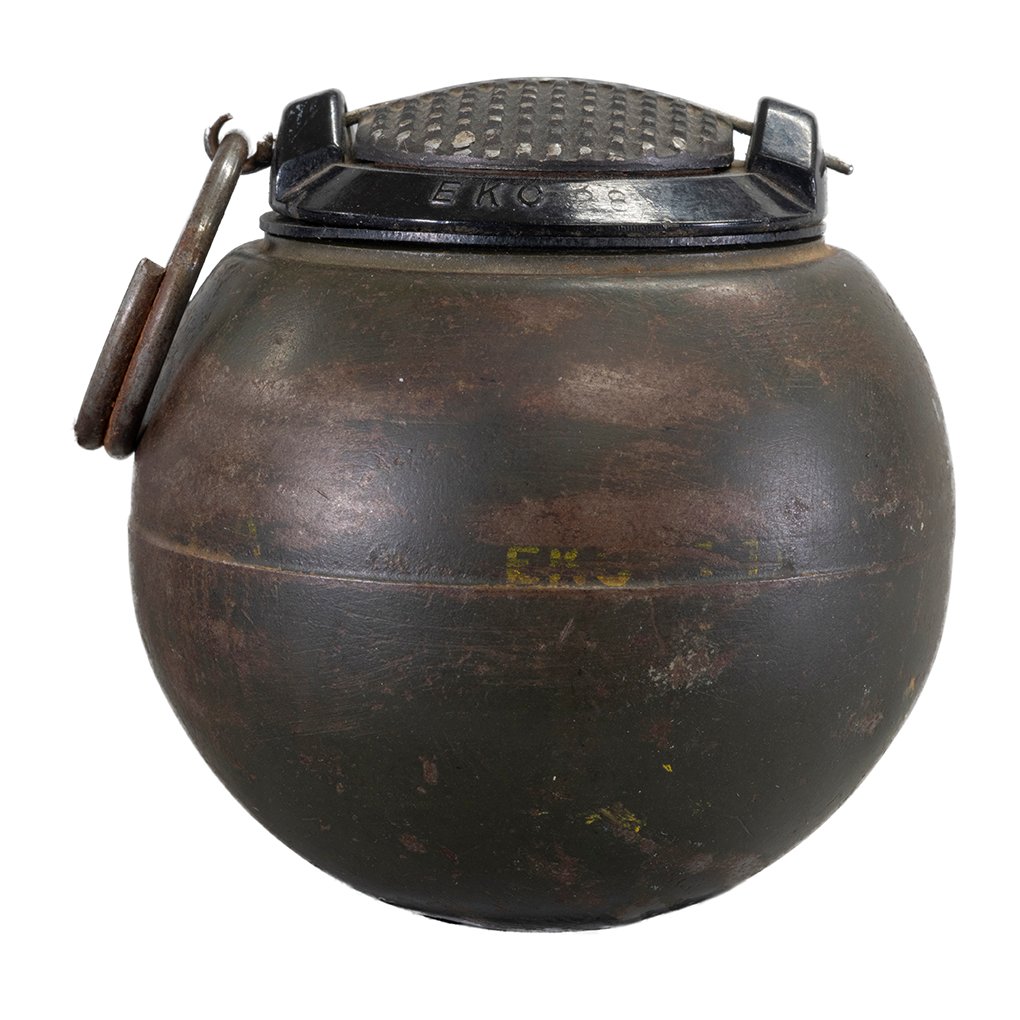
- “EKC” (Eastman Kodak Company) on the body
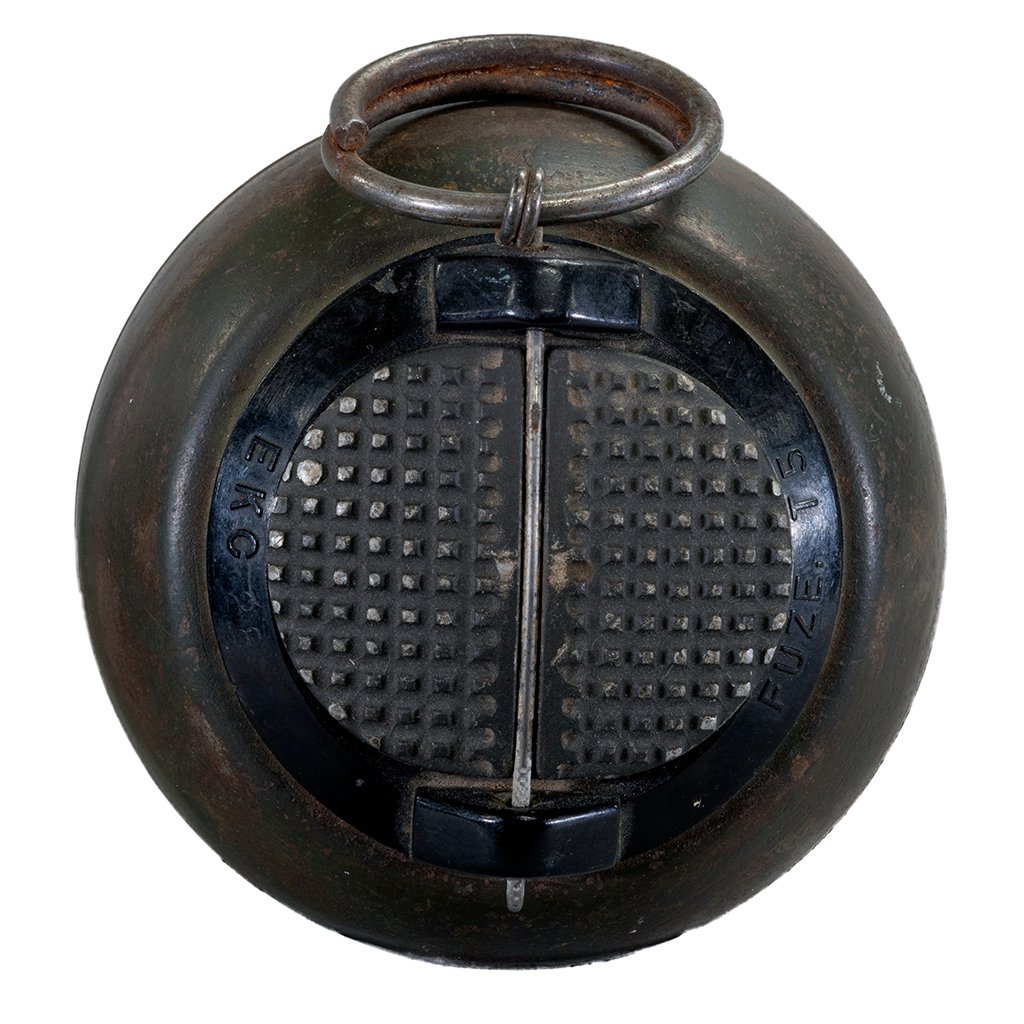
- “FUZE, T5” on the fuze assembly
- “GRENADE T13 COMP A” in yellow lettering, indicating Composition A explosive fill
Related Items
The T13 was a standalone development and did not spawn a family of variants. However, it represents an early attempt at impact-fuzed grenade design that influenced later ordnance development concepts.
Hazards
Primary Hazards
- Fragmentation: Upon detonation, the steel body fragments into high-velocity projectiles capable of causing severe injury or death
- Blast Overpressure: The explosive charge creates a significant blast wave in the immediate vicinity
- Premature Detonation: The impact-sensitive T5 fuze was notoriously prone to accidental detonation during handling, transport, or upon minor impacts
Sensitivity Concerns
The T13’s primary hazard stemmed from its highly sensitive impact fuze:
- Pressure Sensitivity: The fuze was designed to detonate upon contact with hard surfaces, making it extremely sensitive to drops or bumps
- Handling Danger: Multiple fatalities and injuries occurred during testing and deployment due to premature detonations
- Environmental Factors: Rough handling during transport could trigger detonation
Kill Radius and Danger Areas
- Effective Casualty Radius: Approximately 20 meters (66 feet)
- Maximum Throwing Range: 50–60 yards (45–55 meters) for soldiers with baseball experience
- Fragment Danger Zone: Extends beyond the effective casualty radius
Unexploded Ordnance (UXO) Considerations
- Failure Rate: Testing revealed approximately 10% failure rate in detonation
- Dud Hazard: Unexploded T13 grenades remain extremely dangerous and unpredictable
- Age Degradation: Any surviving examples have undergone 80+ years of degradation, making them highly unstable
- Collector Items: Most surviving examples in museums or private collections have been demilitarized and rendered inert
⚠️ CRITICAL WARNING: The T13’s impact fuze makes any unexploded example extraordinarily dangerous. The fuze mechanism may have degraded over time, potentially increasing sensitivity. Never approach, handle, or attempt to move any suspected T13 grenade.
Key Identification Features
Physical Characteristics
| Feature | Specification |
|---|---|
| Shape | Spherical |
| Diameter | Approximately 3 inches (76 mm) |
| Circumference | 9.5 inches (241 mm)—matching a regulation baseball |
| Weight (Original Design) | 5.5 ounces (156 g) |
| Weight (Production Model) | 12 ounces (340 g) / 11 ounces (310 g) reported |
| Explosive Fill Weight | Approximately 9 ounces (255 g) of Composition A |
External Features
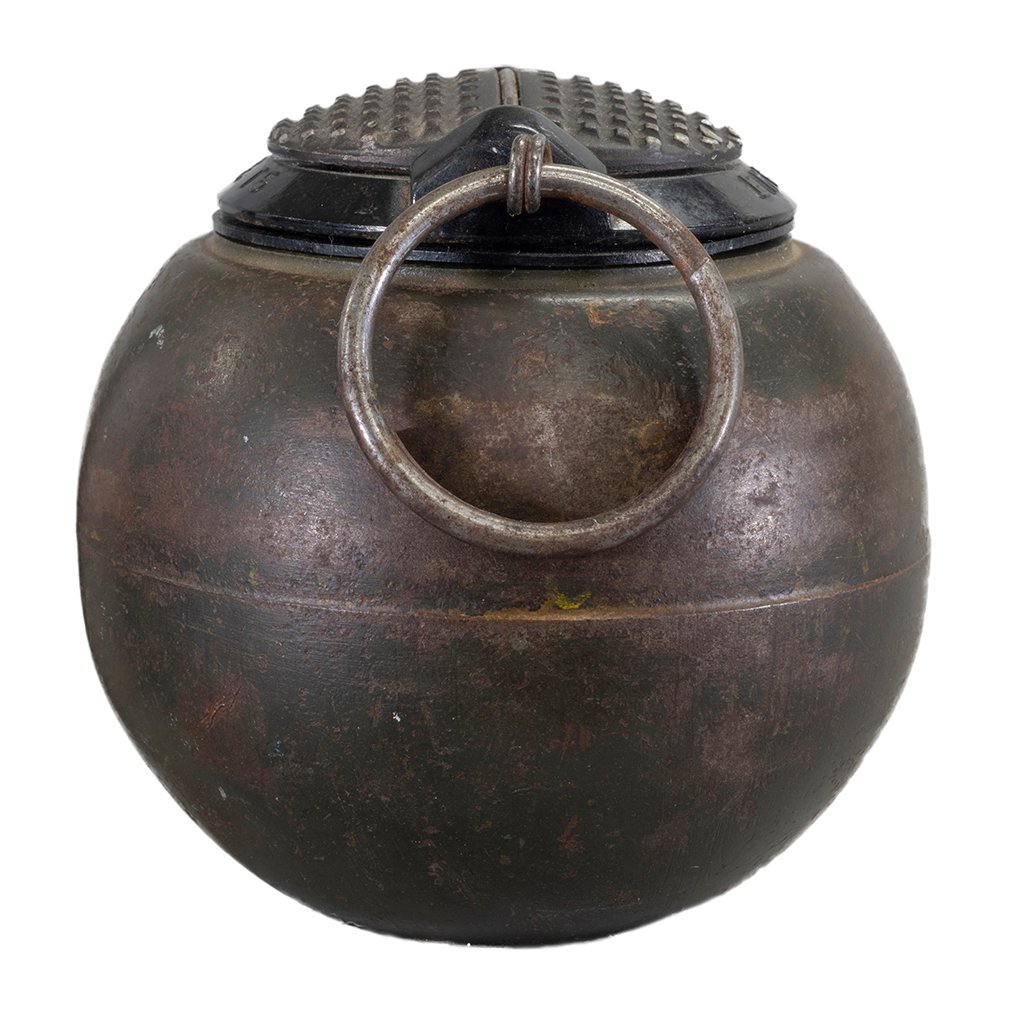
- Body: Smooth steel sphere with a machined or cast surface
- Butterfly Cap: Weighted, knurled cap on top designed to be held with two fingers during throwing
- Arming Pin: Safety pin that must be removed before throwing
- Nylon String: Coiled cord attached to the butterfly cap that unspools during flight
- Surface Finish: Olive drab or bare metal finish
- Markings: Yellow stenciled nomenclature indicating model and explosive type
Distinctive Recognition Points
- Perfect spherical shape distinguishes it from other WWII grenades
- Baseball-like dimensions and weight
- Butterfly cap assembly on top with knurled gripping surface
- “EKC” manufacturer marking (Eastman Kodak Company)
- Attached nylon cord visible when cap is in place
Fuzing Mechanisms
T5 Impact Fuze
The T13 utilized the T5 Fuze, an innovative impact-sensitive fuzing system manufactured by Eastman Kodak Company.
Arming Sequence
- Pre-Throw Preparation: The grenade is held with two fingers on the weighted, knurled butterfly cap
- Pin Removal: The arming pin is pulled, freeing the butterfly cap
- In-Flight Arming:
- Upon throwing, the butterfly cap detaches from the grenade body
- A length of nylon string begins to unspool from the grenade
- When fully extended, the cord pulls a secondary arming pin attached to its far end
- This action arms the pressure-sensitive impact fuze
- Detonation: Upon striking a hard surface, the armed fuze triggers immediate detonation
Safety Mechanisms
- Primary Safety Pin: Prevents butterfly cap separation until intentionally removed
- In-Flight Arming System: The grenade should only arm after sufficient separation from the thrower
- Minimum Arming Distance: The nylon cord length provided a theoretical minimum safe distance before arming
Critical Design Flaw
The pressure sensitivity required for reliable impact detonation proved excessive:
- The fuze was too sensitive, triggering on minor impacts
- Vibrations during transport could cause detonation
- Handling during combat conditions proved hazardous
- The 10% failure rate indicated inconsistent fuze function
Self-Destruct Features
The T13 did not incorporate self-destruct or self-neutralization features, contributing to UXO hazards from failed grenades.
History of Development and Use
Development Timeline
1943 – Concept Origin
- The OSS conceived the idea of a baseball-shaped grenade based on the observation that American men were familiar with throwing baseballs from childhood
- The theory held that soldiers could throw such a grenade with greater accuracy and distance than conventional grenades
Late 1943 – Design Phase
- Collaboration began between OSS, U.S. Army Ordnance Department, and Eastman Kodak Company
- Initial design called for a 5.5-ounce grenade, later increased to approximately 12 ounces for improved lethality
January 1944 – Adoption
- The T13 design was officially adopted
- Eastman Kodak began manufacturing the T5 fuze
- Production of grenade bodies commenced
March 1944 – Testing Begins
- Aberdeen Proving Ground, Maryland hosted initial testing
- Problems with premature detonations emerged almost immediately
March 1944 – March 1945 – Testing Period
- Over the course of testing, five premature detonations occurred
- Two personnel were mortally wounded
- Forty-four others sustained injuries
- Despite these setbacks, the Army ordered 10,000 units
June 1944 – Combat Deployment
- Several thousand T13 grenades were shipped to Europe
- Grenades were reportedly used during the Invasion of Normandy (D-Day)
- Additional grenades were earmarked for airdrop to partisan forces in occupied Europe
Mid-1944 – Recall
- Following premature detonations that killed American troops in combat, the T13 was recalled from service
- Efforts to improve the T5 fuze continued but achieved limited success
- Testing of 2,742 grenades revealed a 10% failure rate
March 1945 – Program Suspension
- Production of the T13 was officially suspended
- The grenade was deemed unsuitable for general issue
1945 – Post-War Destruction
- Following the end of World War II, remaining T13 stocks were ordered destroyed
- Files pertaining to the weapon were classified
- Very few examples survived
Combat Employment
The T13 holds the unfortunate distinction of having killed and injured more American personnel than enemy forces. Its brief combat use during the Normandy invasion was cut short by safety concerns, and the weapon never achieved its intended tactical purpose.
Legacy
Despite its failure, the T13 represents an innovative approach to infantry weapons design:
- Demonstrated early attempts at impact-fuzed grenades
- Highlighted the challenges of balancing sensitivity and safety in fuze design
- Influenced understanding of ergonomic weapon design
- Became a cautionary tale in ordnance development history
Current Status
- Service Status: Obsolete/Withdrawn (1945)
- Production Status: Discontinued
- Surviving Examples: Extremely rare; most in museums or private collections
- Notable Displays: John F. Kennedy Special Warfare Museum, SPYSCAPE museum
- Collector Value: Highly sought after as a WWII artifact
Technical Specifications
| Specification | Value |
|---|---|
| Designation | Grenade, Hand, Fragmentation, T13 |
| Type | Impact-fuzed fragmentation grenade |
| Manufacturer | Eastman Kodak Company (fuze); various (body) |
| Country | United States |
| Era | World War II (1943–1945) |
| Shape | Spherical |
| Diameter | ~3 inches (76 mm) |
| Circumference | 9.5 inches (241 mm) |
| Total Weight | 11–12 oz (310–340 g) |
| Explosive Fill | Composition A |
| Explosive Weight | ~9 oz (255 g) |
| Fuze Type | T5 Impact Fuze |
| Fuze Manufacturer | Eastman Kodak Company |
| Arming Method | In-flight (cord-actuated secondary pin) |
| Detonation Method | Impact/Pressure |
| Effective Casualty Radius | ~20 meters (66 ft) |
| Maximum Throwing Range | 50–60 yards (45–55 m) |
| Failure Rate | ~10% |
| Production Quantity | ~10,000+ ordered |
| Service Life | 1944 (limited) |
Frequently Asked Questions
Q: Why was the T13 designed to look like a baseball?
A: The OSS designers believed that American men, having grown up playing baseball, possessed inherent throwing skills that could translate to more accurate and longer grenade throws. By matching the baseball’s size (9.5-inch circumference) and approximate weight, they theorized soldiers could leverage muscle memory developed through years of playing the sport. This represented an innovative but ultimately flawed attempt to optimize weapon ergonomics around cultural familiarity.
Q: What made the T13’s impact fuze so dangerous?
A: The T5 fuze was designed with extreme pressure sensitivity to ensure detonation upon striking any hard surface – a feature intended to prevent enemies from throwing the grenade back. However, this same sensitivity made the fuze prone to accidental detonation from minor impacts during handling, transport, or even vibrations. The engineering challenge of creating a fuze sensitive enough to detonate on impact yet stable enough for safe handling proved insurmountable with 1940s technology.
Q: How does the T13 compare to the standard WWII fragmentation grenade (Mk 2)?
A: The Mk 2 “Pineapple” grenade used a time-delay fuze (approximately 4–5 seconds), giving soldiers a predictable window to throw and seek cover. The T13’s impact fuze eliminated this delay but introduced handling dangers. The Mk 2’s segmented body was designed for predictable fragmentation, while the T13’s smooth sphere relied on the steel body shattering. The Mk 2 proved vastly more reliable and remained in service for decades, while the T13 was withdrawn within months.
Q: Were any improvements made to address the T13’s safety issues?
A: Yes, engineers attempted to modify the T5 fuze to reduce sensitivity while maintaining impact-detonation reliability. However, these efforts achieved only limited success. Testing continued through early 1945, but the fundamental design challenge – balancing impact sensitivity with handling safety – could not be resolved with contemporary technology. The project was ultimately abandoned.
Q: How many casualties resulted from the T13 program?
A: According to historical records, during the testing period at Aberdeen Proving Ground from March 1944 to March 1945, five premature detonations occurred, mortally wounding two personnel and injuring forty-four others. Additional casualties occurred during the brief combat deployment in Europe, leading one historical assessment to conclude that the T13 killed and injured more American personnel than enemy forces.
Q: Why is the T13 so rare today?
A: Following the program’s termination in 1945, the U.S. military ordered the destruction of all remaining T13 grenades and classified related documentation. This systematic destruction, combined with the relatively small production quantity (approximately 10,000 ordered), means very few examples survived. Those that exist today were typically retained as souvenirs, acquired before the destruction order, or preserved in military museums.
Q: Could a collector safely own an original T13 grenade?
A: Original T13 grenades in private collections or museums should be completely demilitarized (rendered inert) with explosive components removed. Legitimate dealers sell only inert examples that cannot be converted to explosive devices. Any grenade that has not been professionally demilitarized should be considered extremely dangerous and handled only by qualified EOD personnel. Possession of live ordnance is illegal in most jurisdictions.
Q: Did any other countries develop similar baseball-shaped grenades?
A: The T13 was unique to the United States and directly tied to American cultural familiarity with baseball. Other nations developed spherical grenades (such as the British Mills Bomb precursors), but none specifically designed around baseball dimensions or ergonomics. The concept of impact-fuzed grenades was explored by various militaries, but the specific combination of baseball design and impact fuzing was distinctly American.
Safety Warning
This document is for educational and identification purposes only. All grenades and explosive ordnance are extremely dangerous and should only be handled by trained military personnel or explosive ordnance disposal (EOD) specialists. Unexploded ordnance (UXO) can remain lethal for decades and may be unstable. If you encounter suspected ordnance, do not touch it—mark the location, evacuate the area, and contact military or law enforcement authorities immediately.
The information presented here is intended for military professionals, historians, collectors (handling inert training replicas only), and educational purposes. Never attempt to disarm, modify, or handle live ordnance.