V-429 Artillery Fuze
Ordnance Overview
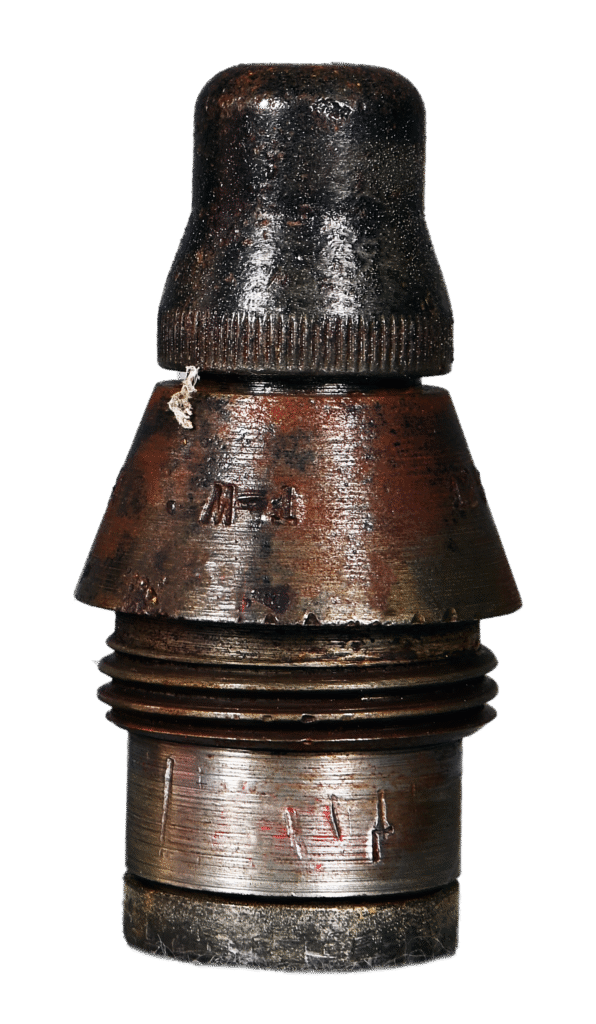
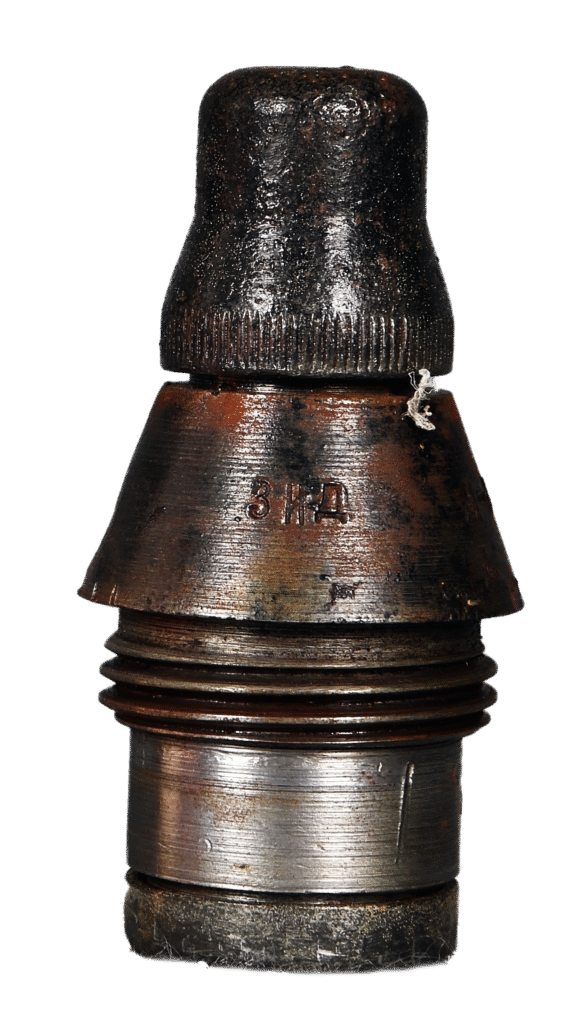
The V-429 Artillery Fuze is a Soviet-designed mechanical time fuze used primarily with artillery projectiles during the mid-to-late 20th century. This fuze represents a significant advancement in Soviet artillery technology, incorporating both time-delay and impact detonation capabilities in a single, relatively compact mechanism. The V-429 is notable for its robust construction and reliability under various environmental conditions, making it particularly effective in the harsh operating environments typical of Soviet military doctrine.
Country/Bloc of Origin
- Primary Developer: Soviet Union (USSR)
- Development Period: 1950s-1960s
- International Variants:
- Produced under license in Warsaw Pact countries including Poland, Czechoslovakia, and East Germany
- Modified versions adopted by various Soviet client states
- Some reverse-engineered variants produced in China and North Korea
Ordnance Class
- Type: Mechanical time fuze for artillery projectiles
- Primary Role: Multi-purpose fuze for high-explosive artillery shells
- Delivery Method: Artillery-delivered via field guns and howitzers
- Compatible Calibers: Primarily 122mm, 130mm, and 152mm artillery rounds
- Detonation Types: Time-delay, impact, or combination modes
Ordnance Family/Nomenclature
- Official Soviet Designation: V-429
- NATO Designation: Not specifically assigned (classified under general Soviet fuze categories)
- Common Names:
- “Mechanical Time Fuze V-429”
- “Soviet Multi-Purpose Artillery Fuze”
- Related Variants:
- V-429M (improved version with enhanced environmental protection)
- V-429A (adapted for use with specific 152mm rounds)
- Production Codes: Various factory markings including Cyrillic characters indicating manufacturing plant and date
Hazards
Primary Hazard Types
- Blast Effect: Initiates main explosive charge in artillery shell (typically 3-15kg of high explosive)
- Fragmentation: Triggers creation of high-velocity shell fragments with lethal radius of 50-200m depending on shell size
- Thermal Hazards: Flash and heat from explosive detonation
Sensitivity Characteristics
- Impact Sensitivity: Designed to function on impact with targets of moderate hardness
- Timing Mechanism: Mechanical clockwork mechanism that can be extremely sensitive to disturbance
- Environmental Stability: Generally stable but clockwork components may degrade over time
- Magnetic Sensitivity: Minimal – primarily mechanical operation
Special Considerations
- Unexploded Ordnance Risk: Failed fuzes may remain armed and dangerous for decades
- Handling Sensitivity: Clockwork mechanism may be triggered by vibration or impact during handling
- Cold Weather Effects: Lubricants in mechanism may thicken, affecting reliability
- Corrosion Hazards: External corrosion may indicate internal deterioration affecting safety
Key Identification Features
Physical Dimensions
- Length: Approximately 95-105mm (3.7-4.1 inches)
- Diameter: 45-50mm (1.8-2.0 inches) at widest point
- Weight: 180-220 grams (6.3-7.8 oz)
Visual Characteristics
- Shape: Cylindrical with tapered nose cone
- Color: Typically dark olive drab or black finish
- Material: Steel construction with brass or bronze components
- Threading: Coarse external threads for installation in shell fuze well
Distinctive Features
- Setting Ring: Graduated timing ring with Cyrillic markings
- Safety Wire Holes: Small holes for installation of safety wire
- Manufacturer Markings: Cyrillic text indicating factory and production year
- Time Scale: Numerical markings (typically 0-25 seconds) around setting ring
- Impact Nose: Pointed or slightly rounded nose cap for impact detonation
Fuzing Mechanisms
Primary Systems
- Mechanical Clockwork Timer: Spring-driven escapement mechanism for time delay
- Impact Detonator: Striker mechanism activated by target impact
- Arming System: Centrifugal or setback arming during projectile launch
Operational Sequence
- Setting: Time delay manually set before loading using graduated ring
- Launch Arming: Acceleration forces during firing arm the fuze
- In-Flight: Clockwork mechanism counts down preset time
- Function: Detonation occurs either at preset time or upon impact (whichever occurs first)
Safety Features
- Transportation Safety: Unarmed until fired from artillery piece
- Dual Safety: Requires both arming and triggering events to function
- Safety Wire: Often installed during storage to prevent accidental setting changes
Power Source
- Mechanical Energy: Spring-powered clockwork system
- No Batteries: Entirely mechanical operation eliminates power source concerns
History of Development and Use
Development Context
The V-429 was developed during the Soviet Union’s post-World War II military modernization program, reflecting lessons learned from extensive artillery use during the Great Patriotic War. Soviet engineers sought to create a more reliable and versatile fuze system that could function effectively in the diverse climatic conditions of the USSR.
Development Timeline
- 1950-1955: Initial development and testing at Soviet ordnance facilities
- 1956-1960: Production refinement and introduction to artillery units
- 1960s: Mass production and distribution throughout Warsaw Pact forces
- 1970s-1980s: Continued use with gradual introduction of electronic successors
Combat History
- First Deployment: Introduced to Soviet artillery regiments in the late 1950s
- Major Conflicts:
- Limited use during Berlin Crisis (1961)
- Employed by Soviet forces in Afghanistan (1979-1989)
- Used by various Soviet client states in regional conflicts
- Found in conflicts involving Soviet-equipped forces throughout the Cold War
Tactical Impact
The V-429 provided Soviet artillery with improved accuracy in both airburst and ground impact roles, allowing for more effective suppression of enemy infantry and soft targets. Its reliability in extreme cold conditions made it particularly valuable for Soviet forces operating in arctic environments.
Current Status
- Production: Ceased in the early 1990s following Soviet dissolution
- Service: Some remaining stocks still in service with former Soviet states
- Disposal: Large quantities destroyed during post-Cold War arms reduction
- Unexploded Ordnance: Significant UXO concerns in former conflict areas
Technical Specifications
Performance Characteristics
- Time Delay Range: 0-25 seconds (typical setting)
- Timing Accuracy: ±0.5 seconds under standard conditions
- Operating Temperature: -40°C to +50°C (-40°F to +122°F)
- Shelf Life: 15-20 years under proper storage conditions
Explosive Components
- Booster Charge: 2-5 grams of RDX or similar high explosive
- Detonating Train: Lead azide primary explosive
- Safety Devices: Multiple mechanical safety systems
Compatibility
- Artillery Types: Field guns, howitzers, and some rocket artillery
- Shell Types: High explosive, fragmentation, and some chemical rounds
- Installation: Standard threaded fuze well (Soviet specifications)
Frequently Asked Questions
Q: How does the timing mechanism in the V-429 fuze maintain accuracy under the extreme acceleration of artillery firing?
A: The V-429 uses a robust mechanical escapement mechanism similar to those found in military watches, but built to much stronger tolerances. The clockwork components are secured with heavy springs and shock-absorbing materials to withstand forces of up to 15,000 G’s during launch. The timing accuracy is achieved through careful balancing of the escapement wheel and regulation of the spring tension, allowing the mechanism to function reliably even after experiencing the tremendous acceleration of artillery firing.
Q: What is the primary difference between the V-429 and earlier Soviet artillery fuzes?
A: The V-429 represented a significant advancement over earlier Soviet fuzes by combining both time and impact detonation modes in a single, mechanically reliable package. Earlier fuzes were typically single-purpose (either time OR impact) and often used less reliable powder train timing systems. The V-429’s mechanical clockwork provided much more accurate timing control and could be easily adjusted in the field, while still maintaining the backup impact detonation capability.
Q: Why did Soviet designers choose a mechanical clockwork system over electronic alternatives in the 1950s?
A: During the V-429’s development period, electronic systems were not sufficiently robust to withstand the extreme forces of artillery launch, nor were they reliable in the harsh environmental conditions Soviet forces expected to encounter. Mechanical systems also eliminated concerns about electromagnetic interference, battery life, and the complexity of maintaining electronic components in field conditions. The clockwork approach provided proven reliability based on decades of mechanical timekeeping experience.
Q: How dangerous is an unexploded V-429 fuze found today, decades after manufacture?
A: V-429 fuzes should be considered extremely dangerous even decades after manufacture. The mechanical timing mechanism may have deteriorated in unpredictable ways, potentially making the fuze more sensitive to disturbance. The primary explosive components (lead azide) remain chemically active and dangerous. Additionally, the clockwork spring may still be under tension, creating risk of unexpected activation. Any suspected V-429 fuze should be reported immediately to military EOD personnel and never handled by civilians.
Q: Could the V-429 be set for airburst detonation over enemy trenches?
A: Yes, this was one of the primary tactical applications of the V-429. Artillery crews could calculate the time-of-flight to target and set the fuze accordingly to detonate the shell above enemy positions, maximizing the effectiveness of fragmentation against personnel in trenches or fortifications. This capability made Soviet artillery much more effective against dug-in infantry positions and represented a significant tactical advantage during the Cold War period.
Q: What markings would help identify a V-429 fuze in the field?
A: Key identification markings include: Cyrillic characters “В-429” stamped on the fuze body, a graduated time-setting ring with numbers 0-25, factory markings typically in Cyrillic indicating the manufacturing facility and date, and the characteristic Soviet olive drab or black finish. The overall cylindrical shape with tapered nose and external threading are also distinctive features that differentiate it from Western fuze designs.
Q: How did weather conditions affect the reliability of V-429 fuzes?
A: The V-429 was specifically designed for the extreme climate variations of the Soviet Union, from arctic conditions to desert environments. However, extreme cold could cause lubricants in the clockwork mechanism to thicken, potentially affecting timing accuracy. High humidity could promote corrosion of steel components. Soviet doctrine included specific maintenance procedures for different climate zones, including the use of arctic lubricants and protective coatings for tropical environments.
Q: What happened to V-429 fuze production after the collapse of the Soviet Union?
A: Production of V-429 fuzes ceased in the early 1990s as the Soviet military-industrial complex was dismantled. Many production facilities were closed or converted to civilian use. However, large stockpiles remained in various former Soviet states, some of which were sold to other countries or fell into irregular hands. This has contributed to ongoing UXO problems in various regions where these fuzes were subsequently used in conflicts throughout the 1990s and 2000s.
SAFETY WARNING: All artillery fuzes, including the V-429, should be considered extremely dangerous until proven safe by qualified explosive ordnance disposal personnel.
Safety Warning
This document is for educational and identification purposes only. All grenades and explosive ordnance are extremely dangerous and should only be handled by trained military personnel or explosive ordnance disposal (EOD) specialists. Unexploded ordnance (UXO) can remain lethal for decades and may be unstable. If you encounter suspected ordnance, do not touch it—mark the location, evacuate the area, and contact military or law enforcement authorities immediately.
The information presented here is intended for military professionals, historians, collectors (handling inert training replicas only), and educational purposes. Never attempt to disarm, modify, or handle live ordnance.