ARP-RFL-40 N Rifle Grenade
Ordnance Overview
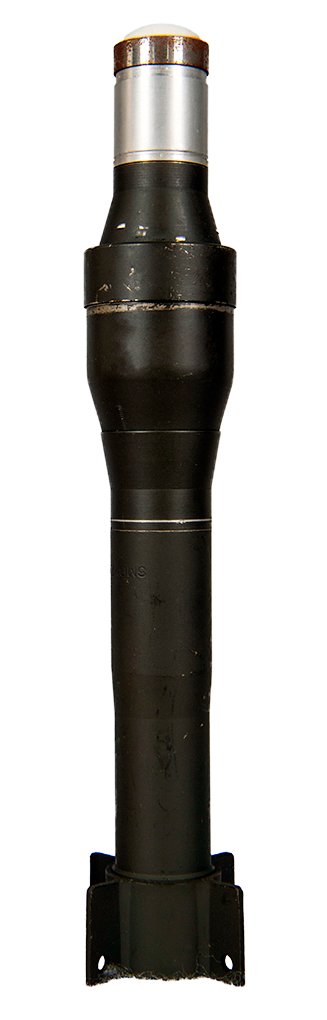
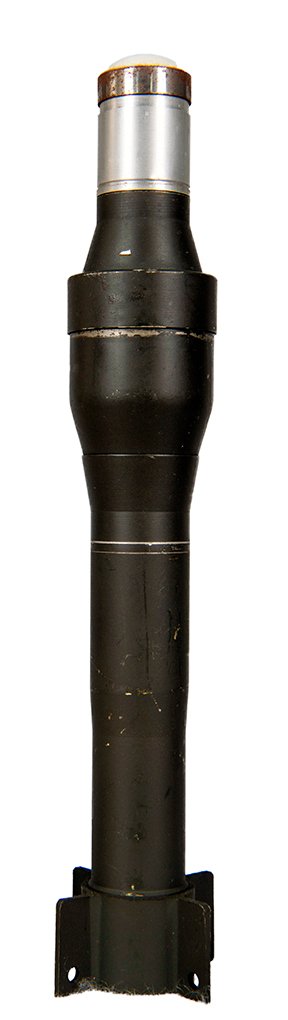
The ARP-RFL-40 N is a Belgian 40mm anti-armor rifle grenade designed and manufactured by Mecar SA during the Cold War era. This fin-stabilized munition employs a shaped charge warhead to defeat armored targets and represents an important development in rifle-launched anti-tank ordnance. The designation “N” indicates its requirement for “Normal projection” using blank cartridges, distinguishing it from bullet-trap variants within the same family.
Country/Bloc of Origin
Country: Belgium
Manufacturer: Mecar SA (Mecanique et Armement de Precision)
Period: Cold War era (1960s-1980s)
Manufacturer Location: Petit-Roeulx-lez-Nivelles, Hainaut Province, Belgium
Mecar SA was established in 1938 and became a major Belgian munitions manufacturer producing weapons ranging from grenades to lightweight anti-tank cannons for NATO forces, the Belgian military, and various international customers. The company is now a wholly-owned subsidiary of NEXTER Systems S.A., a French defense systems company, following acquisition in May 2014.
Ordnance Class
Primary Classification: Anti-armor rifle grenade
Warhead Type: High Explosive Anti-Tank (HEAT) / Shaped charge
Delivery Method: Rifle-launched via 22mm NATO STANAG grenade launcher adapter
Propulsion: Blank cartridge propellant gases
Stabilization: Fin-stabilized flight
This munition belongs to the category of rifle-launched anti-tank grenades designed to give infantry troops organic anti-armor capability without requiring dedicated launcher systems beyond the standard infantry rifle.
Ordnance Family/Nomenclature
Primary Designation: ARP-RFL-40 N
NATO Stock Number: 1330-13-114-0010 (BTU variant)
Manufacturer Symbol: M over A (Mecar marking)
Nomenclature Breakdown:
- ARP – Anti-armor Rifle Projectile
- RFL – Rifle (launched)
- 40 – 40mm diameter of the grenade body
- N – Normal projection (blank cartridge required)
Related Variants:
- ARP-RFL-40 BTU (M260) – Bullet Trap Universal variant that accepts both blank cartridges and standard ball ammunition
- PFL-RFL-40 – Parachute illumination variant
- FRG-RFL-40 – Fragmentation variant
- ECN-40 – Smoke/signal variants
- GSM-40 – Smoke marker variant
The ARP-RFL-40 family represents Mecar’s comprehensive line of 40mm rifle grenades designed for various tactical roles.
Hazards
CRITICAL SAFETY WARNING: All ordnance should be considered extremely dangerous until rendered safe by qualified Explosive Ordnance Disposal (EOD) personnel. Never approach, handle, or disturb suspected ordnance.
Primary Hazard Profile
Blast Hazards:
- High explosive detonation from shaped charge warhead
- Metallic fragmentation from grenade body upon detonation
- Overpressure effects in confined spaces
Thermal Hazards:
- Extreme heat from shaped charge jet formation
- Secondary fires from target ignition
Sensitivity Considerations:
- Impact Sensitivity: HIGH – Point-initiating base-detonating fuze activates on target impact
- Setback Arming: Grenade arms during launch acceleration
- Handling Sensitivity: Moderate when fuzed; inert components when properly demilitarized
- Environmental Degradation: Metal components subject to corrosion; fuze mechanisms may become unstable with age
Unexploded Ordnance (UXO) Risks:
- Setback-armed grenades that fail to detonate remain extremely dangerous
- Fuze mechanisms may become more sensitive over time
- Corrosion can compromise safety features
- Any encountered UXO should be reported immediately to authorities
Kill Radius/Danger Areas:
- Primary effect: Shaped charge jet with anti-armor penetration capability
- Secondary fragmentation: Dangerous up to 50+ meters
- Minimum safe distance for EOD operations: 300+ meters for suspected live ordnance
Key Identification Features
Physical Dimensions
- Total Length: Approximately 9.75 inches (248 mm)
- Body Diameter: 40mm
- Weight: Approximately 400-500 grams (live version)
Visual Characteristics
Shape and Profile:
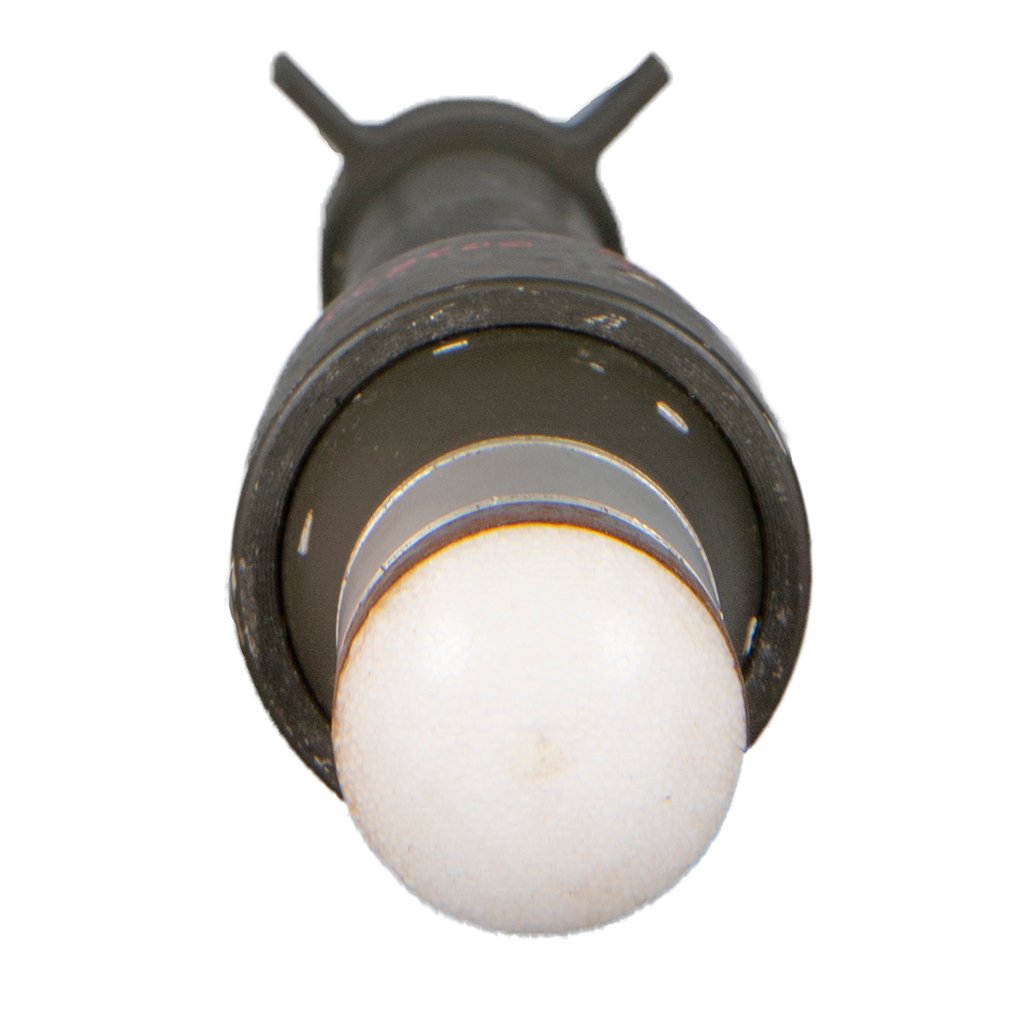
- Cylindrical warhead body with rounded, conical nose
- Distinct two-piece construction visible at body joint
- Long tubular tail section (stabilizer assembly)
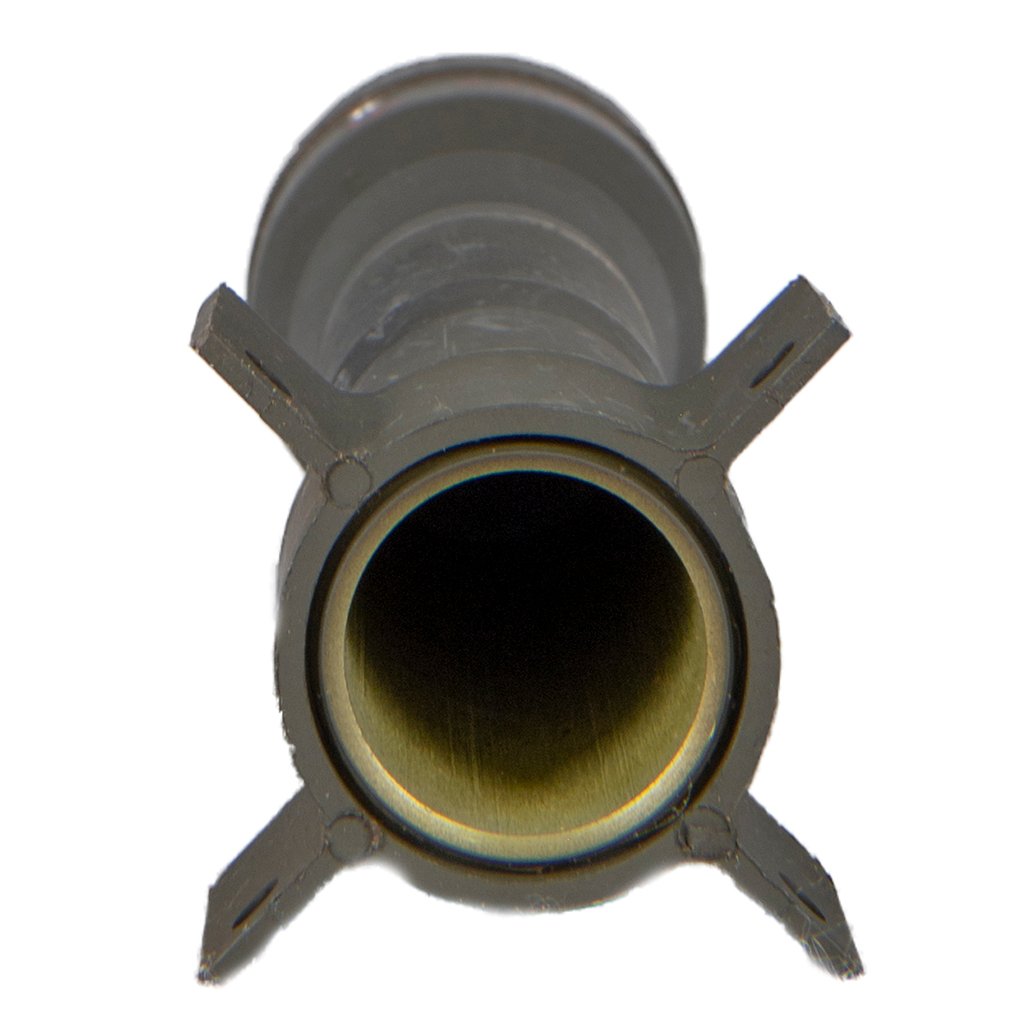
- Finned tail with 4-8 stabilizing fins
Color Schemes:
- Anti-armor variants: Typically olive drab green or gray
- Practice versions: May be painted black or blue
- Markings: White or yellow stenciled nomenclature
Distinctive Features:
- Smooth cylindrical warhead section
- Hollow stabilizer tube that fits over rifle’s grenade launcher adapter
- Spot-welded or integrated fin assembly
- No bullet trap opening in tail section (key distinguishing feature from BTU variants)
- Mecar manufacturer markings (M over A symbol)
- Date codes and lot numbers typically stenciled on body
Material Composition:
- Body: Sheet steel construction
- Fins: Steel or aluminum, spot-welded or riveted
- Stabilizer tube: Steel tubing
- Fuze components: Steel and brass mechanisms
Fuzing Mechanisms
Fuze Type: Point-Initiating Base-Detonating (PIBD)
The ARP-RFL-40 N employs a sophisticated fuzing system designed for reliability against armored targets while maintaining safety during handling and launch.
Arming Sequence
1. Pre-Launch State:
- Grenade shipped and stored with safety pin installed
- Firing pin mechanically blocked from detonator
- Fuze in safe condition
2. Launch Phase – Setback Arming:
- Rapid acceleration during launch overcomes spring tension
- Setback forces cause arming mechanism to move
- Safety features disengage after grenade leaves launcher
- Arming typically complete within 5-10 meters of flight
3. Flight Phase:
- Fins deploy and stabilize grenade trajectory
- Fuze remains armed and ready to function
- Point-detonating mechanism prepared for impact
4. Target Impact:
- Nose impact crushes point-initiating element
- Firing pin driven into base-mounted detonator
- Detonator initiates shaped charge explosive train
- Base-detonating design optimizes shaped charge standoff
Safety Mechanisms
- Safety Pin: Removable pin prevents accidental firing pin movement during handling
- Setback Arming: Prevents detonation until launch forces are applied
- Minimum Arming Distance: 5-10 meters prevents premature detonation near firer
Triggering Method
- Primary: Impact with target surface
- Sensitivity: Functions on contact with soft earth, vegetation, or hard targets
- Angle Consideration: Optimal function within 20° of perpendicular impact
Special Considerations
- No Self-Destruct Feature: This grenade does not incorporate self-neutralization mechanisms; unexploded rounds remain dangerous indefinitely
- No Anti-Handling Devices: Standard configuration lacks anti-disturbance features
- Fuze Power: Mechanical impact-actuated; no battery or electrical components required
History of Development and Use
Development Context
The ARP-RFL-40 N was developed during the Cold War period when NATO forces faced the threat of massive Soviet armored formations in Central Europe. Infantry units required organic anti-tank capabilities that didn’t depend on heavy weapons or vehicles. Rifle grenades represented a cost-effective solution that leveraged existing infantry rifles.
Historical Background
Origins (1950s-1960s): Belgium’s Mecar SA, building on World War II and post-war rifle grenade experience, developed the RFL-40 series to meet NATO requirements for standardized 22mm rifle grenade launching systems. The HEAT warhead technology represented mature shaped-charge principles proven in World War II.
Design Philosophy: The ARP-RFL-40 N embodied several key design principles:
- Compatibility with standard NATO rifles equipped with 22mm grenade launchers
- Lightweight enough for infantry to carry multiple rounds
- Sufficient armor penetration against light armored vehicles and APCs
- Simple, reliable mechanical fuzing requiring no batteries or electronics
- Cost-effective manufacture for large-scale production
Operational Deployment:
- Primary Users: Belgian Armed Forces, NATO allies, and various export customers
- Fielding Period: 1960s through 1980s
- Tactical Role: Squad-level anti-armor defense
- Typical Load: Infantry soldiers might carry 2-3 grenades in addition to standard ammunition
Conflicts and Service: While specific combat records are limited in open sources, rifle grenades of this type saw service in:
- Cold War European defense planning
- Various regional conflicts where Belgian or NATO forces provided military assistance
- Counter-insurgency operations
- Training exercises throughout NATO
Evolution and Improvements
The BTU Innovation: Mecar developed the Bullet Trap Universal (BTU) system as a major improvement, allowing grenades to be launched using standard ball ammunition rather than requiring blank cartridges. This significantly improved tactical flexibility, as soldiers didn’t need to carry separate blank rounds or change ammunition types.
Parallel Development: The RFL-40 family expanded to include:
- Illumination rounds (PFL series)
- Smoke and signaling grenades
- Fragmentation variants
- Practice rounds for training
Obsolescence and Current Status
Decline (1970s-1980s): Rifle grenades gradually became obsolescent as more effective systems emerged:
- Dedicated 40mm grenade launchers (M203, M79) offered faster reloading and better accuracy
- Disposable rocket launchers (M72 LAW, AT-4) provided superior armor penetration
- Reusable missile systems offered precision guidance and longer ranges
Current Status:
- Production: Ceased in Belgium by the 1990s
- Service: Largely withdrawn from frontline NATO units
- Stockpiles: Remaining stocks held in reserve or demilitarized
- Modern Use: Primarily of historical interest; some may remain in service with nations using older weapon systems
- Legacy: Influenced later rifle grenade designs and training doctrine
Production and Distribution
Manufacturing Scale: Exact production numbers remain classified, but Mecar produced tens of thousands of RFL-40 series grenades for:
- Belgian military requirements
- NATO standardization programs
- Export contracts to allied nations
- Commercial sales to approved customers
Global Distribution: The ARP-RFL-40 series was distributed to various NATO members and aligned nations during the Cold War, though specific recipient countries remain partially classified.
Technical Specifications
Explosive Characteristics
- Warhead Type: Shaped charge (HEAT principle)
- Explosive Fill: Estimated 100-150 grams of military explosive (likely RDX/TNT composition)
- Armor Penetration: Approximately 100-150mm of rolled homogeneous armor (RHA) at optimal angle
- Penetration Mechanism: Munroe effect shaped charge jet
Performance Parameters
- Effective Range: 50-150 meters
- Maximum Range: 200-250 meters
- Launch Velocity: Approximately 60-80 meters per second
- Optimal Launch Angle: 5-15° elevation for direct fire
- Time of Flight: 2-4 seconds to typical engagement ranges
Launch Requirements
- Launcher Type: 22mm NATO STANAG rifle grenade adapter
- Compatible Rifles: FN FAL, FN FNC, and other NATO rifles with appropriate adapter
- Propulsion: Blank cartridge (typically rifle-specific grenade cartridge)
- Recoil: Moderate; manageable by prone or supported firing positions
Environmental Tolerances
- Operating Temperature: -30°C to +50°C
- Storage Temperature: -40°C to +60°C (in approved magazines)
- Humidity Resistance: Sealed components resist moisture; prolonged exposure degrades reliability
- Shelf Life: Estimated 10-20 years under proper storage conditions
Deployment Characteristics
- Ready Time: 30-60 seconds to prepare and aim
- Rate of Fire: 2-3 rounds per minute (practical)
- Portability: Individual infantryman can carry 2-4 rounds in addition to standard loadout
Frequently Asked Questions
Q: What is the main difference between the ARP-RFL-40 N and the ARP-RFL-40 BTU?
A: The critical difference lies in the propulsion system. The ARP-RFL-40 N requires a blank cartridge for launching, as it lacks a bullet trap mechanism. This means the soldier must remove live ammunition, chamber a blank cartridge, mount the grenade, and fire. In contrast, the ARP-RFL-40 BTU (Bullet Trap Universal) incorporates a bullet trap in the tail section that safely captures and contains a standard ball round, using the bullet’s impact energy combined with propellant gases to launch the grenade. The BTU variant offers significant tactical advantages: faster employment, no need to carry separate blank ammunition, and the rifle remains loaded with live rounds until the moment of grenade launch. However, the simpler N-variant was cheaper to manufacture and represented mature, proven technology.
Q: How effective was the ARP-RFL-40 N against actual armored vehicles?
A: The ARP-RFL-40 N’s effectiveness must be understood in context. With an estimated 100-150mm armor penetration capability, it was adequate against the side and rear armor of light tanks, armored personnel carriers (APCs), and infantry fighting vehicles (IFVs) of its era. However, it could not penetrate the frontal armor of main battle tanks like the Soviet T-54/55 or T-62. Its primary tactical value was as an infantry squad’s “last-ditch” anti-armor weapon and for engaging lighter armored threats. The shaped charge warhead was quite effective against soft-skinned vehicles, bunkers, and field fortifications. Soldiers were trained to aim for vulnerable areas like vision ports, tracks, engine compartments, and side/rear armor. While not a tank killer, it provided valuable tactical flexibility to infantry units that might encounter unexpected armor threats.
Q: Why did rifle grenades like the ARP-RFL-40 N eventually become obsolete?
A: Several factors contributed to the decline of rifle grenades. First, dedicated 40mm grenade launchers like the M203 and M79 offered superior accuracy, faster reloading, and purpose-built ammunition optimized for the launcher. Second, disposable rocket systems like the M72 LAW and later the AT-4 provided dramatically better armor penetration (300mm+) with longer engagement ranges and required no modification to the soldier’s rifle. Third, rifle grenades temporarily disabled the rifle as a firearm—a significant tactical disadvantage in close combat. Fourth, the launch process was relatively slow and cumbersome, requiring the soldier to transition from rifle fire to grenade launch mode. Finally, advances in armor technology meant that by the 1980s, most AFVs had armor too thick for rifle grenades to penetrate effectively. Modern infantry now relies on dedicated grenade launchers for indirect fire and disposable/reusable rocket systems for anti-armor work, creating more specialized and effective solutions than the rifle grenade’s generalist approach.
Q: What training was required to effectively employ the ARP-RFL-40 N?
A: Soldiers using the ARP-RFL-40 N required specialized training covering multiple areas. First, they learned the complete launch sequence: unload rifle, clear chamber, select proper grenade cartridge (blank), chamber the blank, mount grenade over launcher adapter, remove safety pin, aim using appropriate sight picture or estimated trajectory, and fire from a stable position. Second, extensive training focused on judging range and angle, as rifle grenades follow a ballistic trajectory requiring Kentucky windage and elevation estimation. Third, soldiers practiced firing from various positions—prone being most stable, but kneeling or standing sometimes necessary for tactical reasons. Fourth, safety training emphasized the critical importance of using ONLY blank cartridges (using live ammunition could catastrophically destroy the rifle and injure the firer), maintaining proper standoff from obstacles, and clearing the backblast area. Finally, tactical employment training covered when to use rifle grenades versus other weapons, target selection, vulnerability analysis of armored vehicles, and coordinated fire with other squad members. Regular practice was essential to maintain proficiency with this relatively complex weapon system.
Q: How does the shaped charge warhead in the ARP-RFL-40 N actually defeat armor?
A: The ARP-RFL-40 N employs the Munroe effect, also called the shaped charge principle, to defeat armor through focused energy rather than brute force. The warhead contains a conical or hemispherical cavity lined with a metallic liner (typically copper) at the front of the explosive charge. When the point-initiating fuze detonates the explosive upon impact, the detonation wave collapses the metallic liner inward from the cavity’s edges toward its axis. This collapse occurs at extremely high velocity, forming a coherent high-velocity jet of superplastic metal that moves at 7,000-10,000 meters per second—faster than a rifle bullet. This jet, though weighing only grams, possesses enormous kinetic energy in a very small area, essentially acting like a focused plasma torch that burns through armor. The base-detonating fuze design ensures optimal standoff distance between the warhead and target, as shaped charges require specific standoff (typically 1.5-3 cone diameters) to form the jet properly before impact. This is why the grenade has its fuze at the base—to detonate the charge from behind and create the proper jet formation at the moment of nose contact with the target. This mechanism makes shaped charges effective even at relatively low impact velocities, unlike kinetic penetrators that require very high velocity.
Q: What should I do if I encounter what appears to be an ARP-RFL-40 N in the field?
A: If you encounter any object you suspect to be an ARP-RFL-40 N or any other military ordnance, follow these critical steps: FIRST, do not approach, touch, move, or disturb the object in any way. Even practice or training rounds may contain components that are hazardous. SECOND, note the location as precisely as possible using landmarks, GPS coordinates, or detailed descriptions, but maintain a safe distance of at least 300 meters. THIRD, establish a perimeter if possible to prevent others from approaching the hazard. FOURTH, immediately contact local law enforcement, military authorities, or emergency services to report the find. In many countries, there are specific EOD (Explosive Ordnance Disposal) units responsible for such discoveries. FIFTH, provide authorities with all relevant information: location, description, any visible markings, and the circumstances of discovery. NEVER assume an old or corroded ordnance item is safe—age and environmental degradation can make ordnance more sensitive and dangerous, not less. Vintage ordnance from Cold War stockpiles continues to be discovered regularly in former military training areas, storage sites, and even construction projects. Only qualified EOD personnel have the training, equipment, and authority to safely identify, render safe, or dispose of military ordnance.
Q: How does the ARP-RFL-40 N compare to other contemporary anti-tank rifle grenades?
A: The ARP-RFL-40 N was broadly comparable to other NATO rifle grenades of its generation, occupying a middle position in terms of performance. The French APAV40, for instance, offered similar armor penetration (100mm) with dual-purpose anti-personnel fragmentation capability, representing a more versatile design. The American M31 HEAT rifle grenade provided slightly better penetration and was optimized for the M1 Garand and later M14 rifles. The British Energa (produced by Mecar under license as the M28) offered superior penetration (200mm+ for the “Super Energa” rocket-boosted version) but was heavier and more expensive. The Soviet RPG-43 and later PG-7 (for the RPG-7 launcher, which technically wasn’t a rifle grenade but served similar tactical roles) dramatically outperformed all rifle grenades with 200-300mm penetration and longer ranges. The ARP-RFL-40 N’s advantages were its relative simplicity, reliability, and cost-effectiveness for mass production. Its primary disadvantage compared to contemporaries was the requirement for blank cartridges rather than bullet-trap capability, which the BTU variant addressed. Overall, it represented competent but not exceptional technology, appropriate for its intended role of providing infantry squads with emergency anti-armor capability against lighter armored threats of the 1960s-1970s era.
Q: What role does the fin stabilization play in the grenade’s effectiveness?
A: Fin stabilization is absolutely critical to the ARP-RFL-40 N’s effectiveness, serving multiple essential functions. First, the fins provide aerodynamic stability during flight, preventing the grenade from tumbling or wobbling, which would drastically reduce accuracy and could prevent the shaped charge from striking the target at the proper angle. The fins work like fletching on an arrow, creating drag at the rear that keeps the nose pointed forward. Second, stable flight ensures the point-initiating fuze contacts the target first and at the optimal angle (perpendicular or near-perpendicular), which is essential for shaped charge effectiveness—angled impacts significantly reduce penetration. Third, the fin assembly adds minimal weight while maximizing stabilizing effect, keeping the overall projectile mass low enough for rifle-cartridge propulsion. Fourth, the long tail section with fins moves the center of pressure behind the center of gravity, creating a naturally stable configuration (like a badminton shuttlecock). Without fin stabilization, the grenade would be wildly inaccurate beyond 30-40 meters and the shaped charge might impact at unfavorable angles, reducing or eliminating armor penetration. The design and placement of the fins represent careful engineering to balance adequate stabilization against increased weight and drag. This is why damage to fins significantly degrades performance and why ordnance with bent or missing fins should be treated as even more unpredictable and dangerous.
Safety Warning
This document is for educational and identification purposes only. All grenades and explosive ordnance are extremely dangerous and should only be handled by trained military personnel or explosive ordnance disposal (EOD) specialists. Unexploded ordnance (UXO) can remain lethal for decades and may be unstable. If you encounter suspected ordnance, do not touch it—mark the location, evacuate the area, and contact military or law enforcement authorities immediately.
The information presented here is intended for military professionals, historians, collectors (handling inert training replicas only), and educational purposes. Never attempt to disarm, modify, or handle live ordnance.