Type 24 Stielhandgranate – German “Stick” Grenade
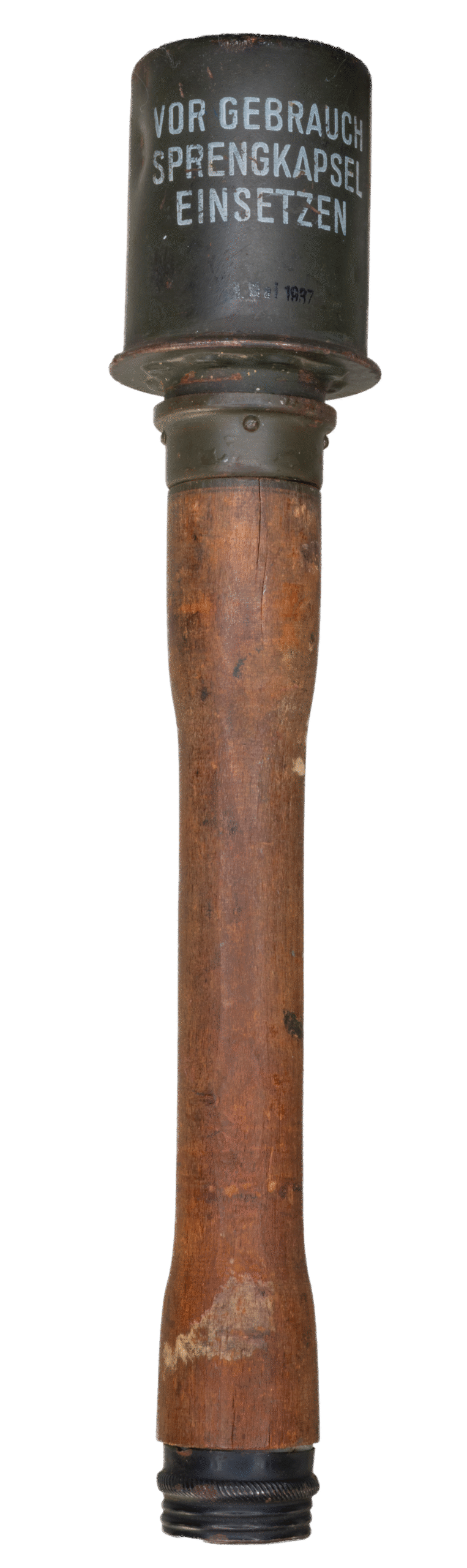
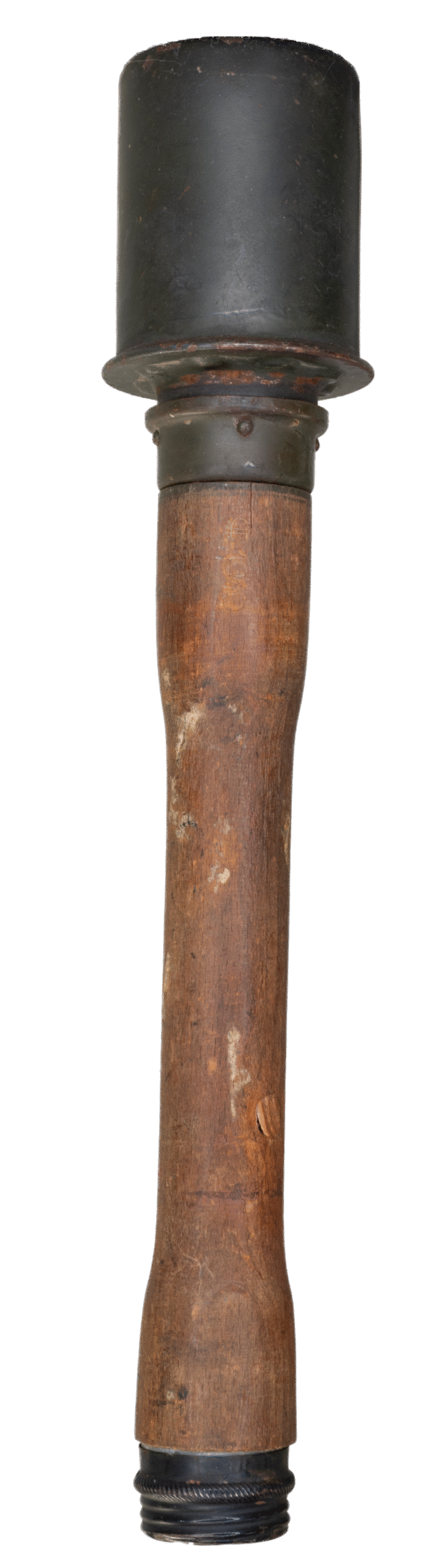
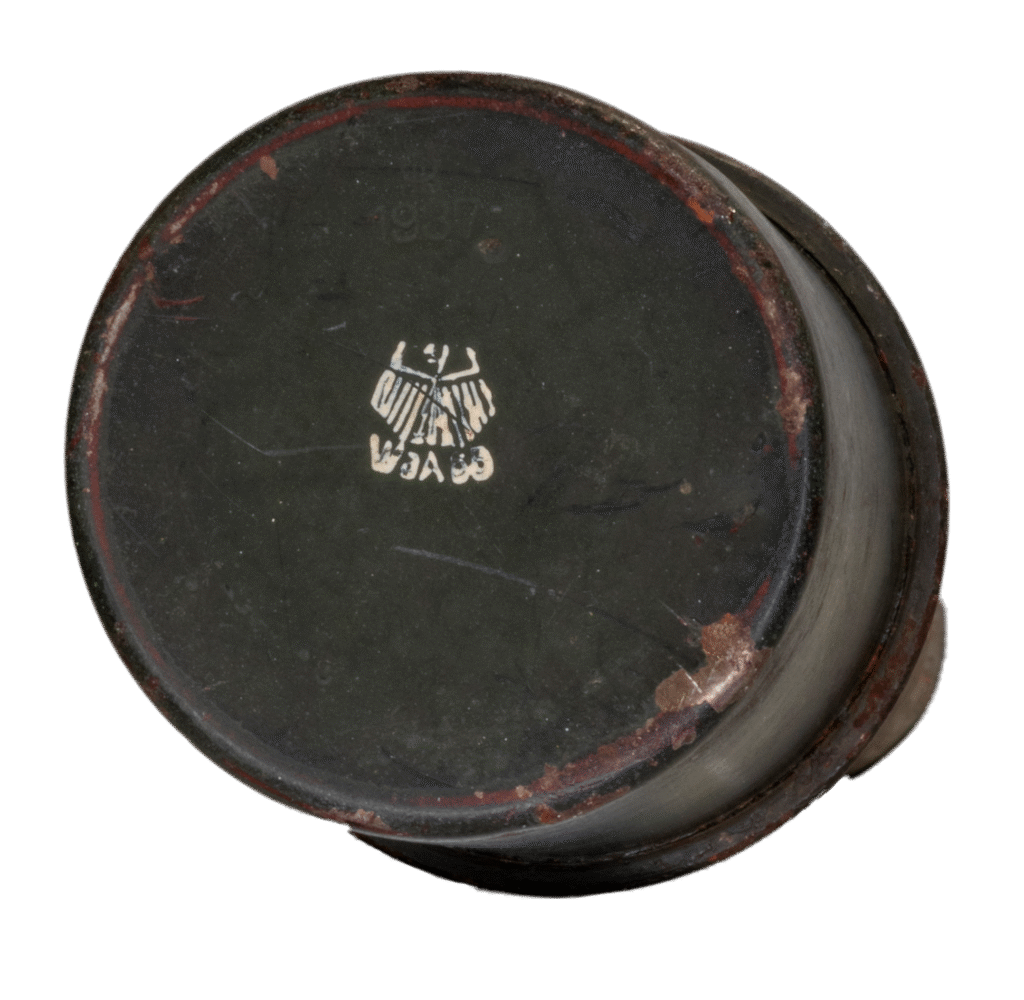
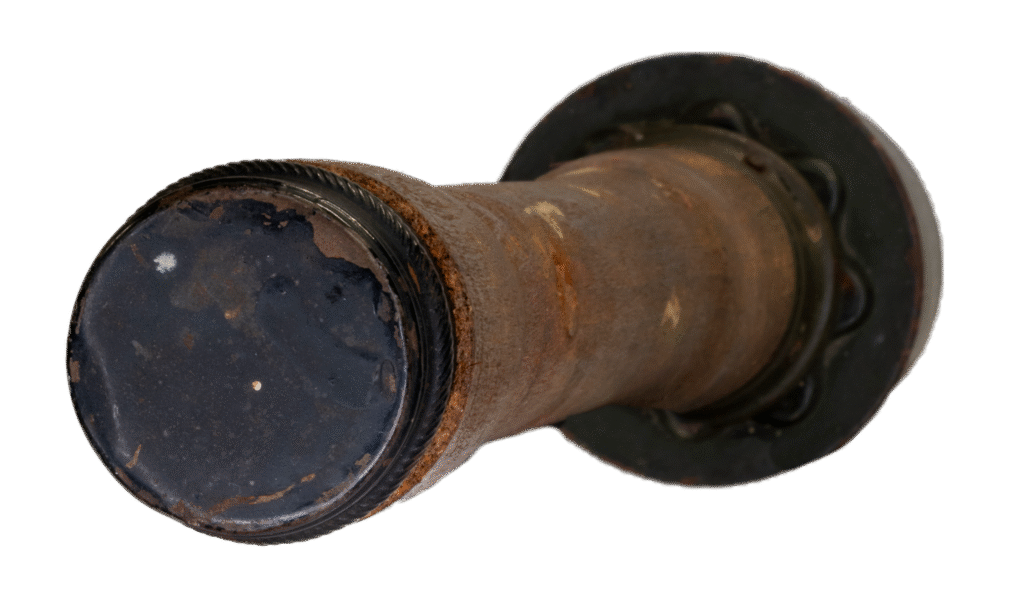
Ordnance Overview
The Stielhandgranate (literally “stick hand grenade”) is one of the most iconic and recognizable weapons of the 20th century, particularly associated with German forces in World War I and World War II. Distinguished by its distinctive wooden handle and cylindrical sheet metal head, the stick grenade earned numerous nicknames including the “potato masher,” “stick bomb,” and “Stielgranate.” The Model 24 (M24 or Type 24), introduced in 1924, became the standard-issue hand grenade of the German Wehrmacht throughout World War II. Unlike the fragmentation grenades preferred by Allied forces, the Stielhandgranate was primarily a concussion/blast grenade, relying on overpressure rather than fragmentation for its lethal effect. The long wooden handle provided superior throwing range compared to contemporary grenades, making it highly effective for offensive operations where troops needed to advance immediately after detonation.
Country/Bloc of Origin
- Country: Germany (Weimar Republic, later Nazi Germany)
- Development Period: 1915-1924
- Official Introduction: 1924
- Primary Era: World War I (predecessors), Interwar Period, World War II (primary use)
- Historical Context: Developed during Germany’s Weimar Republic period as a refinement of WWI stick grenade designs
- Post-War Variants: Influenced numerous post-war designs in Eastern Europe and elsewhere
Ordnance Class
- Type of Weapon: Hand grenade
- Primary Role: Offensive concussion/blast grenade
- Secondary Role: Anti-personnel weapon in enclosed spaces
- Delivery Method: Hand-thrown by individual soldiers
- Activation: Time-delay friction igniter (pull-cord fuze)
- Category: Offensive blast weapon (not primarily a fragmentation device)
Ordnance Family/Nomenclature
Official Designations
- Primary Designation: Stielhandgranate 24 (stick hand grenade model 1924)
- Common Abbreviations:
- M24 (Model 24)
- Stg. 24
- Type 24
- Manufacturer Codes: Various codes stamped on grenades indicating manufacturer (e.g., “cks,” “bmj,” “duv”)
Related Models and Variants
Predecessor Models:
- M1915 Stielhandgranate (Kugelhandgranate 15) – WWI era with ball-shaped head
- M1917 Stielhandgranate – Streamlined WWI version
Improved Variants:
- Stielhandgranate 24/29 – 1929 variant with minor improvements
- Stielhandgranate 24/43 (M43) – Wartime simplified production model, stamped metal construction
- Nebelhandgranate 39 – Smoke variant using same stick design
Fragmentation Variants:
- Stielhandgranate 24 with fragmentation sleeve – External serrated steel sleeve added over head for fragmentation effect
- Standard M24 could be converted to fragmentation role by adding separate sleeve
Specialized Variants:
- Bundled charge – Multiple M24 grenades bundled together for anti-tank or demolition use
- Geballte Ladung – Concentrated charge using 6-7 grenades strapped to a central handle for attacking fortifications
Common Names and Nicknames
- “Potato Masher” (Allied nickname, referring to shape resemblance)
- “Stick Bomb” (British/Commonwealth)
- “Stickbomb” (American)
- “Stielgranate” (German shorthand)
- “Potato Stick” (informal Allied slang)
Hazards
Primary Hazards
Blast Overpressure (PRIMARY HAZARD):
- The M24 is fundamentally a concussion grenade rather than a fragmentation weapon
- Explosive Fill: Approximately 165-180 grams (5.8-6.3 ounces) of TNT or equivalent
- Lethal Radius: 5-10 meters (16-33 feet) in open terrain from blast effects
- Effective Casualty Radius: 10-15 meters (33-49 feet) for incapacitation/injury
- Concussive Effect: Causes barotrauma (pressure injury) to lungs, ears, and internal organs
- Blast Overpressure: Sufficient to cause severe injury or death in confined spaces
Limited Fragmentation:
- Unlike pineapple-style fragmentation grenades, the M24’s thin sheet steel body produces minimal fragmentation
- Metal case may break into a few large pieces rather than many small fragments
- Fragment velocity relatively low compared to purpose-built fragmentation grenades
- Fragmentation hazard radius: 15-25 meters maximum, but inconsistent and unpredictable
- Wooden handle splinters may be propelled outward but pose minimal threat
Enhanced Fragmentation (With Sleeve):
- When fitted with external fragmentation sleeve (Splitterring):
- Effective fragmentation radius increases to 15-20 meters
- Lethal fragment radius: 10-15 meters
- Sleeve contains serrated steel wire or notched steel for controlled fragmentation
- Transforms offensive grenade into defensive fragmentation weapon
Special Hazards:
Confined Spaces:
- Extremely dangerous in buildings, bunkers, trenches, or rooms
- Blast overpressure greatly amplified by hard surfaces and enclosed areas
- Can cause catastrophic injuries even outside the normal lethal radius
- Preferred grenade for clearing bunkers and fortifications due to overpressure effect
Bundle Charges (Geballte Ladung):
- Multiple grenades bound together create significantly enhanced explosive effect
- Used for anti-tank and demolition purposes
- Blast radius greatly increased – can create lethal zone of 20-30 meters
- Capable of damaging light armored vehicles and destroying fortifications
Sensitivity Characteristics
Fuze Sensitivity:
- Time-delay fuze: 4-4.5 seconds (relatively consistent)
- Friction igniter: Activated by pull-cord mechanism
- Not impact-sensitive – requires deliberate fuze activation
- Relatively stable when fuze is not activated
Storage and Handling:
- Stable during normal handling when fuze is safed
- TNT filling is shock-resistant and stable under normal conditions
- Pull-cord protected by screw cap on handle base
- Safe to carry when properly assembled and safed
Environmental Factors:
- Temperature Stability: TNT remains stable across wide temperature range
- Moisture: Fuze can be affected by water infiltration over time
- Corrosion: Sheet steel body prone to rust, especially in damp conditions
- Aging: Deteriorated grenades may have unreliable fuze timing
UXO Hazards
Unexploded M24 Grenades:
- Found throughout former battlefields in Europe, North Africa, and Eastern Front
- Extreme danger: Fuze may be partially activated but failed to detonate
- Corrosion may destabilize components
- Never handle UXO grenades – explosive filling remains potent indefinitely
- Water infiltration may have corroded fuze but not neutralized explosive
Warning Signs of Deterioration:
- Heavy rust or corrosion on metal head
- Missing or damaged screw cap
- Exposed or damaged fuze mechanism
- Cracked or split wooden handle
- Any sign of explosive seepage or discoloration
Safety Warnings
⚠️ CRITICAL SAFETY INFORMATION:
- 4.5-second fuze delay: Short delay requires immediate throw after activation
- No safety mechanism after activation – once pull-cord is pulled, grenade WILL detonate
- Cannot be “un-armed” once fuze is initiated
- Handle must be held away from body during throw to prevent premature detonation
- Minimum safe distance: 30-50 meters from detonation point for thrower (behind cover)
- Thrower must seek cover immediately after release
- Risk of “short fuze” or manufacturing defects causing premature detonation
- Water does not reliably neutralize fuze once activated
Key Identification Features
Physical Dimensions
Overall:
- Total Length: 356 mm (14 inches) typical
- Total Weight: 470-600 grams (1.04-1.32 pounds) depending on variant and filling
- Handle Length: Approximately 150-175 mm (5.9-6.9 inches)
Head (Explosive Canister):
- Diameter: 55-60 mm (2.2-2.4 inches)
- Height: 75-90 mm (3-3.5 inches)
- Shape: Cylindrical with slightly domed or flat top
- Material: Thin sheet steel (0.5-1mm thickness)
Handle:
- Diameter: 30-35 mm (1.2-1.4 inches)
- Length: 150-175 mm (5.9-6.9 inches)
- Material: Turned hardwood (beech, birch, or other hardwoods)
- Finish: Usually varnished or painted
Distinctive Characteristics
Shape and Profile:
- Instantly recognizable “potato masher” or “T-shape” profile
- Cylindrical metal head mounted perpendicular to wooden handle
- Handle screws into base of metal head
- Overall appearance resembles a kitchen mallet or percussion instrument
Color and Markings:
Head (Metal Canister):
- Field Gray (Feldgrau), gray-green, or dark olive paint
- Late-war examples often unpainted (bare steel)
- Manufacturer codes stamped or stenciled on side
- Date stamps (year of manufacture)
- Waffenamt (ordnance acceptance) stamps
- Lot numbers
- Some examples have colored bands indicating filling type:
- Standard: No band or gray
- Training: Blue band (practice grenade, no explosive)
- Smoke: White band (Nebelhandgranate)
Handle:
- Natural wood finish (early war) or painted field gray (later war)
- Screw cap at base for accessing fuze pull-cord
- Some examples have unit markings or inventory numbers
Construction Details:
Head Assembly:
- Pressed or rolled sheet steel cylinder with crimped or welded seams
- Top cap may be flat, slightly domed, or have central detonator well
- Base plate with threaded boss for handle attachment
- Internal detonator assembly visible if disassembled (DO NOT attempt)
Handle:
- Hollow wooden tube
- Threaded at top to screw into head
- Removable screw cap at bottom (covers pull-cord)
- Fuze cord runs through hollow handle and exits at screw cap
- Pull-cord has porcelain or wooden ball at the end for gripping
Fuze Mechanism:
- Friction igniter inside head assembly
- Pull-cord connected to friction wire through hollow handle
- Pulling cord draws friction wire through igniter compound
- Time-delay element burns for 4-4.5 seconds
- Detonator fires main charge
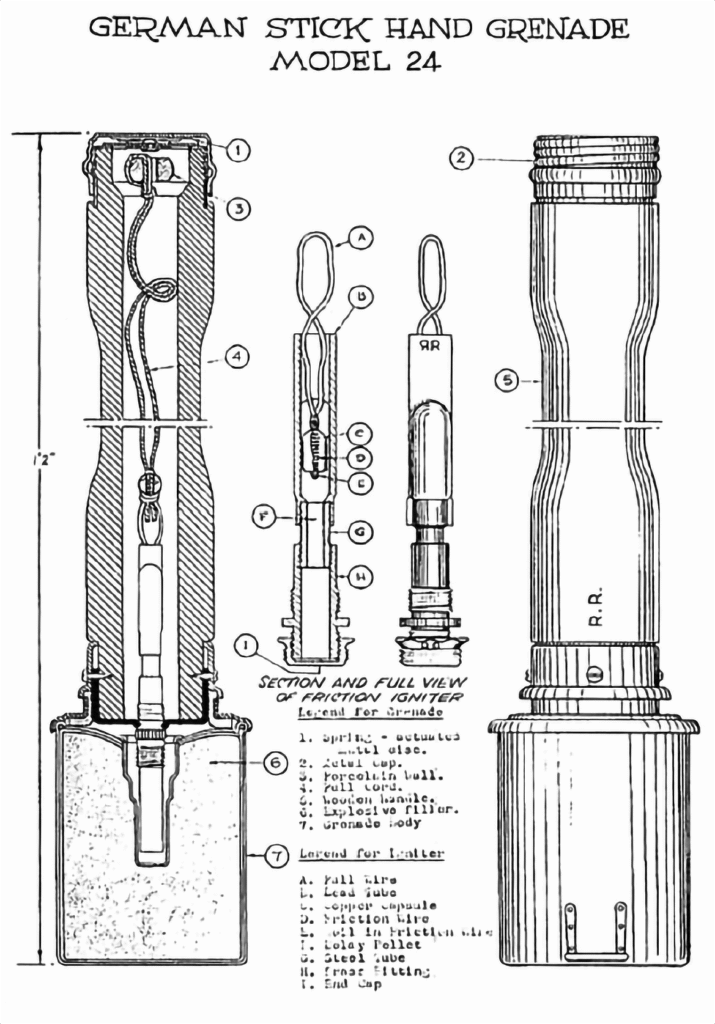
Fragmentation Sleeve (When Present)
Identification of Fragmentation-Enhanced M24:
- External serrated steel sleeve slipped over head
- Sleeve may be notched or pre-fragmented construction
- Adds approximately 100-200 grams weight
- Distinctive ribbed or segmented appearance
- Sleeve may have separate designation (Splitterring)
Material Identification
- Head: Sheet steel (magnetic), typically 22-24 gauge
- Handle: Hardwood, usually beech or birch
- Explosive Fill: TNT (trinitrotoluene), yellow crystalline when visible
- Fuze Components: Brass, steel, cardboard/paper time delay element
- Pull Cord: Woven textile cord with porcelain or wood bead
Variations by Production Era
Early War (1939-1942):
- High-quality construction
- Varnished wooden handles
- Consistent paint finish
- Clear manufacturer markings
Mid-War (1942-1944):
- Painted handles (field gray)
- Simplified construction techniques
- Some material substitutions
Late War (1944-1945):
- Ersatz materials common
- Unpainted steel heads (bare metal)
- Rougher construction quality
- Simplified screw caps and fittings
- Introduction of M43 variant with more cost-effective production
Fuzing Mechanisms
The Stielhandgranate 24 employs a friction-ignited time-delay fuze, one of the simplest and most reliable grenade fuzing systems ever developed.
Fuze Components
Primary System Components:
- Pull Cord (Zündschnur):
- Textile cord approximately 10-12 cm (4-5 inches) long
- Porcelain or wooden ball/bead attached to end for gripping
- Cord passes through hollow handle
- Protected by screw cap at handle base when not in use
- Friction Wire:
- Metal wire attached to pull cord inside grenade head
- Wire coated with friction-sensitive igniter compound
- Wire passes through friction igniter assembly
- Friction Igniter Assembly (Reibzünder):
- Contains friction-sensitive chemical compound
- Pulling cord draws friction wire through compound
- Creates ignition spark/flame
- Delay Element:
- Compressed black powder or similar pyrotechnic composition
- Burns for approximately 4 to 4.5 seconds
- Provides time delay between activation and detonation
- Delay allows thrower to release grenade and take cover
- Detonator:
- Small primary explosive charge
- Initiated by delay element
- Triggers main explosive filling (TNT)
Activation Sequence
Step-by-Step Detonation Process:
- Safed Configuration:
- Pull cord retracted inside hollow handle
- Screw cap secured at handle base
- Friction wire not in contact with igniter
- Grenade safe to handle and carry
- Arming:
- Soldier unscrews cap at handle base
- Pull cord with porcelain bead becomes accessible
- Grenade now in armed configuration (but not activated)
- Activation:
- Soldier firmly grasps porcelain bead
- Pulls cord straight down sharply (requires 3-5 kg / 6-11 lbs force)
- Friction wire drawn through igniter compound
- Igniter compound sparked, initiating delay element
- Audible “pop” or “crack” indicates successful ignition
- Time Delay:
- Delay element begins burning (4-4.5 second fuse)
- Visible smoke may emit from handle base
- No way to stop detonation once initiated
- Soldier must throw immediately
- Detonation:
- After delay period, detonator fires
- Detonator triggers main TNT charge
- High-order detonation occurs
- Blast wave and limited fragmentation produced
Fuze Reliability and Characteristics
Advantages:
- Mechanically simple – few moving parts, reliable function
- No springs or complex mechanisms to fail
- Friction ignition works in wet conditions (if protected during storage)
- Consistent delay time – well-calibrated 4-4.5 second interval
- Positive activation – audible and tactile feedback that fuze ignited
- Cannot accidentally activate – requires deliberate pull-cord extraction and pull
Disadvantages and Limitations:
- No safety mechanism – once activated, cannot be stopped
- Fixed delay – cannot be adjusted for different tactical situations
- Relatively short delay requires immediate throw
- Pull-cord vulnerable to snagging on equipment or vegetation
- Water infiltration over time can degrade fuze reliability
- Manufacturing defects occasionally produced “short fuzes” (early detonation)
Safety Mechanisms
Pre-Activation Safety:
- Screw cap prevents accidental pull-cord activation during handling
- Friction igniter design requires deliberate, forceful pull
- No spring-loaded strikers that could activate from impact
Limitations:
- No post-activation safety – grenade will detonate once fuze is pulled
- No impact safety – if dropped after activation, fuze continues burning
- Cannot be thrown back safely by enemy (fuse timing too short)
Training and Practice Grenades
Übungshandgranate (Training Grenade):
- Identical external appearance to live M24
- Blue band painted on head for identification
- Contains fuze and delay element only
- No explosive filling – produces smoke puff or small report on “detonation”
- Used for training soldiers in throwing technique and fuze operation
- Some variants used small blank cartridge for training effect
Safety Considerations:
- Training grenades still produce flash and smoke
- Must be treated with respect during training exercises
- Fuze timing identical to live grenades for realistic training
Bundle Charge Modifications
Geballte Ladung (Concentrated Charge):
- 6-7 M24 grenades bundled around central stick
- Only central grenade fuze activated
- Sympathetic detonation of surrounding grenades
- Massive explosive effect for anti-tank or demolition use
- Significantly longer fuze delay needed for safe deployment
- Sometimes fitted with extended handle for throwing heavier bundle
History of Development and Use
Origins and World War I Development (1914-1918)
Early Trench Warfare Requirements:
- 1914: Static trench warfare created need for hand-thrown weapons
- Traditional grenades of era had very limited range
- German forces initially used improvised grenades and captured enemy weapons
- Need identified for grenade with superior throwing range
First Stielhandgranate Designs (1915):
- M1915 Kugelhandgranate (ball hand grenade) – First “stick” design
- Ball-shaped metal head on wooden stick
- Similar concept to later designs but heavier, less aerodynamic
- Design Philosophy: Wooden handle provides leverage for longer throws
- Typical Range: 30-40 meters (compared to 20-25 meters for spherical grenades)
M1917 Stielhandgranate:
- Improved design with streamlined head
- More consistent fragmentation sleeve available
- Widely used: Became standard German grenade of later WWI
- Influenced post-war development
WWI Tactical Employment:
- Trench raids: Stick grenades favored for clearing trenches
- Assault teams: Grenade specialists (Stosstruppen) equipped with multiple stick grenades
- Superior range: Allowed German troops to engage trenches from safer distance
- Concussion effect: Highly effective in enclosed trench systems
- Psychological impact: Distinctive appearance and effectiveness feared by Allied troops
Interwar Period and M24 Development (1919-1939)
Post-WWI Development (1919-1924):
- Versailles Treaty restrictions: Limited German military development
- Continued refinement: Despite restrictions, Germany refined grenade designs
- Official adoption: 1924 – Stielhandgranate 24 standardized
- Incorporated lessons learned from WWI experience
M24 Improvements Over WWI Designs:
- Simplified construction for mass production
- Standardized dimensions and components
- Improved fuze reliability and consistency
- Better explosive filling (consistent TNT charge)
- Cost-effective production while maintaining effectiveness
- Modular design allowing fragmentation sleeve attachment
Doctrine Development:
- German infantry tactics emphasized grenade use in offensive operations
- Training emphasized quick, accurate throws
- Offensive grenade concept: Blast-focused design allowed troops to advance immediately after detonation
- Integration with squad tactics (grenades precede assault)
World War II Employment (1939-1945)
The Stielhandgranate 24 became one of the most recognizable symbols of the German Wehrmacht throughout World War II.
Early War Period (1939-1942):
Poland Campaign (1939):
- First large-scale combat use of M24
- Proved highly effective in urban combat
- Superior throwing range advantageous in assault operations
France and Low Countries (1940):
- M24 used extensively in Blitzkrieg operations
- Bunker clearing: Concussion effect ideal for clearing Maginot Line fortifications
- Rapid advance tactics suited to offensive grenade design
North Africa (1940-1943):
- M24 used throughout desert campaigns
- Environmental challenges: Sand, heat, dry conditions
- Generally reliable performance despite harsh environment
Eastern Front (1941-1945):
- Largest-scale use of M24 throughout war
- Urban combat: Stalingrad, Berlin – stick grenades highly effective
- Trench and bunker fighting: Concussion effect ideal for Eastern Front warfare
- Winter conditions: Generally reliable in extreme cold
- Bundle charges frequently used against Soviet armor
Western Front (1944-1945):
- Normandy, Italy, Germany – continued widespread use
- Allied forces encountered M24 throughout campaign
- Distinctive appearance made it instantly recognizable
- Often captured and used by Allied troops
Tactical Applications:
Offensive Operations:
- Assault teams equipped with multiple grenades
- Thrown ahead of advancing infantry
- Cleared defensive positions before close assault
- Longer range than Allied grenades provided tactical advantage
Defensive Operations:
- Used to repel enemy assaults
- Effective in urban defense (house-to-house fighting)
- Concussion effect in buildings superior to fragmentation grenades
Special Operations:
- Geballte Ladung (bundle charges) for anti-tank operations
- Demolition charges using multiple grenades
- Improvised anti-fortification weapons
Partisan Warfare:
- Compact design easily concealed
- Simple mechanism allowed use by irregular forces
- Captured grenades widely used by resistance movements
Production and Distribution
Manufacturing:
- Produced by numerous contractors throughout Germany
- Manufacturer codes stamped on grenades (cks, bmj, duv, etc.)
- Total production: Estimated 75-100 million grenades produced
- Peak production: 1942-1944
Production Challenges:
Early War (1939-1942):
- High-quality materials and construction
- Adequate supply for Wehrmacht needs
Late War (1943-1945):
- Material shortages affected quality
- Ersatz materials substituted (inferior wood, unpainted steel)
- M43 variant introduced with simplified, stamped construction
- Production distributed to avoid Allied bombing
- Quality control issues more common
Distribution:
- Standard issue to all Wehrmacht infantry units
- Waffen-SS units equipped with M24
- Luftwaffe and Kriegsmarine ground forces issued M24
- Foreign allies: Supplied to Italian, Romanian, Hungarian, Finnish forces
- Capture and reuse: Widely captured and used by Soviet forces
Tactical and Doctrinal Impact
German Infantry Tactics:
- M24 integral to Stoßtrupp (assault team) doctrine
- Grenade specialists within infantry squads
- Emphasis on aggressive, rapid grenade employment
- Offensive use prioritized over defensive
Allied Response:
- Allied forces developed respect for M24’s effectiveness
- Longer range forced Allied troops to maintain greater standoff distance
- Psychological impact: Distinctive appearance created recognition and fear
Comparative Advantages:
- Superior range (30-40 meters vs. 20-30 meters for Allied grenades)
- Concussion effect more effective in enclosed spaces than fragmentation
- Handle design easier to throw with accuracy
- Offensive design suited to German doctrine
Limitations:
- Limited fragmentation in open terrain (without sleeve)
- Bulkier than spherical grenades (harder to carry in quantity)
- Handle could snag on equipment or vegetation
- No safety after activation – could not be returned or “cooked off”
Post-War Legacy and Influence
Immediate Post-War (1945-1950s):
- Massive surplus stockpiles captured by Allied forces
- Soviet forces captured enormous quantities (millions)
- Used by occupation forces for demolition and training
- Battlefield clearance: Millions of UXO M24 grenades recovered
Communist Bloc Adoption:
- Soviet Union: Copied design features in post-war grenades
- East Germany (DDR): Continued production of similar designs
- China: Type 23 grenade influenced by German stick grenade concept
- Eastern European nations: Various stick grenade designs based on M24
Modern Influence:
- Stick grenade concept influenced post-war designs worldwide
- Concussion grenade doctrine adopted by many militaries
- Modern offensive grenades still use similar blast-focused design
- Historical significance: Remains iconic symbol of WWII
Cultural Impact:
- Instantly recognizable in films, video games, popular culture
- “Potato masher” nickname endures
- Museum exhibits and collector interest
- Symbol of German military technology
Current Status
No longer in military service:
- Completely obsolete and replaced by modern designs
- Retired from all military inventories by 1950s-1960s
UXO Hazard:
- Thousands discovered annually in former battlefields
- Europe, Eastern Front, North Africa remain contaminated
- Professional EOD disposal required
- Extreme danger: Explosive filling remains potent
Historical and Collector Interest:
- Inert/demilitarized examples highly collectible
- Museum displays worldwide
- Historical research subject
- Caution: “Deactivated” grenades may not be safe – professional verification required
Technical Specifications
Explosive Characteristics
Explosive Fill:
- Type: TNT (Trinitrotoluene)
- Weight: 165-180 grams (5.8-6.3 ounces) depending on variant
- TNT Equivalence: 1:1 (by definition)
- Detonation Velocity: Approximately 6,900 m/s (22,600 fps) for TNT
- Color: Yellow crystalline (when visible)
Blast Effects:
- Effective Lethal Radius (open terrain): 5-10 meters (16-33 feet)
- Casualty Radius (open terrain): 10-15 meters (33-49 feet)
- Danger Radius (enclosed spaces): 20-30 meters or more (blast amplification)
- Overpressure: Sufficient to cause barotrauma and internal injuries
Fragmentation (Without Sleeve):
- Limited fragmentation from thin steel casing
- Casing produces 3-10 large fragments (not effective anti-personnel)
- Fragment velocity: Low compared to purpose-built fragmentation grenades
- Maximum fragment range: 15-25 meters (inconsistent)
Fragmentation (With Splitterring Sleeve):
- Enhanced fragmentation from notched steel sleeve
- Produces 50-100+ fragments of effective size
- Lethal fragment radius: 10-15 meters
- Effective casualty radius: 15-20 meters
- Fragment weight: Varies by sleeve design
Fuze Specifications
Fuze Type:
- Designation: BZE 24 (Brennzünder Entzündung – burning igniter)
- Mechanism: Friction igniter with time delay
- Activation: Pull-cord mechanism
Timing:
- Delay Time: 4.0-4.5 seconds (nominal)
- Consistency: ±0.5 seconds variation typical
- Burning Rate: Stable across temperature range
Activation Force:
- Pull Force Required: 3-5 kg (6.6-11 pounds)
- Pull Distance: 8-10 cm (3-4 inches)
Reliability:
- Function Rate: >95% under normal conditions
- Storage Life: Years if properly stored and protected from moisture
Physical and Handling Specifications
Weight Distribution:
- Total Weight: 470-600 grams (1.04-1.32 pounds)
- Head assembly: 250-300 grams
- Handle: 120-150 grams
- Explosive: 165-180 grams
- Fuze and components: 50-70 grams
Dimensions:
- Overall Length: 356 mm (14 inches)
- Head Diameter: 55-60 mm (2.2-2.4 inches)
- Head Height: 75-90 mm (3-3.5 inches)
- Handle Diameter: 30-35 mm (1.2-1.4 inches)
- Handle Length: 150-175 mm (5.9-6.9 inches)
Center of Gravity:
- Balance point approximately at junction of head and handle
- Design facilitates accurate, stable flight when thrown
Throwing Performance
Maximum Range (Athletic Soldier):
- Stick Grenade: 35-40 meters (115-130 feet)
- Comparison to spherical grenades: 20-30 meters typical
- Advantage: 30-50% greater range than contemporary Allied grenades
Effective Accurate Range:
- Trained Soldier: 25-30 meters (82-98 feet)
- Average Soldier: 20-25 meters (65-82 feet)
Aerodynamics:
- Stable flight due to handle acting as stabilizing surface
- Predictable trajectory
- Less affected by crosswinds than spherical grenades
Environmental Specifications
Operating Temperature:
- Function Range: -40°C to +60°C (-40°F to +140°F)
- Storage Range: -50°C to +70°C (-58°F to +158°F)
- TNT explosive stable across temperature range
Environmental Resistance:
- Water Resistance: Moderate (fuze vulnerable to prolonged immersion)
- Humidity: Functions in high humidity if properly stored
- Sand/Dust: Generally resistant; no complex mechanisms to foul
- Impact: Relatively robust during normal handling
Storage Life:
- Explosive: Indefinite if stored properly (TNT extremely stable)
- Fuze: Deteriorates over decades, especially in humid conditions
- Casing: Steel prone to corrosion, especially in damp conditions
Packaging and Transport
Individual Packaging:
- Typically issued without individual packaging (bare grenades)
- Wooden crates for bulk transport
Carrying Methods:
- Stick belt carrier: Leather loops on belt for carrying multiple grenades by handle
- Assault rig: Special carriers holding 6-8 grenades
- Pouches: Canvas pouches for 1-2 grenades
- Carrying capacity: Typical soldier carried 2-6 grenades
Storage Containers:
- Wooden crates: 15-30 grenades per crate
- Metal containers: For long-term storage
- Desiccant packets included to protect fuzes from moisture
Comparative Data
Versus Contemporary Grenades:
| Characteristic | M24 Stielhandgranate | M2 Fragmentation (US) | Mills Bomb No.36 (UK) |
|---|---|---|---|
| Weight | 470-600g | 595g | 765g |
| Throw Range | 35-40m | 25-35m | 20-30m |
| Delay | 4-4.5s | 4-5s | 4-7s |
| Primary Effect | Blast/Concussion | Fragmentation | Fragmentation |
| Lethal Radius | 5-10m (blast) | 10-15m (frag) | 10-15m (frag) |
| Type | Offensive | Defensive | Defensive |
Key Distinguishing Features:
- Longest throwing range of WWII-era grenades
- Offensive design (blast, not fragmentation)
- Concussion effect superior in enclosed spaces
- Simplest fuze mechanism of major combatants’ grenades
Frequently Asked Questions
Q: Why did Germany design the Stielhandgranate as a concussion/blast grenade rather than a fragmentation grenade like most other nations?
A: The Stielhandgranate’s blast-focused design reflects a fundamental difference in German tactical doctrine compared to Allied forces. Germany developed the M24 as an offensive grenade, intended for troops who would advance immediately after throwing it. In offensive operations, soldiers need to move through the area where the grenade detonates, so excessive fragmentation becomes a hazard to friendly forces—fragments don’t distinguish between enemy and friendly troops in the impact zone. The M24’s concussion effect produces a lethal blast zone of 5-10 meters, which is deadly to exposed targets but allows assault troops to advance within seconds of detonation without risk from fragments. Contrast this with Allied “defensive” fragmentation grenades (Mills Bomb, Mk.2 “pineapple”) designed primarily for troops throwing from cover—these grenades scatter fragments 15-30 meters, making them unsuitable for offensive use without risking friendly casualties. German doctrine emphasized aggressive assault tactics where grenade specialists threw multiple M24s to suppress defenders, then immediately followed with infantry assault. The blast/concussion effect was also superior in enclosed spaces (bunkers, trenches, buildings) where overpressure is amplified, causing devastating injuries even outside the primary kill radius. Germany did recognize the need for fragmentation and developed detachable serrated steel sleeves (Splitterring) that could be added to the M24 when defensive fragmentation was desired, giving the weapon system tactical flexibility.
Q: How does the wooden handle provide a significant throwing range advantage, and why didn’t other nations adopt this design more widely?
A: The Stielhandgranate’s wooden handle functions as a lever arm that increases throwing velocity through basic physics. When throwing a spherical grenade, the arm’s rotational motion generates velocity, but the short radius (essentially the distance from shoulder to hand) limits the energy transferred. The M24’s 150-175mm handle extends this radius, allowing the thrower to generate greater tip velocity through the same throwing motion—similar to how a longer baseball bat hits farther than a shorter one. Additionally, the handle acts as a stabilizing surface during flight, like feathers on an arrow, producing more predictable trajectory and reducing tumbling. This design advantage gave German soldiers 30-50% greater throwing range: 35-40 meters for the M24 compared to 20-30 meters for spherical Allied grenades. This translated to significant tactical advantage—German troops could engage enemy positions from safer distances, and the extra 10-15 meters often meant the difference between throwing from cover or exposing oneself to enemy fire. So why didn’t other nations adopt stick designs more widely? Several reasons: First, the stick grenade is bulkier and less convenient to carry than compact spherical grenades—a soldier can carry multiple spherical grenades in pouches, while stick grenades require specialized belt carriers and are more prone to snagging on equipment or vegetation. Second, Allied doctrine favored defensive fragmentation grenades thrown from cover, where maximum range was less critical than fragment effectiveness. Third, industrial considerations—Allied nations already had established production for spherical grenades and changing designs mid-war would have been disruptive. The Soviets did adopt stick-style designs (RGD-33) but found them less practical for their doctrine. Ultimately, the stick grenade’s range advantage was real but came with practical drawbacks that made other nations reluctant to adopt the design despite its effectiveness.
Q: What is a “Geballte Ladung” (concentrated charge), and how was it used tactically?
A: A Geballte Ladung (literally “concentrated charge” or “bundled charge”) was a field-expedient explosive device created by strapping six to seven Stielhandgranate 24 grenades together around a central handle, creating a massively enhanced explosive charge. The construction was simple: six grenades had their handles removed and were bound around a seventh grenade (which retained its handle), using wire, tape, or straps. Only the central grenade’s fuze was activated—when it detonated, sympathetic detonation of the surrounding grenades occurred, creating an explosive effect equivalent to approximately 1-1.5 kilograms of TNT (six times a single grenade’s charge). This concentrated blast was sufficient to damage light armored vehicles, destroy fortified positions, and breach obstacles. Tactically, Geballte Ladung charges were employed in several roles: Anti-tank operations – infantry assault teams used concentrated charges against Soviet light tanks and armored vehicles, especially early in the Eastern Front where German anti-tank weapons were scarce. The charge was thrown or placed on the vehicle’s engine deck, turret, or tracks; the massive blast could crack armor, destroy tracks, or kill the crew through overpressure transmitted into the fighting compartment. Bunker assault – concentrated charges were highly effective against fortified positions, bunkers, and pillboxes; the blast could collapse bunker roofs, blow in doors, or create breaches in defensive walls. Obstacle clearance – used to blast through barbed wire obstacles, destroy barricades, or clear rubble in urban combat. Demolition – improvised demolition charges for bridges, buildings, or equipment. The concentrated charge had significant limitations: it was much heavier than a standard grenade (3-4 kilograms), reducing throwing range to 10-15 meters maximum—often requiring the soldier to approach very close to the target under fire. The device was also dangerous to carry and use, with risks of premature detonation or sympathetic detonation from nearby explosions. Despite these drawbacks, the Geballte Ladung represented ingenious field improvisation that extended the Stielhandgranate’s versatility beyond its original anti-personnel role, and it became a recognized and formalized tactic in German infantry doctrine by mid-war.
Q: What are the key differences between the original M24 (1924) and the late-war M43 variant?
A: The Stielhandgranate 43 (M43) represented a wartime simplification of the original M24 design, driven by Germany’s deteriorating industrial capacity and critical material shortages by 1943-1945. While functionally similar, the differences reflect desperate wartime economy: Construction quality – The M24 used high-quality turned hardwood handles (beech, birch) with precision threading and varnished finish; the M43 often used cruder wood, rougher machining, and field-gray paint instead of varnish. The M24’s head was rolled or pressed sheet steel with welded or crimped seams; the M43 increasingly used stamped construction with simplified seams. Material substitutions – Late-war M43 grenades frequently appeared with unpainted steel heads (bare metal showing rust-prevention coating only) as paint became scarce. Some M43 variants used ersatz materials including lower-grade steel, inferior wood species, and simplified screw cap designs using stamped steel rather than machined components. Simplified manufacturing – The M43 eliminated or simplified decorative elements and non-essential features. Manufacturing tolerances were relaxed, resulting in less consistent fit between components. Manufacturer markings became less detailed or were omitted entirely. Functional differences – Despite cruder appearance, the M43’s explosive filling and fuze remained fundamentally identical to the M24—the same TNT charge weight and BZE 24 fuze design. Reliability was generally maintained, though quality control issues became more common as production dispersed to avoid Allied bombing. External identification – M43 grenades are typically recognizable by: rougher construction quality, unpainted heads (late war), simpler handle finish, less detailed markings, and sometimes visible manufacturing shortcuts (rough welds, stamped components). In combat effectiveness, the M43 performed essentially identically to the M24—the simplified construction affected production cost and manufacturing time but not the grenade’s lethality. Soldiers generally couldn’t distinguish between variants in field use, and both remained effective anti-personnel weapons. The M43’s introduction reflected Germany’s industrial desperation but demonstrated that even with simplified production, the basic Stielhandgranate design remained viable and effective until the war’s end.
Q: How dangerous are unexploded Stielhandgranate 24 grenades found today, and what should someone do if they encounter one?
A: Unexploded M24 grenades remain extremely dangerous even 80+ years after manufacture, and encountering one requires immediate caution and professional intervention. Here’s why they’re still hazardous: The TNT explosive filling is indefinitely stable and retains full detonating capacity—TNT doesn’t significantly degrade over time unless exposed to extreme conditions, so a WWII-era M24 found today contains the same explosive potential as when manufactured. The fuze mechanism, however, is far less stable: corrosion may have weakened components, making the grenade more sensitive to disturbance than when new. Water infiltration might have corroded the delay element or friction igniter, potentially causing unpredictable behavior—the grenade might detonate with minimal disturbance, fail to function, or detonate with an abnormal (shorter or longer) delay if the fuze is somehow activated. Environmental degradation of the steel casing, wooden handle, and internal components creates unpredictability: you cannot determine the grenade’s condition by external appearance alone. Additionally, many discovered M24s were emplaced with booby-trap modifications (anti-handling devices, secondary fuzes) that may still be active. If you encounter a suspected Stielhandgranate 24 or any suspected ordnance: (1) Do not touch, move, or disturb it under any circumstances—even “gentle” handling can trigger deteriorated fuzes or anti-handling devices. (2) Mark the location from a safe distance (minimum 50 meters) without approaching closer. (3) Evacuate the immediate area and prevent others from approaching. (4) Report to authorities immediately—contact police, military authorities, or explosive ordnance disposal (EOD) teams; provide exact location and description. (5) Do not attempt to “make safe” or disarm the grenade—even experienced personnel require specialized equipment and procedures. UXO M24 grenades are regularly discovered throughout Europe (especially Germany, Poland, Russia), North Africa, and other WWII battlefields. Professional EOD teams handle these discoveries routinely, but civilian handling has caused deaths and injuries. The grenade’s “antique” or “collectible” appearance doesn’t reduce its danger—these are functional weapons containing high explosives. Never assume a found grenade is inert, deactivated, or safe. Even grenades marked as “training” or “practice” may contain functional fuzes or have been swapped with live examples. The only safe approach to suspected ordnance is professional disposal by qualified personnel.
Q: Why is the Stielhandgranate 24 called a “potato masher,” and how did this nickname originate?
A: The nickname “potato masher” was coined by Allied soldiers (primarily British and American troops) during World War II based on the grenade’s distinctive resemblance to a common kitchen implement used for mashing potatoes. The visual similarity is unmistakable: the cylindrical metal head atop a wooden handle creates a silhouette nearly identical to the handheld potato mashers used in home kitchens of the era—a cylinder with perforations or a flat base attached to a perpendicular wooden handle. The nickname arose organically among frontline troops who were the first to encounter the weapon in large numbers during the North African campaign (1940-1942) and later in Italy and France. For Allied soldiers unfamiliar with German military nomenclature, the long technical name “Stielhandgranate” was impractical, so the descriptive, humorous “potato masher” became the common field term. The nickname served several purposes: Recognition and identification – it provided an instantly recognizable, simple name for quickly communicating about enemy weapons (“Jerry’s throwing potato mashers!”). Psychological defusing – humor helped soldiers cope with a deadly weapon; the mundane, domestic reference made the feared German grenade seem less threatening psychologically, even though it was tactically effective. Cross-cultural communication – Allied forces from multiple nations (UK, US, Canada, Australia, etc.) all used kitchens and understood the potato masher reference, making it an effective lingua franca regardless of formal military terminology. The nickname has endured in popular culture, appearing in films, video games, historical documentaries, and collector communities. It’s now arguably more widely recognized than the official “Stielhandgranate 24” designation. Other period nicknames included “stick bomb” (British), “stick grenade” (American), and occasionally “hand grenade on a stick,” but “potato masher” remains the most iconic and widely remembered. Interestingly, German soldiers had their own informal terms for the grenade, including simply “Stielgranate” (stick grenade) or “Eierhandgranate” (egg hand grenade) for comparison to the ovoid German Model 39 fragmentation grenade. The cultural staying power of “potato masher” demonstrates how soldiers’ informal terminology often outlives official nomenclature, particularly when it captures a weapon’s distinctive visual characteristics in memorable, relatable terms.
Q: How did the tactical doctrine for using the Stielhandgranate differ between offensive and defensive operations?
A: German tactical doctrine made sophisticated distinctions in Stielhandgranate employment based on operational context, leveraging the M24’s characteristics for maximum effectiveness. In offensive operations, the M24’s design was optimized for assault tactics: German Stoßtrupp (assault team) doctrine called for specially designated grenade specialists (Handgranatentrupp) within infantry squads who carried 6-8 grenades specifically for assault missions. The technique involved advancing under covering fire, then saturating enemy positions with multiple grenades thrown in rapid succession—the goal was to suppress defenders through blast/concussion effects immediately before the assault team closed with the position. The M24’s offensive characteristics were ideal for this: the blast effect killed or stunned defenders without creating persistent fragmentation hazards that would endanger advancing friendly troops. Soldiers could advance through the blast zone within 5-10 seconds of detonation—fragmentation grenades would have required waiting 30+ seconds for fragments to stop falling. The superior throwing range (35-40 meters) allowed assault troops to suppress positions while still approaching, maintaining momentum. Doctrine emphasized immediate follow-up—grenades were not thrown as isolated attacks but as the opening action of a coordinated assault, with infantry rushing the position while defenders were still stunned. In defensive operations, employment differed significantly: Doctrine called for adding the Splitterring fragmentation sleeve when defending fixed positions, converting the M24 from offensive concussion to defensive fragmentation weapon. Defenders threw grenades from fortified positions (trenches, bunkers, buildings) against attacking forces, where maximum casualties through fragmentation were desirable and friendly forces would remain in protective cover. The throwing sequence emphasized volume of fire—multiple soldiers throwing simultaneously to create a beaten zone of explosions. Defensive positions typically stockpiled larger quantities of grenades (20-30 per position) for sustained engagement. Unlike offensive use, defensive employment often involved throwing at maximum range to hit approaching enemies before they closed to assault distance. Specialized applications included: Clearing bunkers (offensive)—grenades thrown through apertures or entrances to kill occupants through overpressure; Urban warfare—clearing room-to-room, where concussion effect in enclosed spaces was devastating; Trench fighting—throwing into enemy trench sections before assault; Night operations—the distinctive “crack” of M24 detonation provided audio cues for timing assaults. The doctrinal sophistication reflected German tactical emphasis on grenades as primary weapons, not merely supplementary equipment. Training emphasized accurate throwing, rapid sequence throwing (multiple grenades within seconds), and coordination with squad automatic weapons and rifle fire. This integration of grenade doctrine with overall infantry tactics made the M24 far more than just an explosive device—it was a key component of German combined arms tactics at the squad level, and its characteristics directly influenced how German infantry conducted offensive and defensive operations throughout World War II.
Q: What happened to the millions of surplus Stielhandgranate 24 grenades after World War II ended?
A: The fate of surplus M24 grenades represents one of the largest ordnance disposal challenges in history, with estimated 75-100 million grenades produced during the war and millions remaining at war’s end. The post-war handling occurred through several channels: Immediate post-war capture and disposal (1945-1950): Allied forces (American, British, Soviet, French) captured enormous stockpiles at German military depots, storage facilities, and battlefields. Mass disposal operations were conducted throughout occupied Germany—grenades were collected and destroyed through controlled detonation at designated disposal sites. The Soviet Union captured the largest quantities on the Eastern Front and in occupied Germany, including entire factories and storage depots containing millions of grenades. Sea dumping was common: Allied forces transported hundreds of thousands of grenades to coastal areas and dumped them at sea (North Sea, Baltic Sea, Atlantic), a practice now recognized as environmentally problematic. Battlefield recovery continued for years after the war, with civilian and military teams collecting grenades from former combat zones. Soviet capture and reuse: The Red Army captured millions of M24 grenades, which were: (1) Used for training by Soviet forces throughout the 1940s-1950s, (2) Redistributed to Communist allies and satellite states, (3) Studied for intelligence and design evaluation purposes, (4) Eventually scrapped or disposed of as Soviet inventory expanded. Communist Bloc adaptation: Some captured grenades and production equipment were transferred to East Germany (DDR), where similar stick grenade designs were produced post-war for Warsaw Pact forces. Civilian conversion: In the immediate post-war chaos, some grenades fell into civilian hands—many were deactivated (explosive removed) for souvenirs, though this was illegal and dangerous. Some grenades were repurposed, with the metal heads used for scrap and handles sometimes kept as artifacts. Incomplete recovery: Despite systematic disposal efforts, vast quantities remained undiscovered in: (1) Former defensive positions and trenches, (2) Abandoned bunkers and fortifications, (3) Battlefield areas covered by vegetation or construction, (4) Buildings and cellars in combat zones, (5) Waterways, forests, and agricultural fields. Present-day discoveries: M24 grenades are still regularly discovered throughout Europe: (1) Germany: Hundreds discovered annually during construction, farming, or forest clearing, (2) Eastern Front: Poland, Russia, Ukraine, Belarus remain heavily contaminated, (3) Western Europe: France, Belgium, Netherlands continue to find WWII ordnance, (4) North Africa: Libya, Egypt, Tunisia still contain undiscovered ordnance from desert campaigns. Modern EOD teams routinely dispose of discovered M24 grenades through controlled detonation or chemical neutralization. The environmental legacy is significant: grenades dumped at sea are corroding and potentially leaking explosives, agricultural areas still produce discoveries during plowing, and urban construction frequently uncovers buried grenades. The massive scale of M24 production and distribution means that unexploded ordnance will remain a hazard for decades to come, requiring ongoing vigilance, professional disposal programs, and public education. The Stielhandgranate 24’s legacy thus extends far beyond its wartime use—it represents one of the enduring physical reminders of World War II’s scale and the long-term consequences of industrial-scale warfare.
Safety Notice
⚠️ WARNING: All information provided is for educational and historical purposes only.
- Never approach, handle, or attempt to move any suspected ordnance, including Stielhandgranate 24 grenades or similar devices
- All unexploded ordnance (UXO) must be treated as armed and extremely dangerous regardless of age or apparent condition
- Suspected ordnance should be reported immediately to military authorities, law enforcement, or explosive ordnance disposal (EOD) teams
- Do not attempt to defuse, disarm, or recover military ordnance without proper training and authorization
- This lesson is intended for historical education, military training, and ordnance identification—not for unauthorized ordnance handling
- WWII-era grenades remain fully lethal despite decades of aging
If you discover a suspected Stielhandgranate or any military ordnance:
- Do not touch or disturb the item
- Mark the location from a safe distance (minimum 50 meters / 165 feet)
- Evacuate the immediate area
- Report to authorities immediately (police, military, or emergency services)
- Prevent others from approaching the area
- Never assume an old grenade is “safe” or inert
Collecting warning:
- Even “deactivated” or “demilitarized” grenades may contain residual explosives or functional components
- Possession of live or functional military ordnance is illegal in most jurisdictions
- Professional verification by qualified EOD personnel is required before any grenade can be considered safe
Safety Warning
This document is for educational and identification purposes only. All grenades and explosive ordnance are extremely dangerous and should only be handled by trained military personnel or explosive ordnance disposal (EOD) specialists. Unexploded ordnance (UXO) can remain lethal for decades and may be unstable. If you encounter suspected ordnance, do not touch it—mark the location, evacuate the area, and contact military or law enforcement authorities immediately.
The information presented here is intended for military professionals, historians, collectors (handling inert training replicas only), and educational purposes. Never attempt to disarm, modify, or handle live ordnance.